Nvidia has been run by its finance chief for nine days. Jensen Huang, who founded the company in 1993, resigned as president, chief executive and director on 11 November, effective immediately, according to Nvidia’s filing with the SEC. Colette Kress, the chief financial officer, is interim chief executive while the board looks for a permanent one, and Harvey Jones, a director since 1993, is the board’s first chair.
Since then the board has created a committee for national security and export controls, the Commerce Department has issued a rule on remote access to AI chips, California’s attorney general has served a subpoena, and Reuters reports that the SEC is looking at Nvidia’s accounting. Huang says he would return if asked. Nvidia’s shares closed on Friday 20 November US time 47.5% below their 6 October peak, CNN reports, after US$2.7 trillion of market value was lost.
This article separates what Nvidia and governments have filed or said from what newspapers report from unnamed sources, and marks allegations and denials as such. It covers:
- Eleven days in November
- Who runs Nvidia now
- Why the board let him go
- The campaign to bring Huang back
- Washington’s rule on renting chips
- Singapore, Malaysia and the disputed reporting
- Congress, California and the SEC
- Investors and the share price
- What to watch
Eleven days in November
The crisis began with reporting about Megaspeed, a Singapore company that bought Nvidia servers, and its former chief executive, Alice Huang, whom unnamed US officials suspect of being a Chinese intelligence asset. She has not been charged, China calls the claims “groundless speculation”, and she is not related to Jensen Huang.
| Date (US) | What happened | Source |
|---|---|---|
| 4 to 5 November | The chairs of three House committees ask Huang for a closed-door briefing on his dealings with Alice Huang | House Foreign Affairs Committee |
| 8 November | Nvidia’s board opens an independent investigation; Huang tells staff he was “unfaithful to my wife” | Nvidia; Business Insider |
| 11 November | The board accepts Huang’s resignation and appoints Kress and Jones | Nvidia 8-K |
| 16 November | Commerce issues the remote-access rule; Commerce and Justice describe their Megaspeed investigation | BIS; Justice Department |
| 17 November | Huang says he would be “honored” to return; the board creates a national security committee; quarterly results | NBC News; Nvidia |
| 18 November | Jones tells an all-hands meeting the resignation was “a necessary decision” | WIRED |
| 19 November | The rule takes effect; California serves a subpoena | Federal Register; California AG |
| 20 November | Reuters reports the SEC is examining Nvidia’s accounting; the shares fall 14% | Reuters; CNN |

Who runs Nvidia now
Kress, 59, joined Nvidia in 2013 after nearly 25 years in finance at companies including Cisco and Microsoft, and keeps the finance job. Jones, 73, has been the managing partner of Square Wave Ventures, a family office, since 2004 and was once chief executive of Synopsys. The board will consider internal and external candidates for chief executive, its announcement says. Nvidia’s board page now lists ten directors, without Huang.
| Person | Role now | Since | Also | Source |
|---|---|---|---|---|
| Colette Kress | Interim chief executive | 11 November 2026 | Still executive vice president and CFO, CFO since 2013 | Nvidia 8-K |
| Harvey C. Jones | Chair of the board, its first | 11 November 2026 | Director since 1993; managing partner, Square Wave Ventures | Nvidia 8-K |
| Suzanne Nora Johnson | Chair, National Security and Export Control Oversight Committee | 17 November 2026 | Former vice chairman, The Goldman Sachs Group | Nvidia |
| Stephen C. Neal | Member of that committee | 17 November 2026 | Chairman emeritus and senior counsel, Cooley | Nvidia |
| John O. Dabiri | Member of that committee | 17 November 2026 | Professor of aeronautics and mechanical engineering, Caltech | Nvidia |
| Tim Teter | Executive vice president, general counsel and secretary | Not stated | Agreed to a House interview on 2 December | Nvidia; NBC News |
The new committee is a standing committee that oversees “the company’s national security policies, export control compliance and global trade risk management”, Nvidia said on 17 November. It meets at least quarterly, Nvidia’s national security and trade compliance teams report to it directly, and it will hire outside experts. The announcement does not mention Huang, Megaspeed or the investigation.
The business she inherits
Kress reported Nvidia’s third-quarter results on 17 November as interim chief executive. Revenue for the quarter to 25 October was US$115.8 billion, up 103% on a year earlier, and data-centre revenue was US$107.6 billion, the results release says.
Nvidia expects about US$130 billion next quarter and assumes no data-centre compute revenue from China. Its risk language now names the leadership transition, the board’s investigation and “government and regulatory inquiries”.
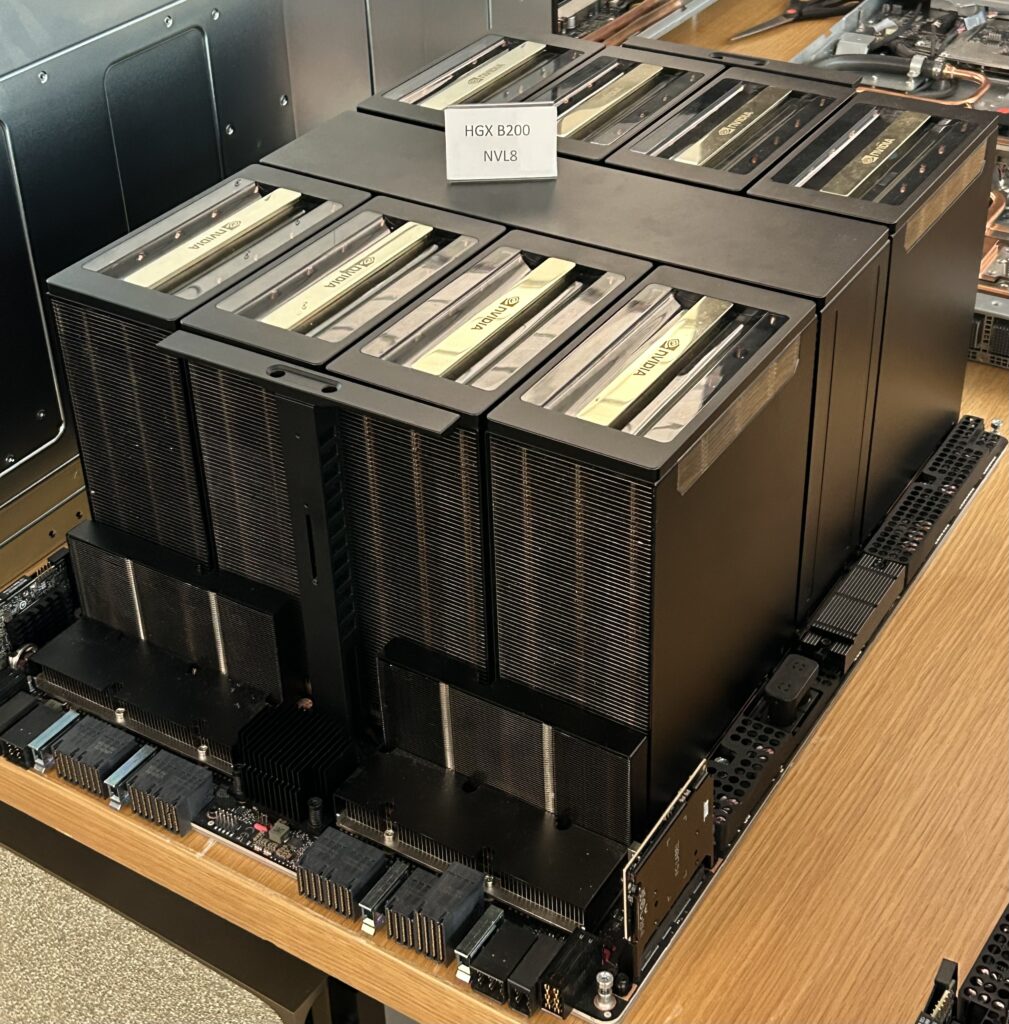
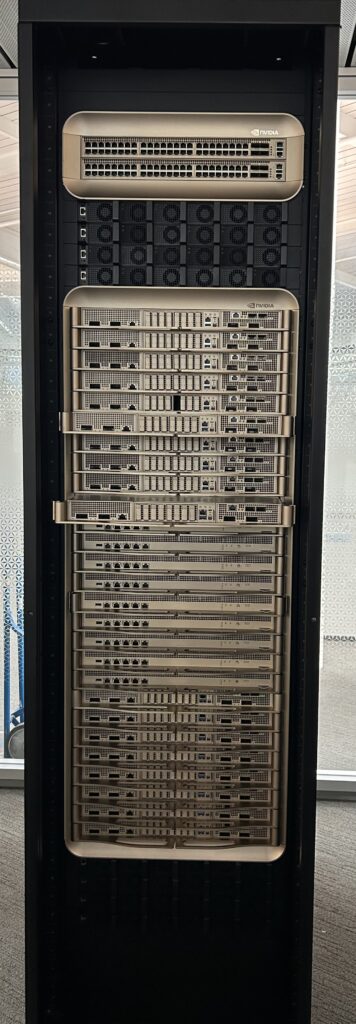
Photo: an Nvidia DGX B200 eight-GPU HGX board, 2025. Pokiiri, CC BY-SA 4.0, via Wikimedia Commons.
“Our momentum is real. NVIDIA is an exceptional technology leader, powered by the relentless innovation of our people.”
Colette Kress, interim chief executive, in the third-quarter results release, 17 November
Why the board let him go
On 8 November the board said it had “no reason to believe that either national security or NVIDIA secrets were compromised” and that it had “confidence in Jensen”, in a statement opening the investigation. The same day Huang told staff, in a note published by Business Insider: “I was unfaithful to my wife. My actions hurt her and our children. There is no excuse for what I did.” The note does not name Alice Huang.
Three days later he was gone. The New York Times reported on 11 November that he had also had a relationship with an Nvidia executive who reported to him, according to the BBC’s summary; Nvidia has not confirmed it. Nvidia has hired the law firm Wachtell Lipton to lead the investigation, CNBC reports.
What moved the board was “lack of candor” and “lying”, two people familiar with it told WIRED. A source close to the board said the lying “spanned a year, from October 2025 through recent events”: board members had asked Huang about Alice Huang after the Times reported on Megaspeed that month, and he denied an inappropriate relationship. A representative for Huang told WIRED only that he “voluntarily resigned”.
The disclosure of personal behavior and a lack of candor inconsistent with the company’s code of conduct, standards, and values made this a necessary decision.
Harvey Jones, Nvidia’s chair, at the all-hands meeting on 18 November, in remarks reviewed by WIRED
The campaign to bring Huang back
On 17 November Huang posted that he “would be honored to answer these calls and return as CEO” if the board decided it was in the interest of shareholders, employees, the company “and America”. He also wrote: “I own my mistakes completely.”
A petition called “Stand With Jensen” had more than 180,000 signatures by 16 November, Yahoo Finance reported, including more than 8,400 people who said they worked at Nvidia; signers describe themselves, and nobody checks. President Donald Trump said he would not oppose a return, and on 20 November said, according to WIRED: “He made some bad decisions, but he is a brilliant person … I’d like to see Jensen make a big apology.”

The board is not considering bringing him back, a person familiar with the matter told CNBC on 16 November. WIRED, citing Semafor, says “a small faction of Nvidia’s board” has pushed for a return. Treasury Secretary Scott Bessent said on 15 November that Nvidia needed “a dramatic shakeup”, should look outside for its next chief executive, and that the board and its counsel should report on compliance within ten days.
Brad Gerstner of Altimeter Capital, one of two investors who wrote to the board on 13 November, said at a Semafor event that his letter had been misunderstood: “If I was on a board I would take that very seriously. Let’s be clear no one is above the law,” the BBC reports.
In September 2024, after a roundtable of technology chief executives with India’s prime minister, Narendra Modi, in New York, Huang praised Modi on camera, in a clip Modi’s channel released under a Creative Commons licence.
Washington’s rule on renting chips
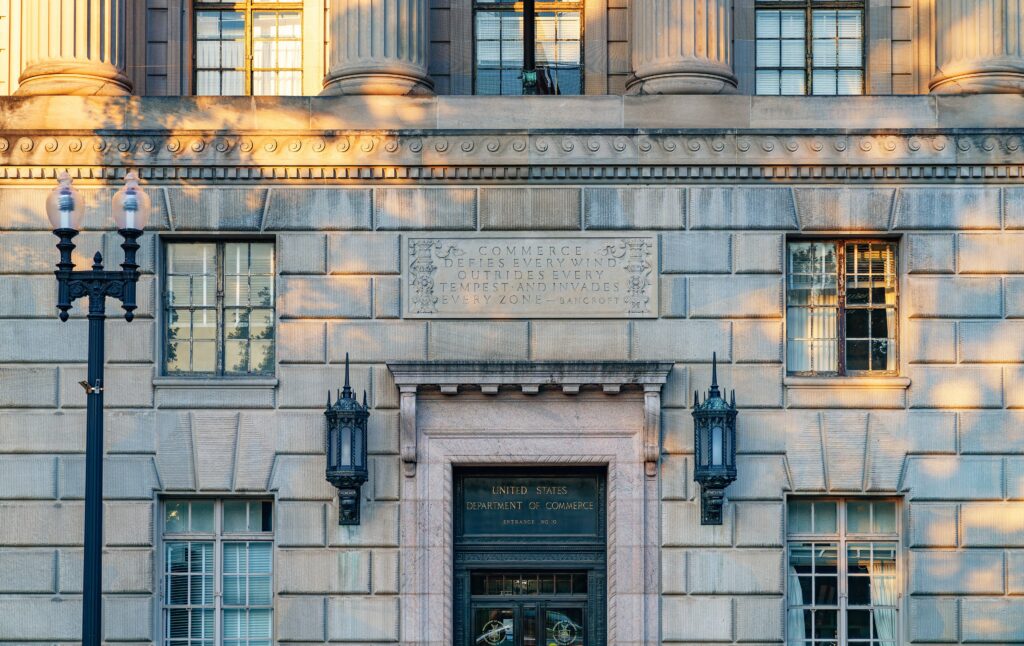
The Commerce Department’s Herbert C. Hoover Building in Washington. Photo: Tony Webster, CC BY 2.0, via Wikimedia Commons.
The Commerce Department’s Bureau of Industry and Security issued a rule on 16 November so that existing restrictions on American chips “cannot be circumvented through remote computing arrangements involving data centers in third countries”. BIS says in its release that the rule was “written by and at the direction of the Department of Treasury and the National Security Council”. It was published and took effect on 19 November, and is signed by Jeffrey Kessler, under secretary for industry and security.
The rule makes three main changes, according to its Federal Register text:
- Chips may not knowingly be exported for a data centre anywhere that gives companies headquartered in Macau or in a country of the rule’s Country Group D:5 access to more than 12,000,000 “aggregate TPP” of computing, at one site or across linked sites.
- Data centres already serving such customers “must obtain a license” within 90 days, which by Sulat’s count is 17 February 2027. Recommender systems such as those of online shops and social networks are exempt.
- Advanced chips going to Indonesia, Malaysia, Singapore, Thailand or Brazil, “countries which present a higher-than-normal risk of diversion”, need a licence, unless the buyer is a US-headquartered company that meets reporting requirements.
It also formally rescinds the Biden administration’s AI Diffusion Rule, which it says was never enforced. Comments are open until 19 January 2027. The rule is public domain and is attached here.
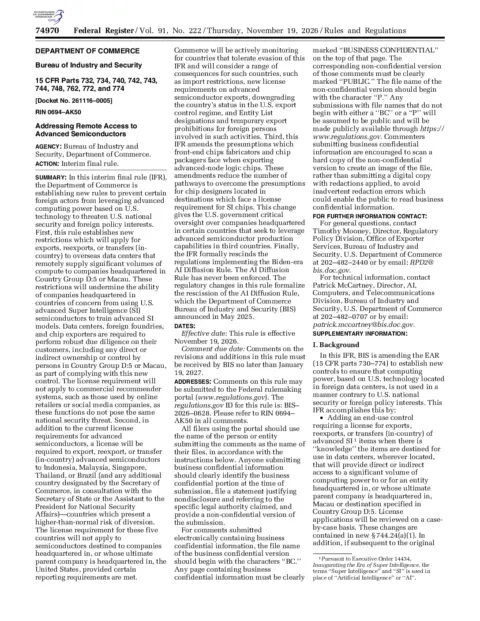 Addressing Remote Access to Advanced Semiconductors, 91 FR 74970, 19 November 2026 (PDF, Federal Register, public domain)
PDF30 pages424 KB
DownloadRead the rule’s details from the Federal Register yourself
The Federal Register publishes every document’s details as JSON, which is how the dates above were checked. This prints them:
curl -s https://www.federalregister.gov/api/v1/documents/2026-23529.json \
  | python3 -c "import json, sys; d = json.load(sys.stdin); print(d['title'], d['effective_on'], d['comments_close_on'], d['page_length'])"

# Addressing Remote Access to Advanced Semiconductors 2026-11-19 2027-01-19 30
The rule arrived as Nvidia’s own chip sales to the region came under scrutiny. Commerce began investigating Megaspeed in 2024, asked Nvidia for its sales records in May 2025, and in June 2025 Nvidia put Megaspeed on its “no sell” list, the Commerce and Justice departments said in a joint statement naming Commerce Secretary Howard Lutnick and Attorney General Todd Blanche. The Justice Department now leads a criminal investigation. Megaspeed brought in about US$787 million of Nvidia’s top chips in November 2025 despite that listing, according to trade records cited by Bloomberg News and reported by Politico.
Singapore, Malaysia and the disputed reporting
Singapore disputes parts of the reporting. Its Ministry of Home Affairs said on 31 October that the Wall Street Journal had attributed statements to Singapore officials that “neither the Singapore Government nor its officials said”, and that “there were no such investigations conducted in respect of Alice Huang”. On 12 November it set out its own case: police and customs opened an investigation in February 2025 into companies including Megaspeed over “potential false declarations” in buying servers, and Alice Huang “was not investigated for espionage”.
In February 2026 Singapore’s police found “insufficient evidence” that she had committed an offence, gave her a stern warning and barred her from re-entering the country, the ministry says. It adds that it has received “limited information or assistance” from the US Justice Department and FBI since September 2025. Investigations into Megaspeed and six other people continue.
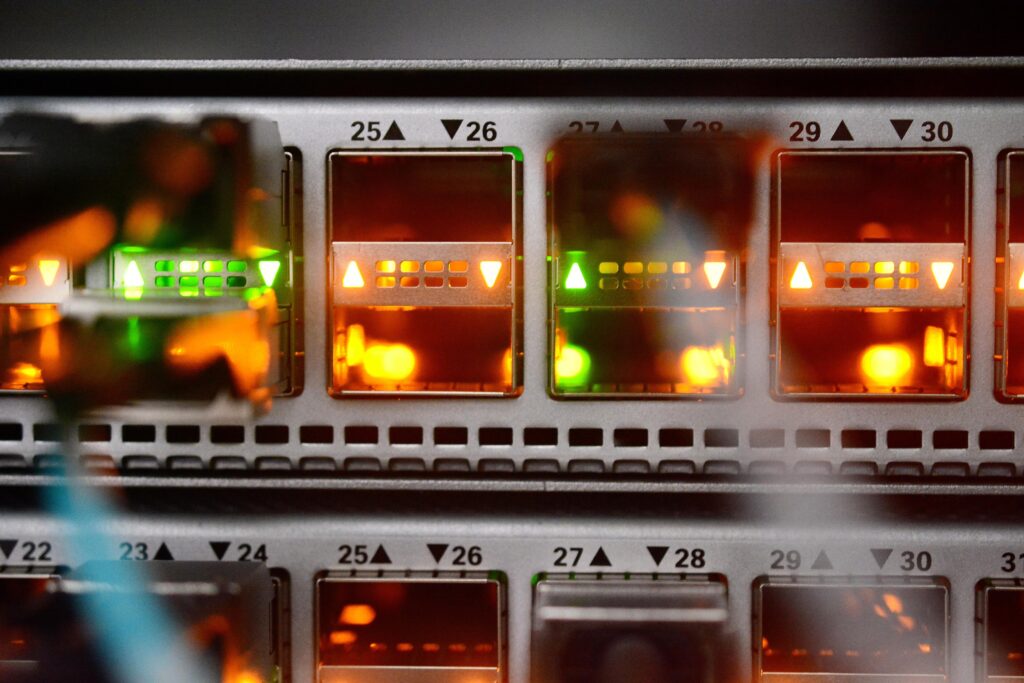
Supermicro told CBS News that Megaspeed “is not, and has never been, a Supermicro customer”. Malaysia’s prime minister, Anwar Ibrahim, said there was “no indication” that chips linked to the matter had been re-exported, and Beijing called the spy claims “nothing more than an attempt to smear China”, CBS reports. Megaspeed says Alice Huang left the company in August 2025 and that it “conducts legitimate and lawful business”.
Congress, California and the SEC
The chairs of the House Foreign Affairs Committee, the Select Committee on the CCP and the Intelligence Committee, Brian Mast, John Moolenaar and Rick Crawford, wrote to Huang on 4 November and again on 12 November, when they also wrote to Teter and to Kessler at Commerce. Huang has agreed to a transcribed, closed-door interview with the three committees on 1 December and Teter on 2 December, NBC News reports. The committee published the second round of letters on Scribd.
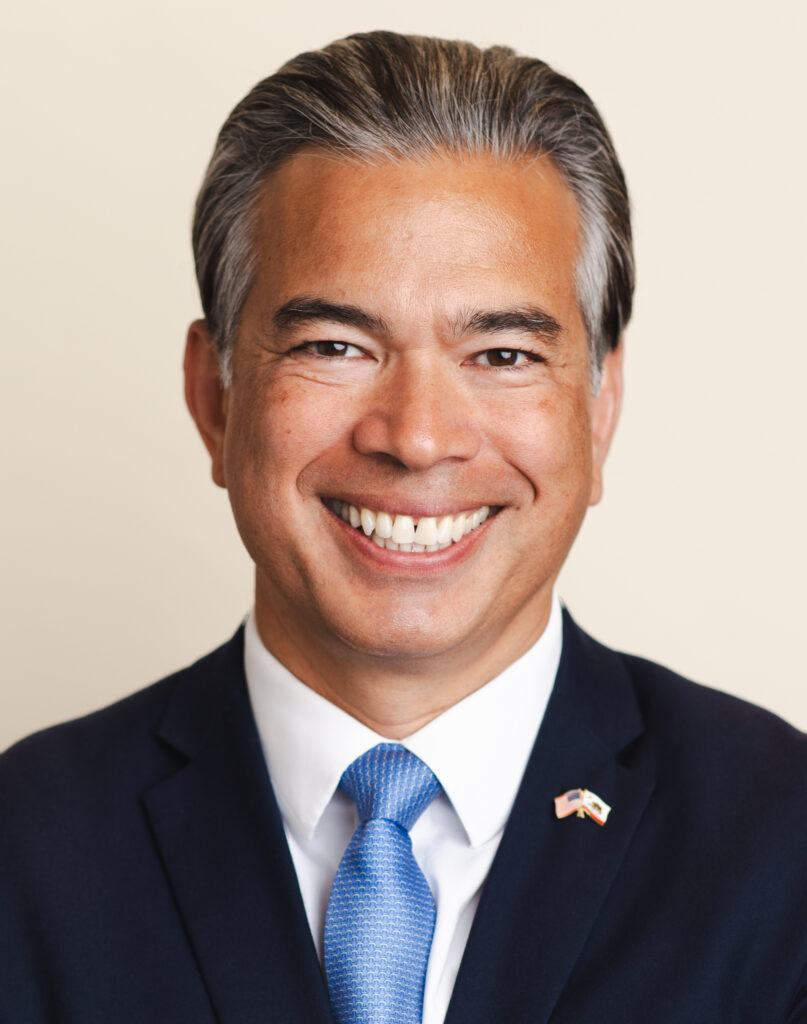
California’s attorney general, Rob Bonta, served Nvidia with an investigative subpoena on 19 November, asking “whether its advanced chips or confidential information may have gone to China and whether Nvidia misled investors and the public”, his office said. A subpoena demands information; it is not a lawsuit and finds nothing. “Companies cannot mislead their investors,” Bonta said.
The SEC is looking at Nvidia’s accounting practices, two people briefed on the matter told Reuters on 20 November, in a report carried by Euronext. The SEC declined to comment. Reuters notes that investigations are not evidence of wrongdoing, and that last year Nvidia began reporting revenue by where customers are headquartered rather than where they are billed, which removed Singapore from its breakdown.
Filings also show that a trust of director Mark Stevens and his wife sold 4,236,740 Nvidia shares between 31 August and 18 September, worth about US$946.6 million by Sulat’s sum of the Form 4 filings. The filings do not give a reason for the sales.
Investors and the share price
−47.5%
Nvidia’s fall from its 6 October peak to the close on 20 November
US$2.7tn
of market value lost over the same period
−22.9%
in the week to 20 November, its worst week since October 2008
Nvidia fell 14% on Friday 20 November, its worst day in almost two years, CNN reports. The Nasdaq ended 18% below its record and the S&P 500 and Dow closed in correction. CNN links the selling partly to “uncertainty about the future of Nvidia’s role in powering the AI industry’s growth after CEO Jensen Huang resigned”.
“There is a real exodus out of tech stocks,” Steve Sosnick, chief strategist at Interactive Brokers, told CNN. David Kelly, chief global strategist at JPMorgan Asset Management, was calmer: “This is not a fatal illness. It’s not even the flu.”
For the story of how Huang built the company, the BBC has quoted Stephen Witt, author of a biography of him.
What to watch
- About 25 November: ten days after Bessent asked the board for answers on compliance, by Sulat’s count.
- 1 December: Huang’s transcribed interview with the three House committees. 2 December: Teter’s.
- 19 January 2027: comments close on the remote-access rule.
- 17 February 2027: data centres serving restricted customers must have a licence, by Sulat’s count of 90 days.
- No date set: the search for a permanent chief executive, the board’s investigation, and whether Commerce adds Megaspeed to its Entity List, which Senator Pete Ricketts introduced a bill on 17 November to force within 30 days.
Sources
- Nvidia: Form 8-K and announcement, 12 November; third-quarter results and committee announcement, 17 November; board statement, 8 November.
- Federal Register, 91 FR 74970; BIS release, 16 November; Commerce and Justice joint statement.
- California Attorney General, 19 November; Singapore Ministry of Home Affairs, 31 October and 12 November; House Foreign Affairs Committee letters.
- Reporting by WIRED, CNBC, CNN, NBC News, the BBC, Business Insider, Reuters (via Euronext), Politico, CBS News and Yahoo Finance, linked where cited.
Discover more from Sulat AI & Tech News
Subscribe to get the latest posts sent to your email.