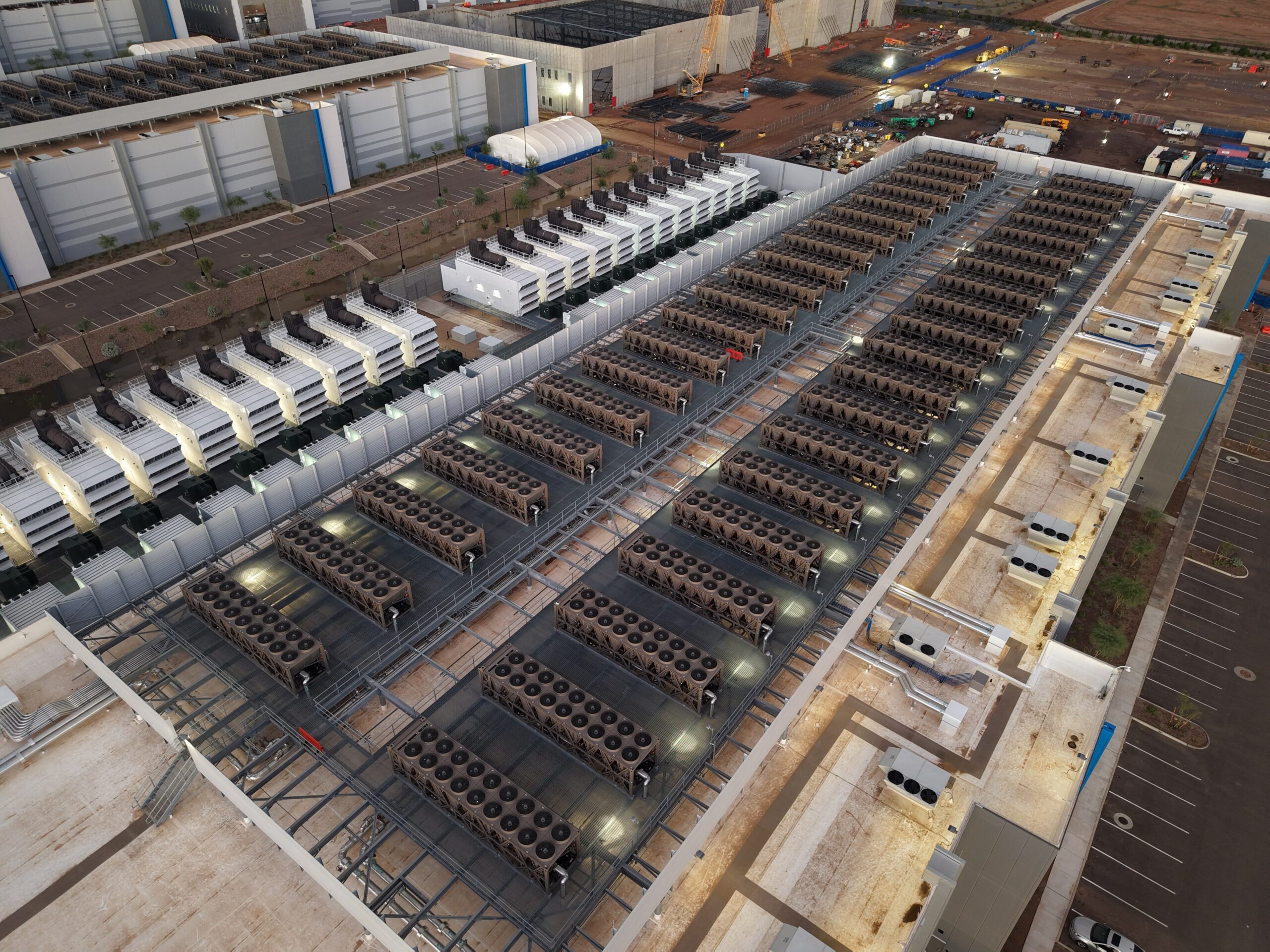
The world’s data centres will use about twice as much electricity in 2030 as they do now, and the emissions tied to them are on track to rise by 70%, the International Energy Agency says in its World Energy Outlook 2026, published on 19 November. Most of the extra power for AI is set to come from gas in the United States and coal in China, while the European Union leans on renewables.
The report landed in the last week of COP31, the UN climate conference in Antalya, Türkiye. Three days earlier the conference presidency and the International Telecommunication Union had launched a voluntary Antalya Artificial Intelligence Pledge on AI’s environmental footprint. Reuters reported that Alibaba was the only big tech company to have signed it so far, and campaigners called it a green label for business as usual.
The figures below are the IEA’s scenario projections, not forecasts. Its executive director, Fatih Birol, says so himself, and the last section explains how to read them.
In this piece:
- What the outlook says about data centres
- Why emissions rise while tech buys record renewables
- Gas in the US, coal in China, renewables in Europe
- Grids, turbines and memory chips
- Water, moratoria and local opposition
- Cooling, not chatbots, is the bigger demand story
- The Antalya AI pledge and who signed it
- What critics say the pledge leaves out
- What it means for Australia and New Zealand
- Scenarios, not forecasts
What the outlook says about data centres
Electricity use by data centres around the world grew by 17% in 2025, and investment in them reached US$565 billion, the outlook says in its section on AI. It expects a further US$4 trillion to be spent on data centres by 2030. In the Stated Policies Scenario, which counts policies governments have put forward even if they are not yet law, data centres’ consumption doubles to about 1,000 terawatt-hours (TWh) a year by 2030. Capacity built for AI drives about three-quarters of that growth.
Spread evenly across a year of 8,760 hours, 1,000 TWh is a continuous load of about 114 gigawatts, by Sulat’s arithmetic. The Guardian compares the extra 350 TWh that AI data centres will use within four years with more than Great Britain’s whole annual electricity consumption.
1,000 TWh
data-centre electricity use in 2030 in the Stated Policies Scenario, about double today’s
70%
rise in emissions tied to data centres that the IEA says is on track by 2030
120 GW
of data-centre capacity worldwide today, nearly 80% of it in China, the EU and the US
The agency watched the build-out from space. It tracked 93 large “AI factories”, data centres purpose-built for AI, in satellite imagery, and says their potential capacity grew tenfold in 24 months to 17 GW by September. Once all 93 are finished, their combined capacity is set to be about 50 GW.
The new total is a little higher than the agency’s own estimate from April. Its separate report Key Questions on Energy and AI projected 950 TWh for 2030.1 That report, which the Antalya pledge cites, is free to download under a Creative Commons licence.
 IEA, Key Questions on Energy and AI (April 2026, PDF, CC BY 4.0)
PDF138 pages6 MBiea.blob.core.windows.net
DownloadData centres are still a small part of the picture the outlook draws. Electricity is about 23% of the world’s final energy use, it says, and demand for it grows by more than 10,000 TWh over the next decade, pushed by electric motors in industry, appliances, air conditioners, electric vehicles, heat pumps and data centres. The efficiency gains of the past decade in household lighting, televisions, fridges and other appliances, at 600 TWh, are already greater than the world’s annual electricity use for data centres, the executive summary notes.
Birol launched the report on 19 November alongside Laura Cozzi, the IEA’s director of sustainability, technology and outlooks, and Tim Gould, its chief energy economist, who designed and directed the study. Its headline subject is not AI but the disruption to oil and gas through the Strait of Hormuz this year, which the report calls “the largest energy supply shock that the world has faced”.
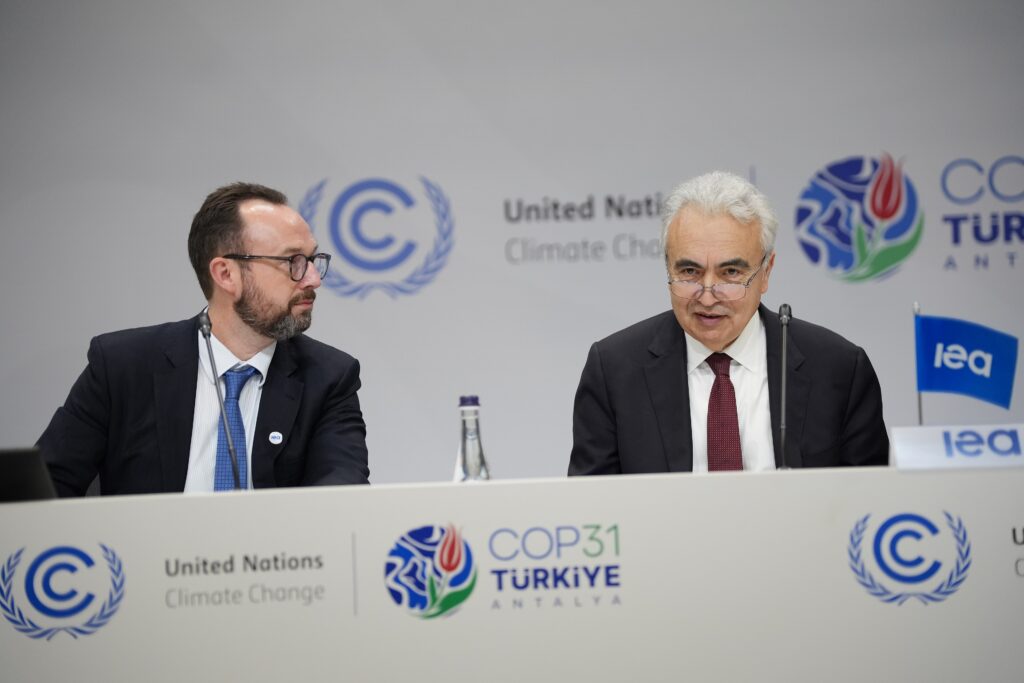
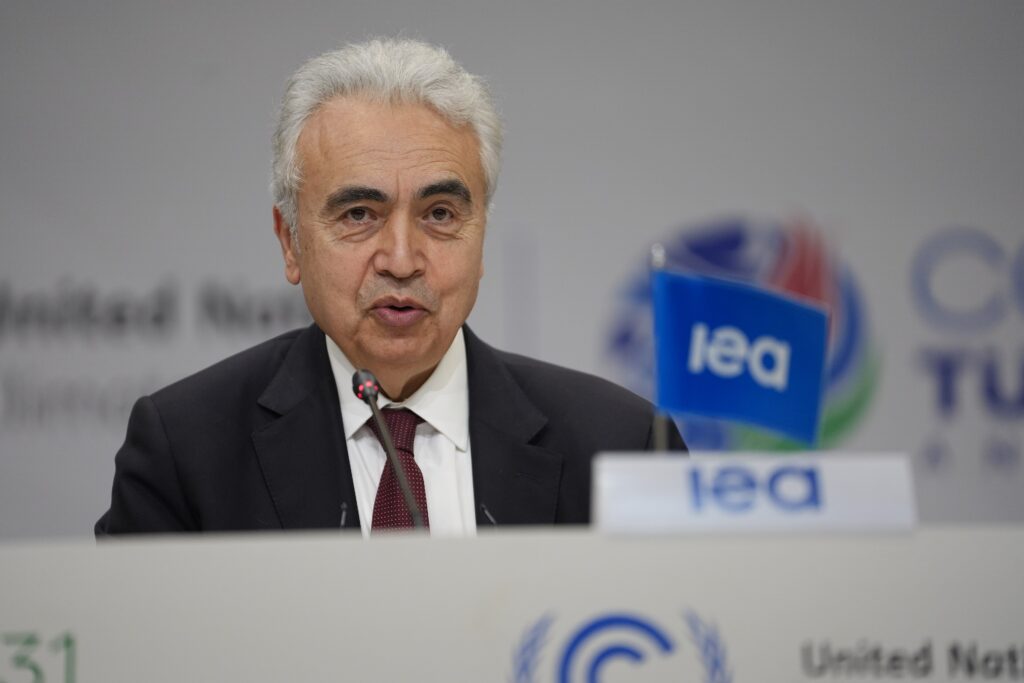
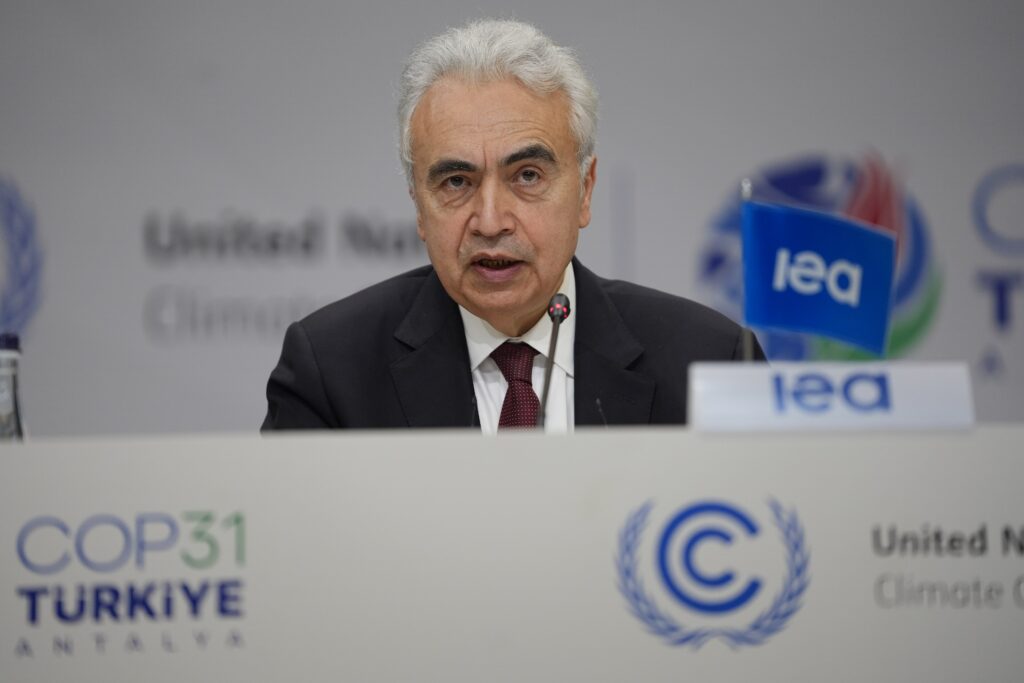
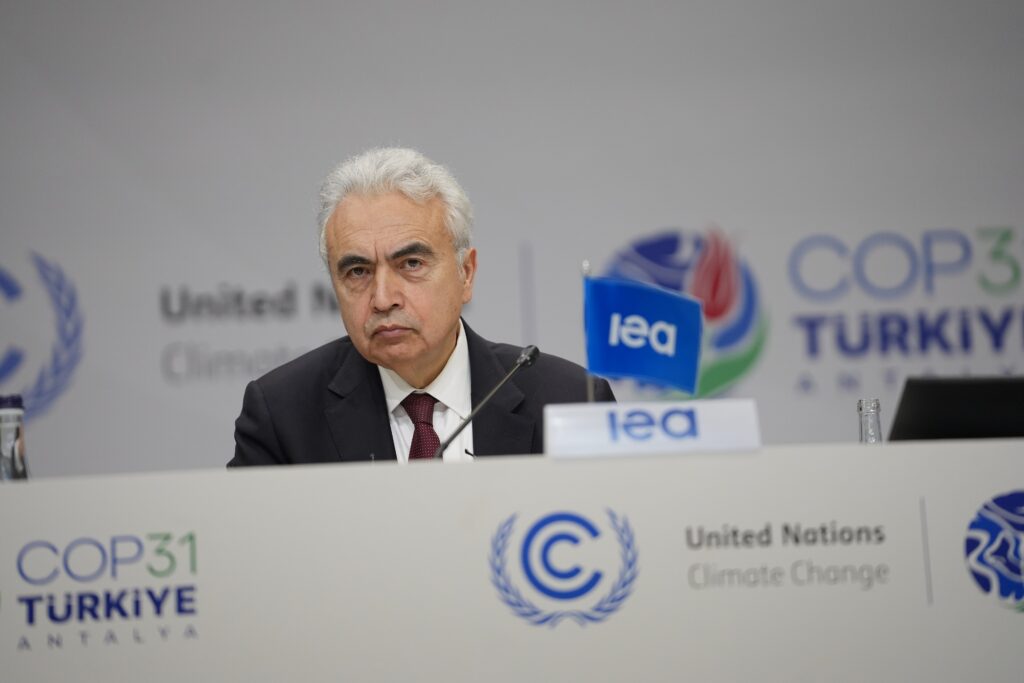
“By providing multiple scenarios – none of which are forecasts – and analysis of unparalleled scope, it can serve as a reference … In pursuit of greater energy security, countries must take care not to replace one dependency with another.”
Fatih Birol, executive director of the IEA, in the agency’s launch statement, 19 November
Why emissions rise while tech buys record renewables
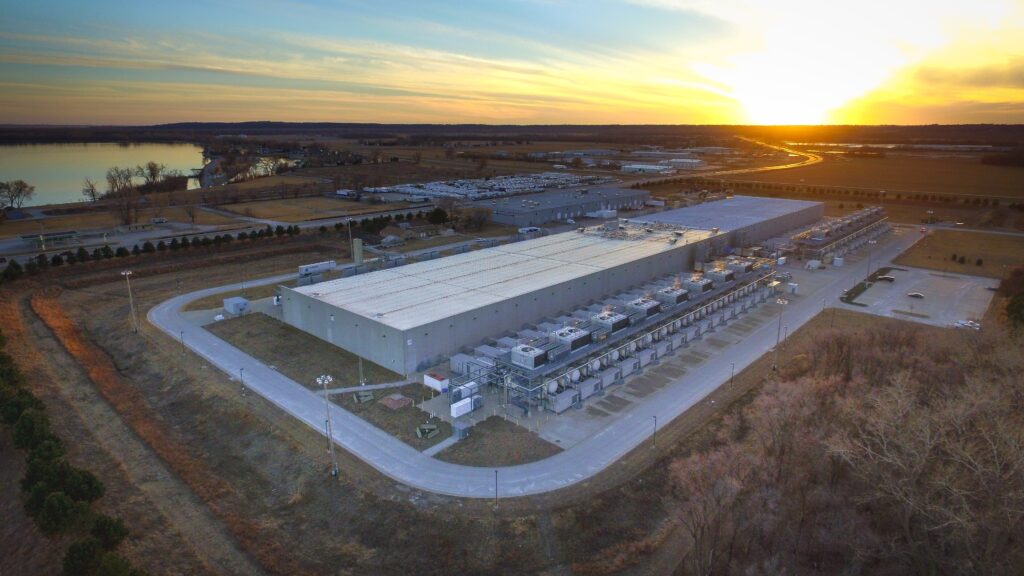
Google’s data centre at Council Bluffs, Iowa, in 2017. Photo: Chad Davis, CC BY 2.0, via Wikimedia Commons.
The technology industry is now the largest corporate buyer of renewable energy, the IEA says, and nearly half of commercial data centres’ electricity demand is matched by renewable power purchase agreements. It has also signed with developers of small modular reactors and geothermal plants. The report’s heading for this part reads “Data centre companies are turning into energy makers”.
Those contracts are not the power that reaches the servers. Coal- and gas-fired plants generate about 60% of the electricity physically supplying data centres around the world today, the report says. “As a result of the growth in natural gas- and coal-fired power generation for data centres, emissions associated with this sector are on track to rise by 70% by 2030.” Renewables and gas account for about 80% of the extra generation that data centres need by 2030.
A purchase agreement guarantees renewable energy over a year, not at the hour a site needs it, Data Centre Review points out in its reading of the report.
Other estimates of where data centres’ power comes from today differ. AFP, citing the IEA, put coal at about 30%, renewables at 27%, gas at 26% and nuclear at 15%.2 A separate study of about 400 large US data centres, which NPR covered, compared their emissions with a country’s.
Gas in the US, coal in China, renewables in Europe
The three markets that hold most of the world’s data centres take different paths to 2030 in the outlook’s Stated Policies Scenario. Gas supplies about 60% of US data centres’ electricity by 2030. In China about half the power for AI data centres comes from coal, and the rest mostly from renewables, with some nuclear and very little gas, according to the Guardian’s reading of the report. In the EU renewables supply about 70%, Anadolu Agency reports.
| Market | Largest source for data centres by 2030 | Its share | Gas capacity planned for data centres, August 2026 | Reported by |
|---|---|---|---|---|
| United States | Natural gas | About 60% | About 180 GW | IEA via Anadolu Agency; IEA report |
| China | Coal, for AI data centres | About half | Not given | IEA via the Guardian |
| European Union | Renewables | About 70% | Not given | IEA via Anadolu Agency |
| Canada | Not given | Not given | 11 GW | IEA report |
| Rest of the world | Not given | Not given | 4 GW combined | IEA report |
About 180 GW of gas plants planned in the US to supply data centres is “almost as much new gas capacity as the total now installed across the European Union”, the Guardian says. Most of it will not run before the 2030s, because of a backlog in gas-turbine orders, the IEA adds.
Grids, turbines and memory chips
“The rapid growth of data centre capacity has been pushing electricity systems to their limits,” the report says. It compares prospective data-centre capacity with peak demand in Great Britain, Ireland, Italy, Alberta, Denmark, Finland, Texas and the Northern Virginia area served by Dominion, and lists reforms that help: rules favouring credible connection applications, “bring-your-own-power” arrangements and data centres that can flex their use.
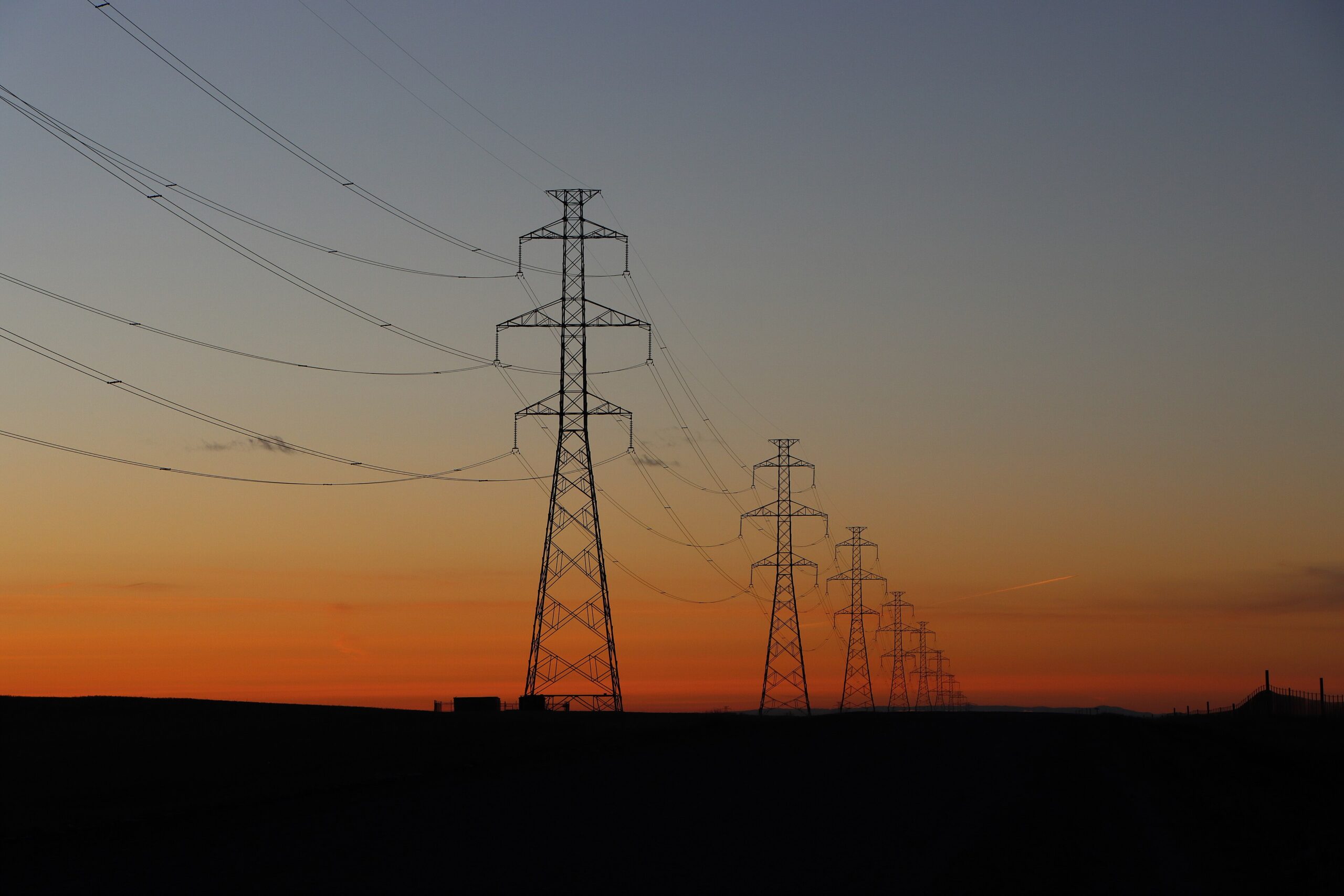
Turbines and transformers
Supply chains are “imposing a speed limit on how fast the data centre industry can grow”, the IEA writes, especially for advanced chip packaging, memory chips and power equipment. Over the next ten years the world needs at least 25 million kilometres of new power lines and upgrades to 15 million more, and copper, transformers and cables are already in tight supply, says the executive summary. The agency expects data centres to need about 25 GW of batteries by 2030.
Memory and racks
The April report expected a shortage of high-bandwidth memory to last until at least the end of 2027. It also said a single AI server rack could draw as much power at its peak as 65 households by 2027.
Attacks on the grid
A bigger, busier grid is also a bigger target. Energy utilities faced more than 2,000 cyberattacks a week in 2025, the executive summary says. The US Government Accountability Office looked at the risk to the American grid in a 2019 report and recorded a short podcast with it.
Water, moratoria and local opposition
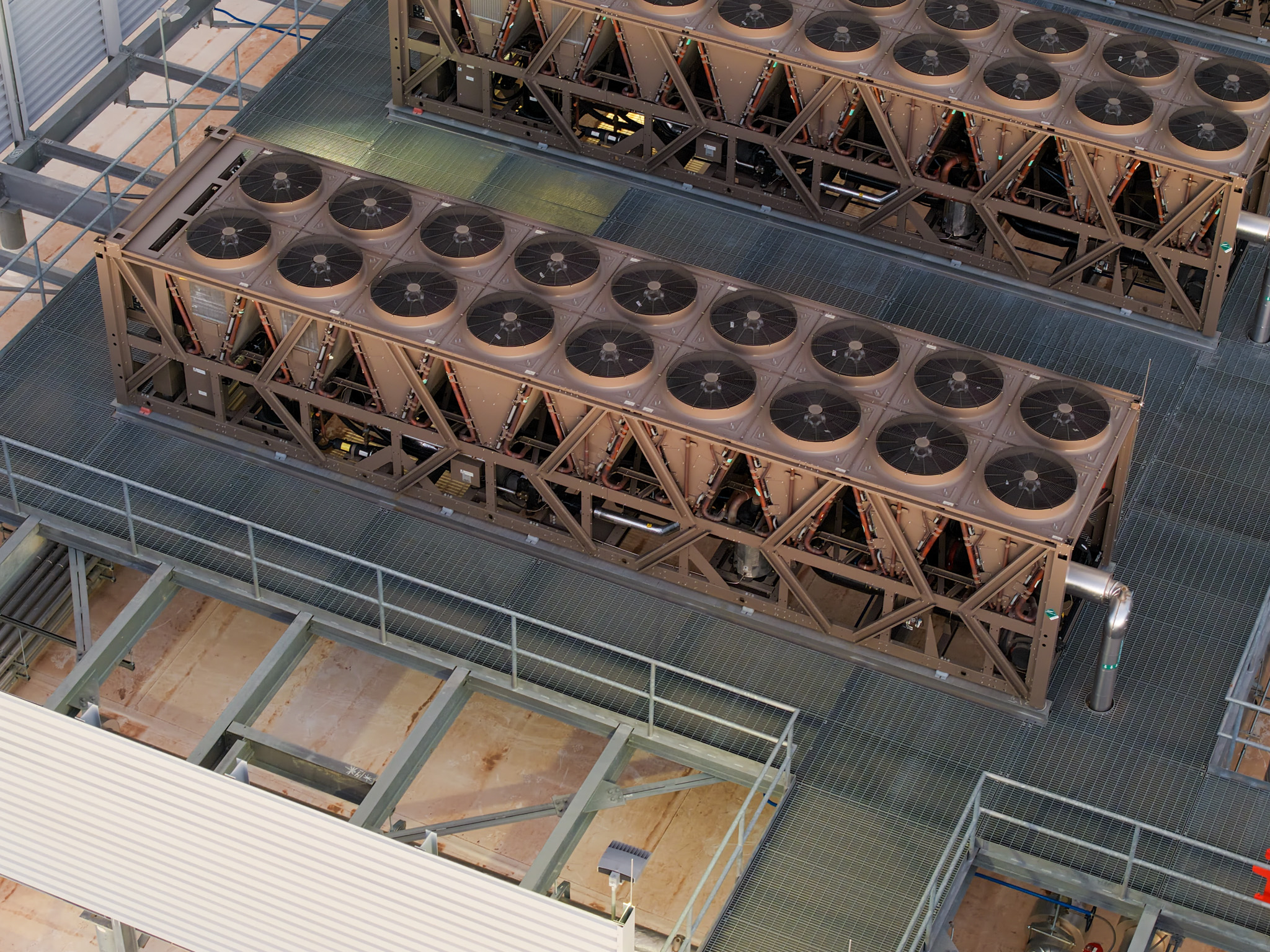
About 30% of existing and planned data-centre capacity sits in areas with high water stress, the outlook says in a box on water. Water linked to data centres came to 885 billion litres in 2025. Of that, 240 billion litres was used inside the buildings, “equivalent to half a cup of water per day for every internet user in the world”. Nearly 40% is tied to generating their electricity, and about a quarter to cooling them directly.
Liquid cooling for AI servers trades water against energy efficiency, the report says, and worries about water are “one of the main reasons for data centre moratoria”.
Photo: cooling units on a data-centre roof in Mesa, Arizona. Rsparks3, CC0, via Wikimedia Commons.
In the first seven months of 2026, local and state authorities in the US adopted nearly five times as many moratoria on data-centre plans as in the whole of 2025, the report says, over planning, land use, electricity prices, the environment and water. In September Thailand paused 49 projects under construction and 117 awaiting approval while it wrote rules on electricity, water, siting and community impact.
On prices, the IEA is cautious: its analysis “does not yet show a clear relationship” between more data-centre capacity and higher electricity prices. A data centre whose grid or generation costs are spread across all users can raise their bills, it says, while one that uses spare capacity and pays its share can ease them.

Cooling, not chatbots, is the bigger demand story
For all the attention on AI, the outlook’s biggest new source of electricity demand is air conditioning. “Already today, for the first time in energy history, demand for cooling in buildings is overtaking that for heating,” the executive summary says. In the Stated Policies Scenario, cooling adds 1,700 TWh of demand by 2035, and a case with more heatwaves adds 40% to that.
“Energy demand from AI and data centers has dominated public attention this year, but by 2035 the global growth in electricity demand from cooling is forecast to be about 70% greater than from data centers.”
Nick Wayth, global director of the WRI Polsky Center for the Global Energy Transition, in the World Resources Institute’s takeaways from the report, 20 November
Data-centre demand is concentrated in the US, China and the EU, Wayth notes, while cooling is needed everywhere, above all in emerging and developing economies. Outside China, 85% of households in those economies are exposed to high temperatures but fewer than 20% have an air conditioner, according to the IEA.
Inside a data centre, power and cooling are most of the plant. The YouTube channel Lawrence Systems toured a decommissioned one, from its flywheel UPS to its diesel generator room and cooling pumps, according to the video’s chapter list, and released it under a Creative Commons licence.
How much energy an AI answer takes varies widely. Energy per AI task has fallen “by at least an order of magnitude annually”, the IEA’s April report says, and if every web search were a simple AI text query, the total would be under 1% of data centres’ use. Video generation, reasoning and agents can use “hundreds or thousands of times more energy per query”.
The Antalya AI pledge and who signed it

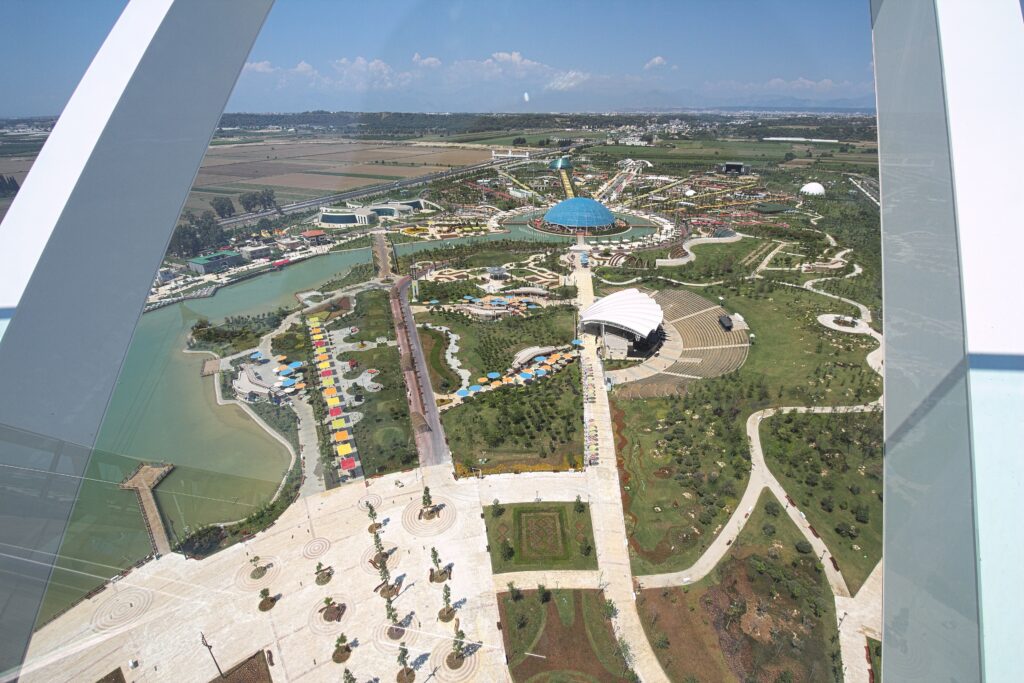
COP31 runs in Antalya from 9 to 20 November, with Türkiye as host. Murat Kurum is the conference’s president and Australia’s Chris Bowen its president of negotiations, according to UN Climate Change. The talks are held at the Antalya Expo Center, the grounds built for Expo 2016.
The COP31 presidency and the ITU “officially launched” the pledge on 16 November, the ITU said that day. Its text had been public since October. It aims “to make AI part of the climate solution – sustainably powered, efficiently designed, transparently measured and available to all”, and is open to governments, companies, investors, cities and civil society groups.

“AI is a powerful tool for tackling the climate crisis, but it must be used responsibly,” said Doreen Bogdan-Martin, the ITU’s secretary-general. Kurum said “the rapid growth of AI” must be “powered and deployed responsibly, and used for the benefit of climate actions”.
The pledge has four actions: power and build AI infrastructure sustainably, design and buy AI responsibly over its whole life, measure and report its environmental impact against agreed standards, and widen access to finance and computing for climate work in developing countries. Its text says the objectives are “voluntary and non-prescriptive” and “create no new obligations”. Governments can also sign optional commitments in an annex, including these two, quoted from the pledge text:
A1. To progressively request providers of AI systems and services to disclose energy and environmental impact data

B1. To progressively require AI infrastructure operations to be powered by zero- and low-emission energy.
Signatories take stock at each COP until 2030, starting with COP32, through the ITU’s Green Digital Action initiative.
How many signed
Counts differ by outlet and by day, so each is given with its source:
- At the launch on 16 November, AFP counted 80 endorsements, “barely 10 nations” among them, with the US, China and the EU missing.
- Reuters reported 90 endorsements at the launch. Alibaba was the only big tech company to have signed; Germany, Brazil and South Korea were among the governments.
- Anadolu Agency later reported 80 statements of support and 271 commitments, 43 of the statements from the private sector.
Meta, Microsoft, Google and Nvidia did not answer Reuters’ questions about the pledge. Amazon declined to comment on it and pointed to its own target to cut the carbon intensity of its electricity use 65% by 2030 from 2019. The pledge stays open to signatures until COP32 at the end of 2027.
“Eighty is not a limit,” Tomas Lamanauskas, the ITU’s deputy secretary-general, told AFP. “I think it’s about creating momentum.”
We cannot ask people to accept higher bills, more planet heating pollution and deeper inequality today in exchange for promises of a better tomorrow.
Simon Stiell, executive secretary of UN Climate Change, at the pledge launch, 16 November, as reported by AFP
What critics say the pledge leaves out
Stiell said at the launch that AI and other frontier technologies are “a double-edged sword”, and that its “benefits must outweigh its growing costs”. Campaigners went further. Jill McArdle, a corporate campaigner at Beyond Fossil Fuels, told AFP the pledge was a “distraction” whose “promises are vague”. Her group’s statement says governments should put homes and electrification ahead of data centres for grid access, rule out new fossil fuels for AI and require data centres to run on additional renewable energy.
“Voluntary standards alone are not enough,” Julie Cerqueira, chief programme officer at the Natural Resources Defense Council, told Reuters. In Australia, Christopher Wright, a University of Sydney professor according to Common Dreams, called the data-centre build-out the “nail in the coffin for the planet’s life support systems”.
Türkiye’s industry and technology minister, Mehmet Fatih Kacır, framed it the other way round at the launch: “We must both reduce AI’s environmental footprint and harness its potential to modernise industry, improve energy efficiency, strengthen climate resilience, and accelerate green development.”
What it means for Australia and New Zealand

The outlook does not discuss data centres in either country. Birol’s foreword describes the IEA as a “strategic partner to the COP31 Presidencies of Türkiye and Australia”, and the report holds up Australia’s National Electricity Market as an example of batteries cutting gas use: gas-fired generation there fell 30% year on year in the second quarter of 2026, to its lowest second-quarter level since 2003.
Australia
The market operator, AEMO, has its own data-centre forecast. About 165 data centres used roughly 5 TWh in the 2026 financial year, about 3% of the market’s consumption, two-thirds of it in New South Wales. In AEMO’s Step Change scenario, which it treats as most likely, that triples to about 15 TWh by 2030 and reaches about 34 TWh, 13% of consumption, by 2036.
New Zealand
Datagrid’s campus near Invercargill
Singapore-based Datagrid has approval for a NZ$3.5 billion, 280 MW AI data centre near Invercargill, due to open in 2028, which would become the country’s second-largest electricity user after the Tiwai Point aluminium smelter, Alan Brent and Andrew Crossland wrote in The Conversation in July. Tiwai Point draws 572 MW, and at full build the campus would use about 6% of New Zealand’s electricity, according to the consultancy Certified Strategic. The Green Party has proposed a one-year pause on new AI data centres.
Where its power comes from
Datagrid’s agreement with Mercury covers 140 MW of its 280 MW demand. The Conversation calls it a power purchase agreement; Certified Strategic describes it as a 15-year option rather than a firm supply contract.
Why flexibility matters in a dry year
Transpower estimates that every gigawatt cut from peak demand could avoid about NZ$1.5 billion in system costs, the Conversation article says, which is why a data centre that can turn down in a dry year matters in a hydro-based system.
Scenarios, not forecasts
The outlook runs several scenarios, and Birol’s launch statement says none is a forecast. The data-centre figures in this article come from the Stated Policies Scenario unless the text says otherwise.
How the IEA’s scenarios differ
The Current Policies Scenario counts only policies “already firmly in place”. The Stated Policies Scenario adds measures that have “formally been put forward but not yet adopted”. Both assume ships pass freely through the Strait of Hormuz by the end of 2027. The report also has an Additional Response Case and a Low Hormuz Case, and a Net Zero Emissions by 2050 Scenario, which it calls “normative”: it sets out what reaching the goal would take rather than what current policy leads to. Warming by 2100 is 2.9 °C in the first, 2.5 °C in the second and 2.4 °C in the Additional Response Case.
- Terawatt-hour (TWh)
- A billion kilowatt-hours, the unit the IEA uses for a year of a country’s or a sector’s electricity use.
- AI factory
- The IEA’s term for a data centre built for AI; it tracked 93 of them by satellite.
- Power purchase agreement
- A long contract to buy a generator’s output, often renewable, which need not match the hours a site uses power.
- Moratorium
- A pause on approving or building new projects while rules are written.
For a longer view, Kate Crawford’s book Atlas of AI is about the material and energy costs of artificial intelligence.
The same question reaches the web’s own servers. Theo van der Zee gave a WordCamp talk in 2022 on making websites more sustainable.
Sources
- IEA, World Energy Outlook 2026, overview, executive summary and full report, section 1.10, 19 November 2026. CC BY 4.0.
- IEA, launch statement, 19 November 2026.
- IEA, Key Questions on Energy and AI, April 2026.
- COP31 Presidency, Antalya Artificial Intelligence Pledge; ITU, launch release, 16 November 2026.
- The Guardian, Anadolu Agency, Data Centre Review, AFP, Reuters (via Yahoo), WRI, Beyond Fossil Fuels, Common Dreams and UN Climate Change, linked where cited.
- AEMO, Forecasting growing data centre demand, 2026; The Conversation and Certified Strategic on New Zealand, July and November 2026.
- The April report projected data-centre electricity use rising from 485 TWh in 2025 to 950 TWh in 2030, about 3% of the world’s demand. Both are “roughly double”; the outlook’s 1,000 TWh is its newer figure. ↩︎
- AFP does not name the IEA publication these shares come from, and they do not match the outlook’s “around 60%” from coal and gas. They probably come from the agency’s earlier Energy and AI work, which Sulat did not open. ↩︎
Discover more from Sulat AI & Tech News
Subscribe to get the latest posts sent to your email.