Lightpanda says Playwright, Puppeteer and chromedp users can call its own commands over the connection they already have. In an X post on 24 November, the maker of the headless browser names two of them: LP.getSemanticTree, which returns a compact page outline whose elements can be clicked and filled by node ID, and LP.detectForms, which lists every form on the page with its fields.
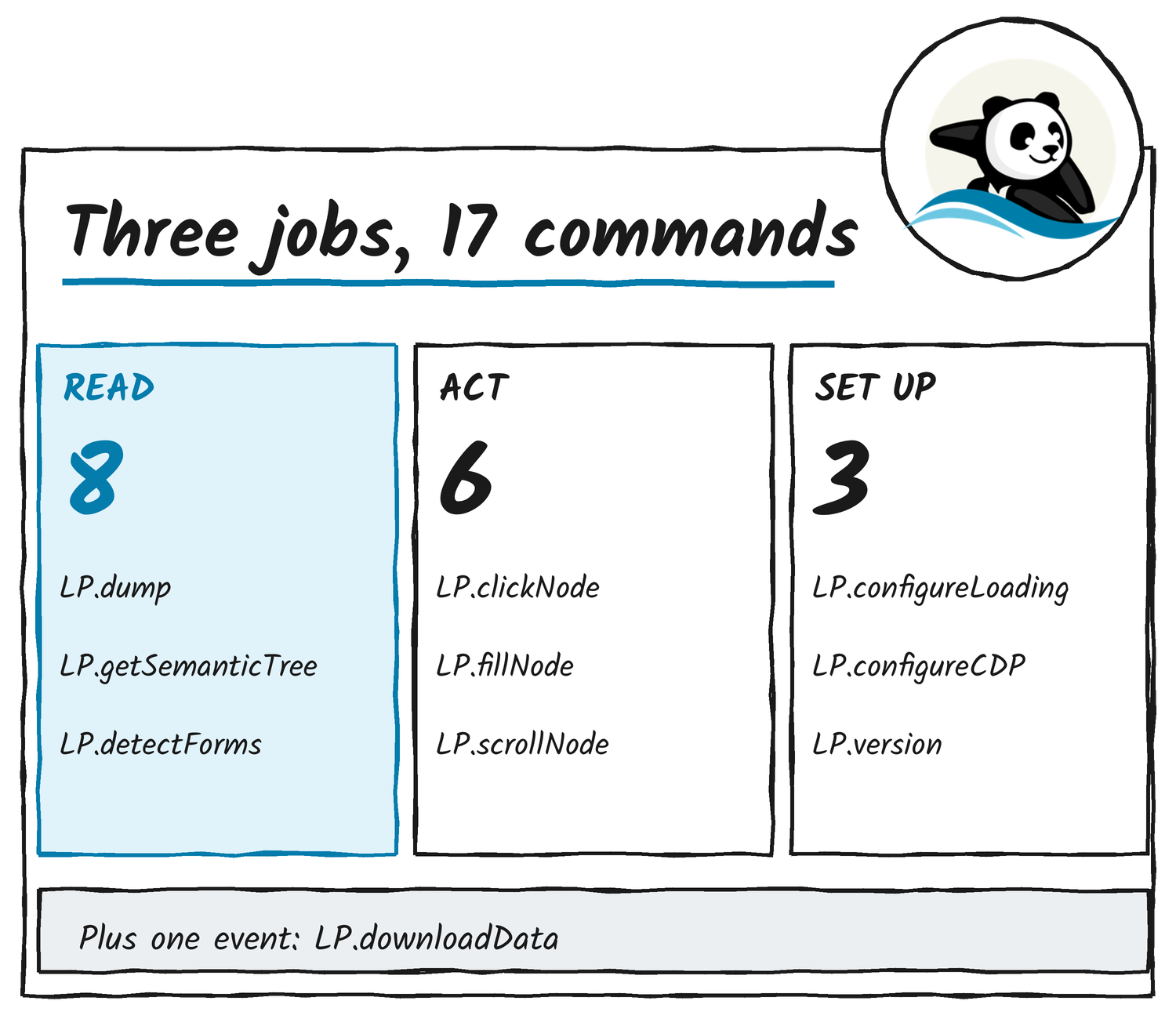
Both belong to the LP domain, a set of Chrome DevTools Protocol (CDP) commands that only Lightpanda implements. The current reference lists 17 commands and one event. The post links to a talk by Pierre Tachoire, Lightpanda’s co-founder and CTO, at the Extract Summit conference, which reached YouTube on 20 November.
- What the post and the talk cover
- What the LP domain holds
- Why a browser ships its own commands
- Knowing when a page is ready, and behaving politely
- Who builds it, and where the numbers stand
- How it compares with the other engines
- What it doesn’t do
- Try it
What the post and the talk cover
The post is short. It tells Playwright, Puppeteer and chromedp users that the same connection carries Lightpanda-specific commands, and it lists LP.getSemanticTree and LP.detectForms as the first two. The reference page covers the other 15.
The talk it links to is 33 minutes and 50 seconds. Tachoire’s description on YouTube says Lightpanda is an open-source headless browser written from scratch in Zig on top of V8, and that it skips rendering, image decoding and GPU compositing. Because it speaks CDP, the description adds, it works with existing Puppeteer and Playwright scripts. The practical half covers connection and context lifecycle, opt-in resource loading, the settled readiness event, native ad-block lists and HTTP caching, cheaper alternatives to request interception, safety limits, WebDriver support and Prometheus metrics.
What the LP domain holds
A command takes a backendNodeId when it targets an element. The IDs come from LP.getSemanticTree, LP.getInteractiveElements, LP.detectForms or LP.waitForSelector, or from a standard CDP command such as DOM.describeNode. A failed command returns a CDP error with code -31998 and the error name as its message. Every command reads or acts on the main frame, though an ID can point into an iframe.
| Group | Command | What it does |
|---|---|---|
| Read | LP.dump | Converts the live DOM to HTML, Markdown, PNG or PDF, after your clicks and fills. Options strip scripts, styles, navigation or page clutter. |
| Read | LP.getSemanticTree | Returns a pruned outline of the page. In text format each line starts with the node’s ID, and [i] marks an interactive node. |
| Read | LP.getNodeDetails | Describes one node and returns a CSS selector that matches only that node. |
| Read | LP.getStructuredData | Reads JSON-LD, Open Graph, Twitter card and meta tags, and links. |
| Read | LP.getPageStatus | Reports what went wrong while loading: HTTP status, a Cloudflare, AWS WAF or Vercel challenge, script errors, unsupported calls, skipped and blocked resources. |
| Read | LP.getContentSignal | Returns the Content Signals a site’s robots.txt declares, such as whether AI training is allowed. |
| Read | LP.getInteractiveElements | Lists native controls, ARIA widgets, editable regions, and elements with click or key listeners. |
| Read | LP.detectForms | Lists each form’s action and method, and each field’s tag, type, required flag, value and select options. |
| Act | LP.clickNode | Clicks a node by ID. |
| Act | LP.fillNode | Types into an input or textarea, or selects an option by value, and fires the input and change events. |
| Act | LP.scrollNode | Scrolls a node or the page, which fires the scroll events lazy loading and infinite scroll rely on. |
| Act | LP.waitForSelector | Waits for a CSS selector to match. The default is 5,000 ms. |
| Act | LP.waitUntil | Waits for a load state without navigating. It accepts settled. |
| Act | LP.handleJavaScriptDialog | Sets the answer to the next confirm or prompt dialog. |
| Set up | LP.configureCDP | Changes robots.txt obedience, HTTP version and cache handling for the connection. |
| Set up | LP.configureLoading | Chooses whether iframes, workers, external stylesheets, images and beacons load. |
| Set up | LP.version | Returns the server’s version. |
| Event | LP.downloadData | Streams a download’s body in base64 chunks when the client asks for it. |
The reference page lists LP.dump and doesn’t list LP.getMarkdown, the command Lightpanda launched the domain with in early March. Lightpanda’s 1.0 post says the PNG and PDF options render the page’s Markdown, not its pixels.
From Playwright, a command goes through a CDP session on the page. This is the example from Lightpanda’s Playwright guide, which dumps the page as Markdown after any clicks and form fills:
const client = await context.newCDPSession(page);
const { content } = await client.send('LP.dump', { format: 'markdown' });
console.log(content);
The text format of LP.getSemanticTree returns one line per node. The reference shows it like this for example.com:
1 RootWebArea 'Example Domain'
 16 [i] link 'Learn more'
Node 16 is the link, and the [i] marks it as clickable. An agent passes 16 to LP.clickNode. A form works the same way: LP.detectForms returns each field’s backendNodeId, and LP.fillNode takes that ID and the text to type.
Why a browser ships its own commands
Lightpanda’s argument comes from Adrià Arrufat’s 11 March post: standard CDP was designed for debugging, not for machines. The usual route to a page outline calls Accessibility.getFullAXTree and DOM.getDocument separately, then cross-references the two trees in the agent framework. It also needs heuristics to drop invisible elements and scripts to work out what’s clickable. Arrufat names Stagehand and Browser Use as frameworks that each do this work outside the browser.
Lightpanda moved the job into the engine. LP.getSemanticTree walks the live DOM once, after JavaScript has run, and returns tag names, XPaths, ARIA roles and computed names. Arrufat says the engine decides what’s interactive by checking its own event manager for bound click, mousedown or change listeners, not by guessing from tag names. A select arrives with its options attached, so the agent doesn’t need a second call to read them.
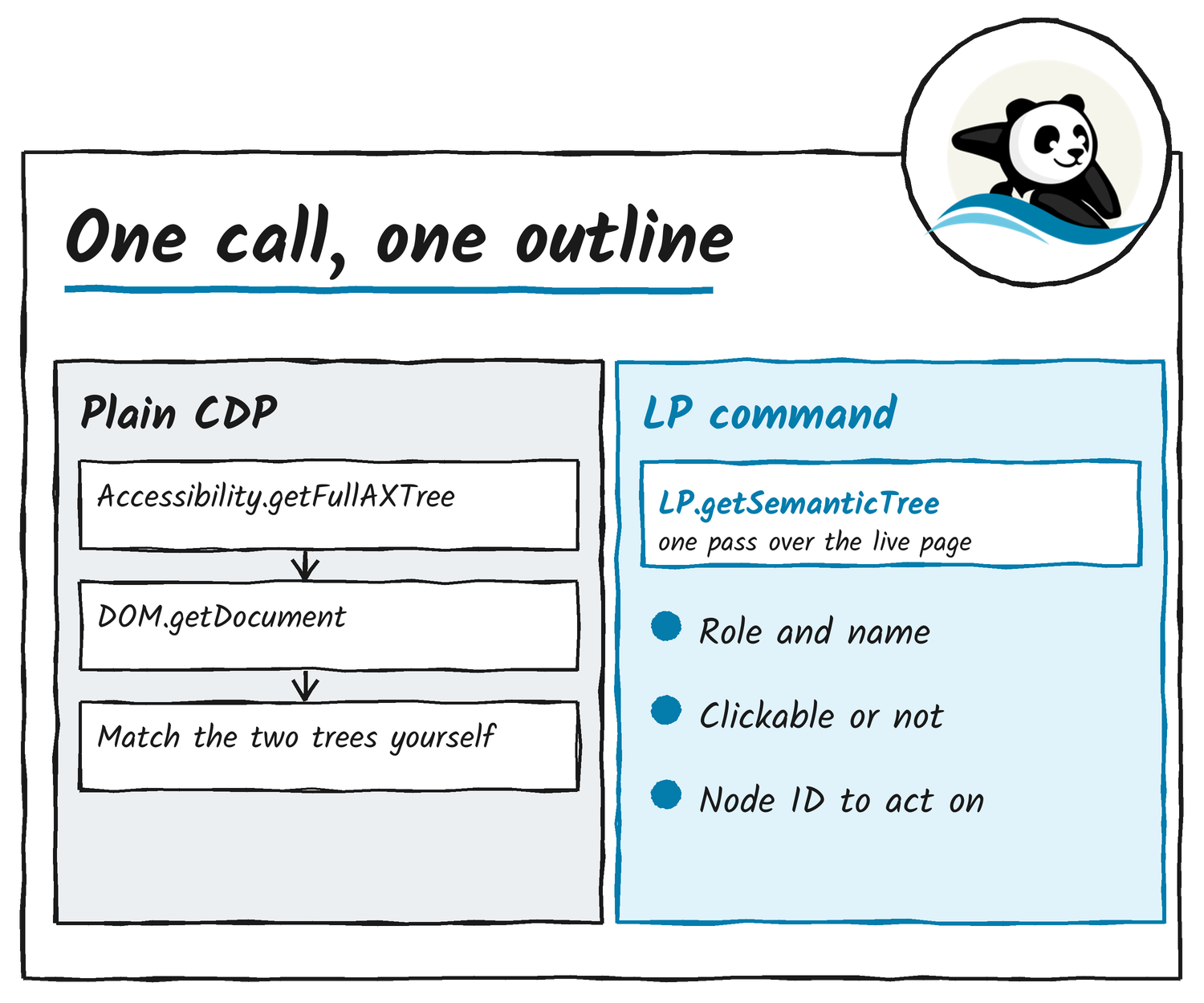
Other tools solve the same problem on top of Chrome. The table shows what each hands the agent, according to each project’s own documentation.
| Tool | Maker | What the agent gets | Runs on |
|---|---|---|---|
| Playwright MCP | Microsoft | An accessibility snapshot with a ref such as e5 on each element. A ref is valid until the page changes. | Chrome, Firefox, WebKit and Edge |
| agent-browser | Vercel Labs | A compact accessibility tree with refs such as @e1, with filters for interactive elements only. | Chrome through CDP, or Lightpanda with --engine lightpanda |
| Stagehand | Browserbase | observe() returns actions with a method and a selector. Each natural-language call uses a model. | Playwright, Puppeteer and Selenium pages |
| LP commands | Lightpanda | A pruned semantic tree with node IDs, computed inside the engine with no model call. | Lightpanda only |
The last row is also the cost. Chrome doesn’t implement the LP domain, so a script that sends LP.getSemanticTree works only when the browser behind the connection is Lightpanda. Hermes Agent, from Nous Research, handles the mixed case by falling back to Chrome for actions Lightpanda doesn’t support, such as screenshots.
Lightpanda’s native MCP server exposes the same engine features as tools, so agents that don’t use CDP get them too. Version 1.0.4, released on 13 November, added a delta: true option to the tree tool that returns only the lines that changed since the last call, which cuts the tokens an agent spends between steps.
Knowing when a page is ready, and behaving politely
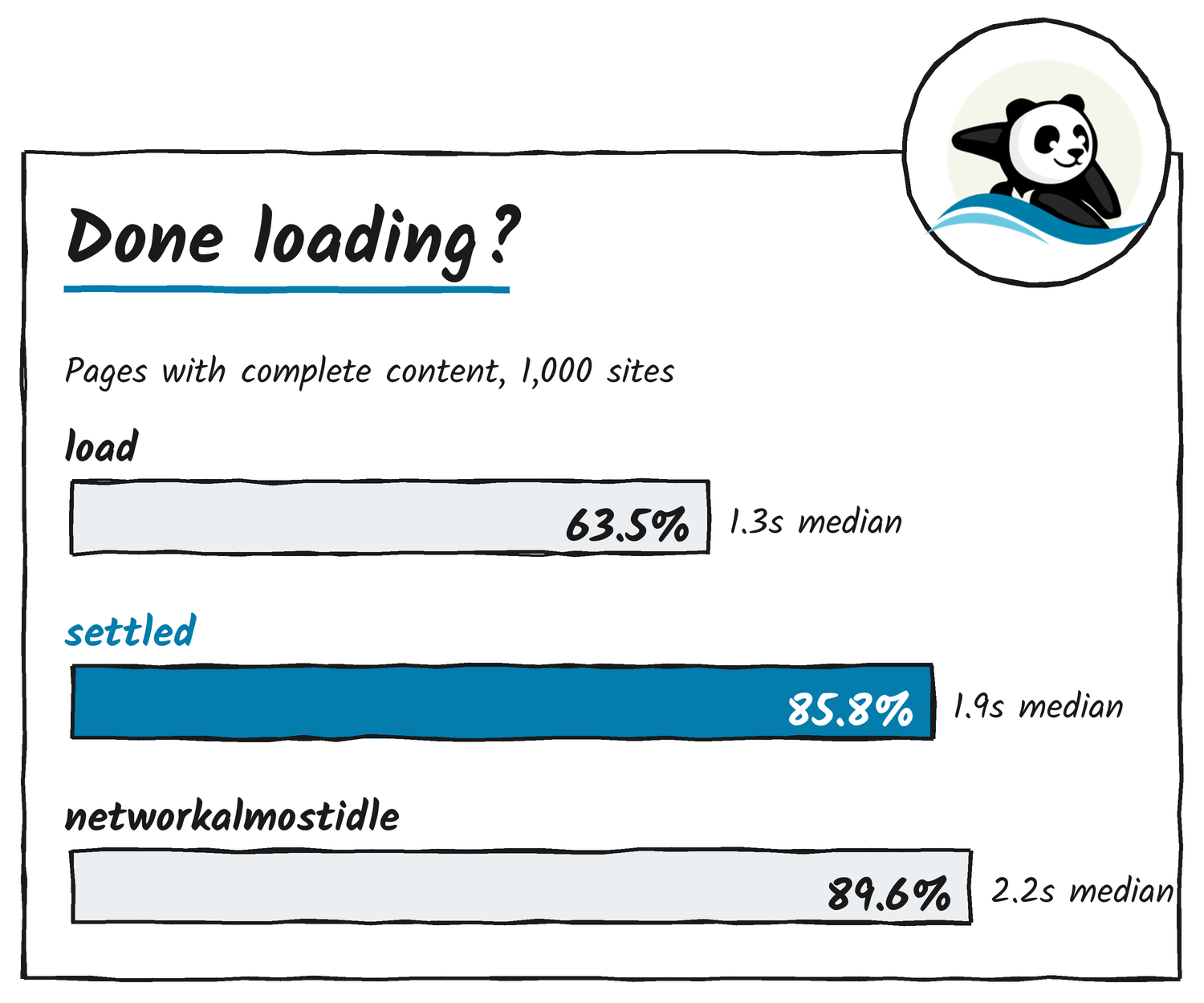
The part of the talk with the most practical weight is page readiness. Lightpanda 1.0.4 added settled, an experimental wait state that LP.waitUntil and --wait-until both accept. Karl Seguin’s 17 November post says it uses an attribution system to decide which network requests and scheduled tasks hold a page up. Requests started from a deeply nested timer, an animation-frame callback or a WebSocket event other than open don’t. Over 1,000 sites, settled returned complete content for 85.8% of pages at a 1.9-second median. load managed 63.5% at 1.3 seconds, and networkalmostidle reached 89.6% at 2.2 seconds.
Two more LP commands work as a pair. LP.getPageStatus tells a blocked or broken page from an empty one, and it records which iframes, workers or images were skipped. Tachoire’s talk uses it as a hint for LP.configureLoading: if a page needs an iframe, retry the site with iframe loading switched on and compare the results. Lightpanda loads none of them by default.
The description also covers Lightpanda’s stance on manners. The browser sends an honest user agent, supports robots.txt and rate-limits per domain. In the talk Tachoire says the rate limit applies to repeated fast navigation on one domain, and that it protects the target site and the user from their own bugs. Navigation across different domains isn’t slowed. LP.getContentSignal only returns data when robots.txt is obeyed, through --obey-robots or LP.configureCDP. Lightpanda added Web Bot Auth support on 20 March, the standard that lets a bot prove its identity cryptographically.
Who builds it, and where the numbers stand
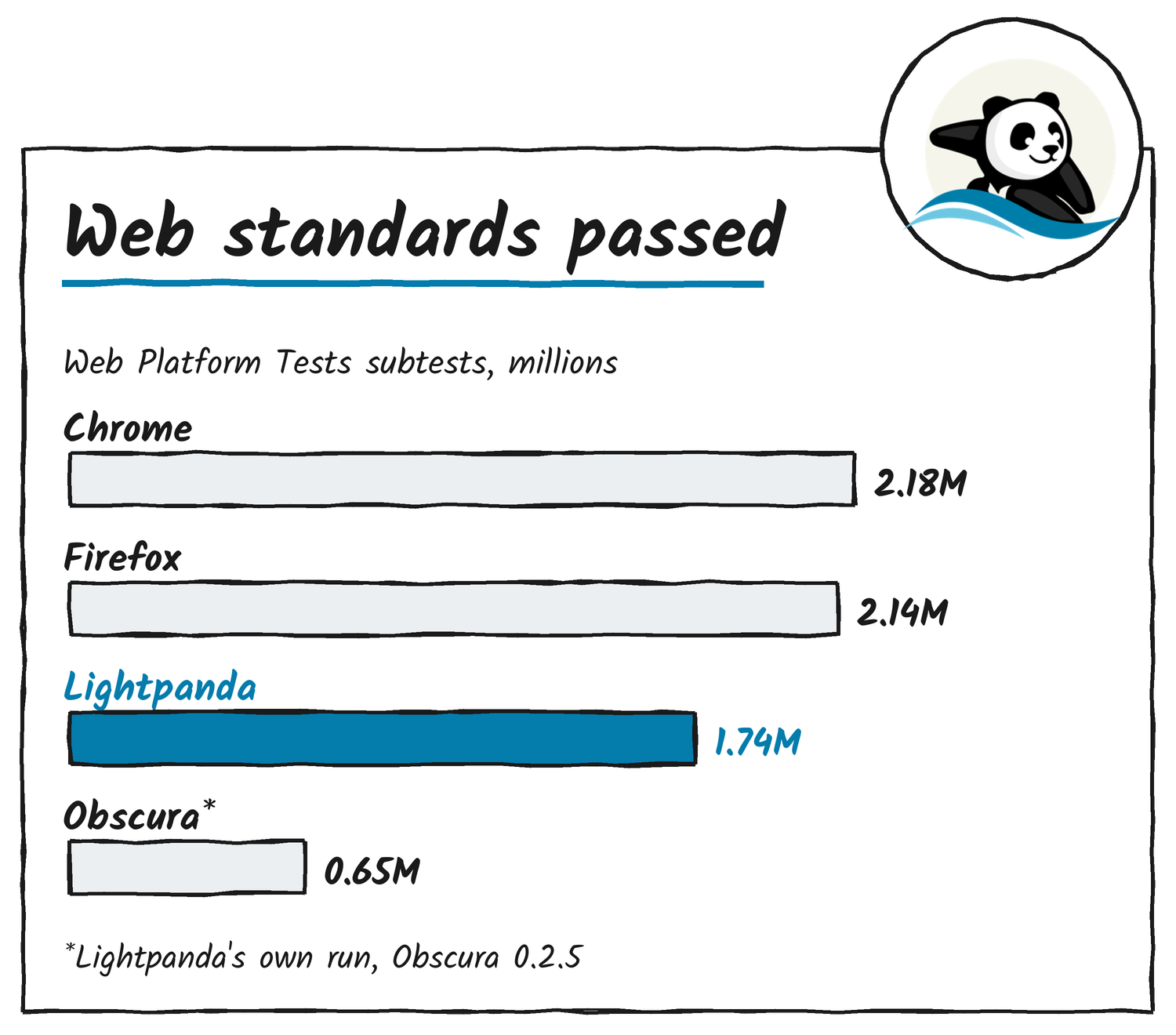
1.74M
Web Platform Tests subtests Lightpanda passes, up from 2,645 in November 2024.
80%
of the 2,184,491 subtests Chrome passes, on Lightpanda’s comparison with wpt.fyi’s September runs.
17
commands in the LP domain, plus one event.
30M+
pages a day at some customers, Lightpanda says.
Lightpanda is based in Paris. Francis Bouvier, its CEO, previously co-founded BlueBoard, an ecommerce analytics company that ChannelAdvisor acquired in 2020. Katie Brown, the COO, led BlueBoard’s commercial team, and Tachoire is the CTO. Bouvier says the idea came from running a fleet of headless Chrome that collected more than 20 million pages a day.
The company announced a pre-seed round on 10 June 2025, led by ISAI. Kima, Factorial Capital and Prototype Capital took part, along with angels including Arthur Mensch of Mistral, Julien Chaumond and Thomas Wolf of Hugging Face, and Stanislas Polu and Gabriel Hubert of Dust. The announcement doesn’t give an amount. The company hasn’t announced a later round.
Rendering these pages is up to 400x more expensive than reading static HTML.
Ilya Bogin, Member of Technical Staff at Keenable, in Lightpanda’s 1.0 post
Bogin’s company builds web search for AI agents and runs Lightpanda for search and indexing. He says more than 35% of Keenable’s answers depend on dynamically rendered sites, and that Lightpanda is 4x faster and 6x more cost-efficient than Chromium. DeveloperHub.io moved its prerender service off headless Chrome. Its CEO, Zaid Daba’een, says pages now serve 4x faster and load average fell 10x. Both accounts come from Lightpanda’s own post.
| Date | What happened | Source |
|---|---|---|
| Feb 2023 | The browser repository is created | GitHub |
| Nov 2024 | Beta release, passing 2,645 WPT subtests | Lightpanda |
| 10 Jun 2025 | Pre-seed round led by ISAI | Lightpanda |
| 5 Mar 2026 | LP.getMarkdown and native Markdown output | Lightpanda |
| 11 Mar 2026 | LP.getSemanticTree, getInteractiveElements and getStructuredData, plus a native MCP server | Lightpanda |
| 8 May 2026 | Hermes Agent adds Lightpanda as a browser backend | Lightpanda |
| 17 Jun 2026 | Built-in agent and PandaScript | Lightpanda |
| 2 Oct 2026 | Version 1.0: 1,739,845 WPT subtests, CORS on by default | Lightpanda |
| 6 Oct 2026 | WebDriver support, which lets Selenium scripts run on it | Lightpanda |
| 10 Nov 2026 | Jev model from TypeSafe added for page decisions | Lightpanda |
| 13 Nov 2026 | Version 1.0.4: multi-page CDP connections, settled | GitHub |
| 20 Nov 2026 | Tachoire’s Extract Summit talk posted | YouTube |
| 24 Nov 2026 | X post on the LP commands | X |
The Jev work shows where LP commands are heading. Lightpanda 1.0.3 asks TypeSafe’s Jev model questions about pages it opens, and Lightpanda says each answer takes about 200 ms. In its test, signing in to a page took 0.34 seconds against 5.0 seconds with Claude Haiku 5.5. That’s Lightpanda’s test on one login page, not an independent benchmark.
How it compares with the other engines
The closest comparison is another from-scratch browser. On 19 October Lightpanda published a benchmark of itself against Obscura, Moli and Kitesurf. All four speak CDP, so Playwright and Puppeteer work with each by changing the endpoint. The figures below are Lightpanda’s own.
Lightpanda is the only one of the four that speaks CDP, WebDriver and MCP natively. Obscura reports a higher Web Platform Tests share than Lightpanda measured, but only over a subset of the suite.1
| Lightpanda | Obscura | Moli | Kitesurf | |
|---|---|---|---|---|
| Language | Zig | Rust | Rust | Rust, compiled to WebAssembly |
| Licence | AGPL-3.0 | Apache-2.0 | Apache-2.0 or MIT | Closed source |
| Protocols | CDP, WebDriver, MCP | CDP, MCP | CDP, WebDriver | CDP |
| Crawl of 940 pages, 25 tabs | 4.5 s | 11.5 s | 17.4 s | Not run |
| Peak memory at 25 tabs | 109 MB | 201 MB | 230 MB | Not run |
| WPT subtests passed | 1.76 million (80%) | 652,000 (30%) | No complete run | Not reproduced |
| Where it runs | Local or cloud | Local | Local or cloud | Cloudflare only |
Against headless Chrome, the README’s crawl on an AWS EC2 m5.large instance shows 123 MB of peak memory against 2 GB and 5 seconds against 46 seconds for 100 pages. Cloudflare’s own Kitesurf figures, as Lightpanda summarises them, are 37 MB of memory and 411 ms of CPU against 266 MB and 1.33 seconds for its Chrome-based Browser Run. A Kitesurf page takes 967 ms against 884 ms, so it’s lighter than Chrome and not faster.
The managed-browser market is a different purchase. Those vendors rent Chrome by the hour and charge for proxy traffic and extras on top.
| Service | Entry price | Browser time after included hours |
|---|---|---|
| Cloudflare Browser Run | US$5 a month Workers Paid minimum | US$0.09 an hour after 10 hours, plus US$2 per concurrent browser above 10 |
| Browserbase | US$20 a month Developer | US$0.12 an hour after 100 hours |
| Steel | US$0 plus usage on Launch | US$0.10 an hour, US$0.08 on Scale |
| Hyperbrowser | US$30 a month Startup | US$0.10 an hour |
| Anchor | US$50 a month Starter | US$0.05 an hour plus US$0.01 per browser created |
Startupik’s October comparison argues the hourly rate matters least. On a workload of 100,000 agent tasks a month, it says residential proxy traffic is 93% to 99% of the invoice at every vendor that sells it. An engine that trims memory cuts the hourly bill, and the proxy line stays where it was.
What it doesn’t do
- Lightpanda has no graphical rendering pipeline, so it takes no screenshots.
--dump pngand--dump pdfrender the page’s Markdown. - It passes about 80% of Chrome’s Web Platform Tests subtests. Lightpanda says more than half of the gap is in the CSS, editing and SVG suites, which test layout and painting.
LP.getPageStatusreports calls into WebGL and canvas 2D as unsupported.confirmreturns false andpromptreturns null immediately, where Chrome pauses the page until the client answers.LP.handleJavaScriptDialoghas to be sent before the dialog opens.- The LP commands work only on Lightpanda, and
settledis marked experimental in 1.0.4. - The licence is AGPL-3.0. Lightpanda’s own table lists Obscura as Apache-2.0 and Moli as Apache-2.0 or MIT.
- Every figure in the peer table comes from Lightpanda. Obscura, Moli and Cloudflare haven’t published a response in the sources Lightpanda cites.
Lightpanda’s X post names two commands and gives no roadmap. The March post says Lightpanda is “continuing to add commands”, and a maintainer said on 5 November that the project plans weekly releases.
Try it
The commands below come from Lightpanda’s install page and Playwright guide. After connectOverCDP, open a CDP session on the page and send any LP command by name.
Check it yourself
Install Lightpanda, start the CDP server, then connect Playwright to it.
curl -fsSL pkg.lightpanda.io/install.sh | bash
lightpanda serve --host 127.0.0.1 --port 9222

import { chromium } from 'playwright-core';
const browser = await chromium.connectOverCDP('ws://127.0.0.1:9222');- CDP
- The Chrome DevTools Protocol, the WebSocket interface Playwright, Puppeteer and chromedp use to control a browser.
- backendNodeId
- The number CDP gives a DOM node, which LP commands use to click, fill or describe it.
- Semantic tree
- A trimmed outline of a page listing roles, names and what’s interactive, without layout wrappers.
- WPT
- Web Platform Tests, the shared suite browser makers use to check standards support.
Sources: Lightpanda on X, LP domain reference, Playwright guide, Extract Summit talk, Lightpanda 1.0, 1.0.4 release notes, waitUntil settled, engine benchmark, Jev integration, pre-seed announcement, Playwright MCP snapshots, agent-browser snapshots, Stagehand observe, Cloudflare Browser Run pricing, AC0.AI, Startupik.
- Obscura reports 67.6% on a subset of 893,328 of the 2.2 million subtests. Lightpanda’s run of the full suite on its own infrastructure gives 30%. Cloudflare’s Kitesurf figure covers 11,765 of 38,772 test files. Source: Lightpanda’s 19 October benchmark post. ↩︎
Discover more from Sulat AI & Tech News
Subscribe to get the latest posts sent to your email.