NAB expects Australia’s unemployment rate to reach around 5.5% by early 2028, up from 4.7% in September and above the Reserve Bank of Australia’s forecast of 5.1% by the end of 2028, according to the economic outlook in its 2026 full-year results released on 4 November.
NAB’s economists tie the rise to a multi-year stretch of below-trend growth after 125 basis points of RBA rate increases since February. The same outlook has GDP growth slowing to 1.4% in 2026 and 1.0% in 2027, and the cash rate staying at 4.85% “for a while”.
What NAB changed since September
In its 17 September Australian Forward View, NAB forecast unemployment of around 4.8% by the end of 2027, peaking at 5% by the end of 2028, with GDP growth of 1.6% in 2027. The November outlook lifts the jobless path and cuts 2027 growth to 1.0%.
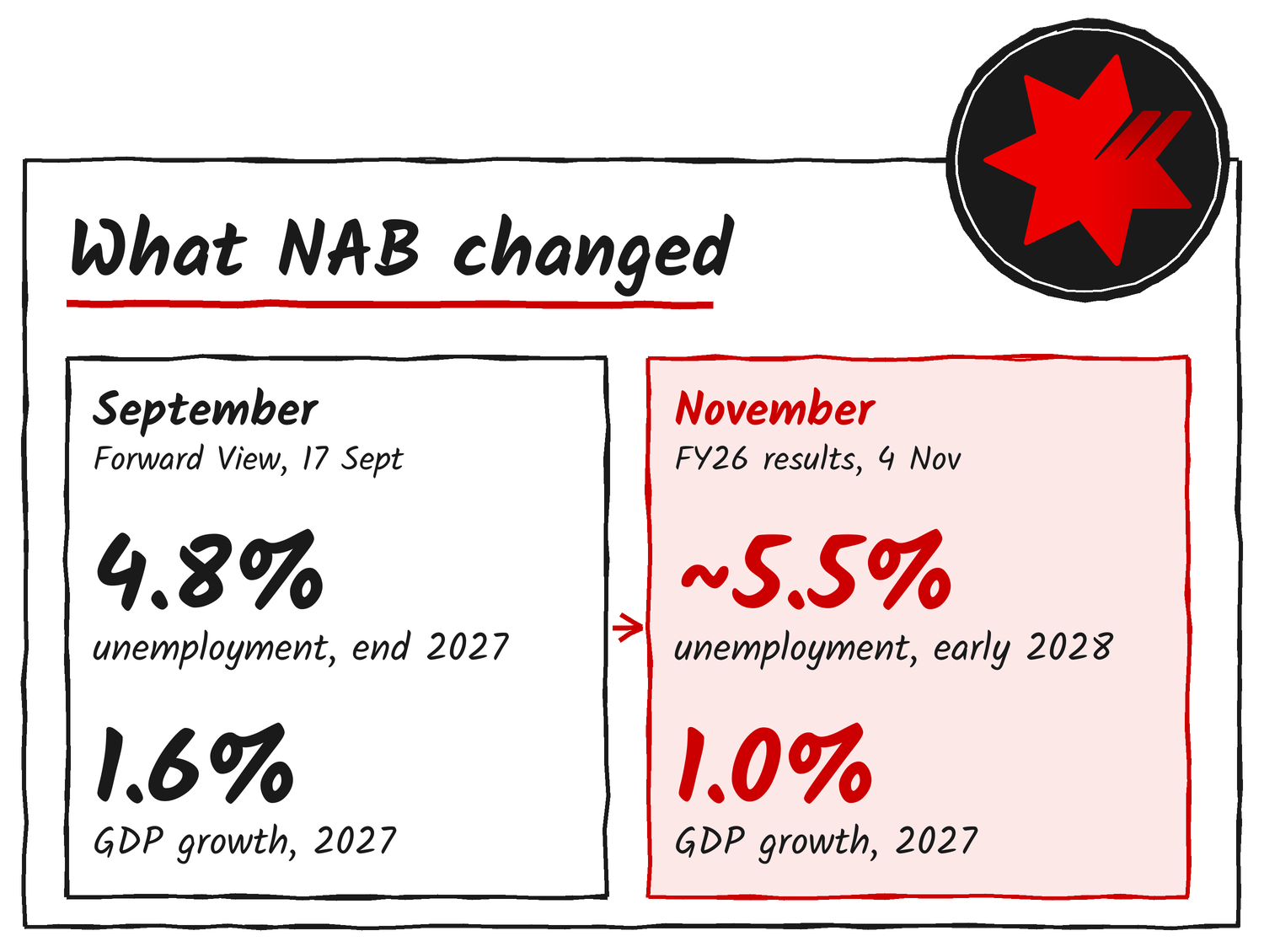
Gareth Spence, NAB’s head of Australian economics, told The Guardian on 2 November that “unemployment might need to rise higher than we thought” to bring inflation under control, and forecast a rate as high as 5.4% by the end of 2027. The results outlook two days later gave around 5.5% by early 2028.
Where the forecasts sit
The RBA’s November Statement on Monetary Policy has unemployment rising to 5.1% by the end of 2028. The Commonwealth Bank forecasts a peak of 5.1% over the same timeframe as NAB, The Guardian reports.
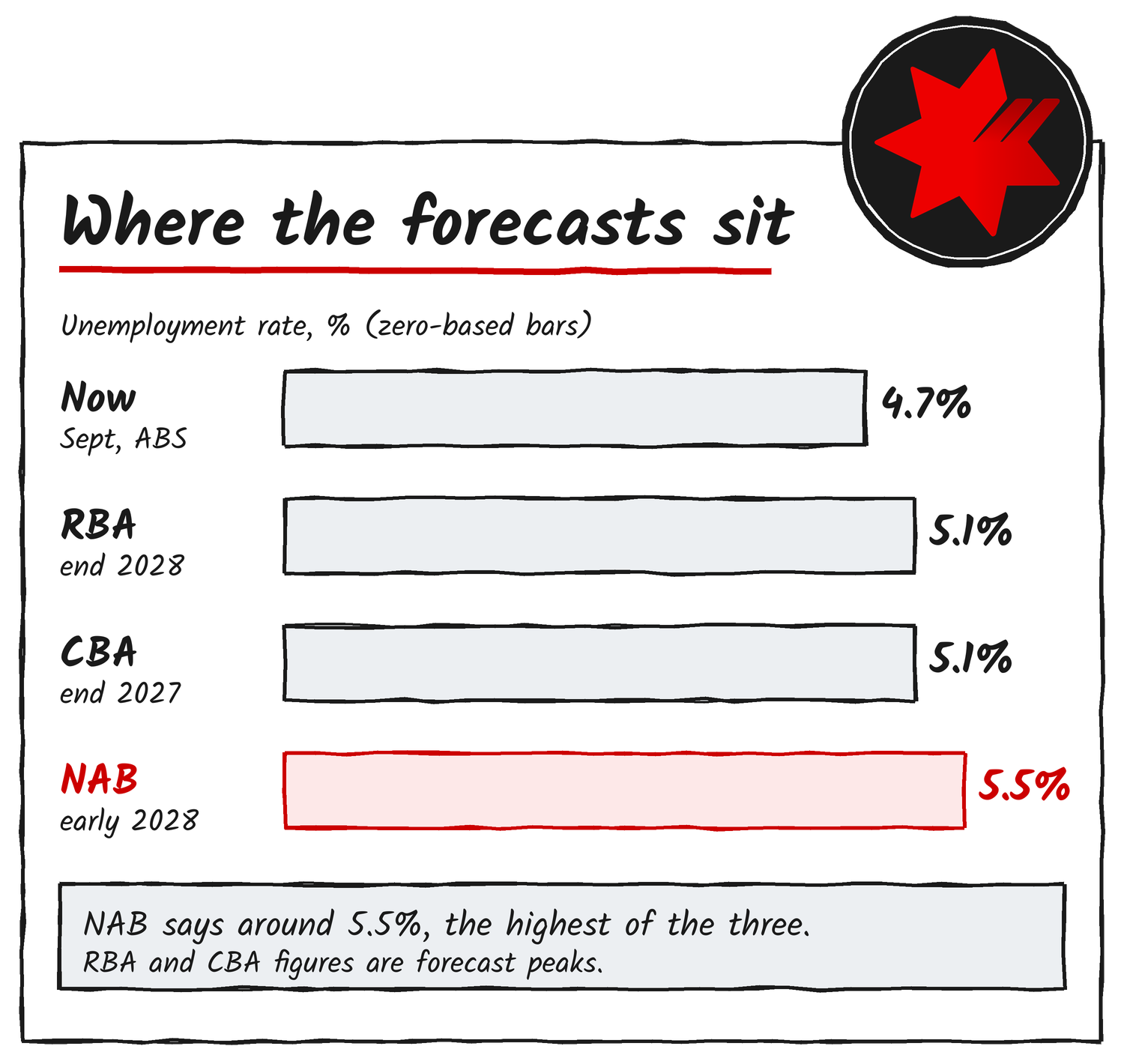
NAB economist Josh Copeland said this month that NAB expects more softening in the labour market than the RBA does, and an ongoing upward trend in the unemployment rate, AAP reports. The rate rose to 4.7% in September, a near five-year high, as employment fell 39,300, Judo Bank notes in its summary of the Australian Bureau of Statistics release.
The job cuts around the forecast
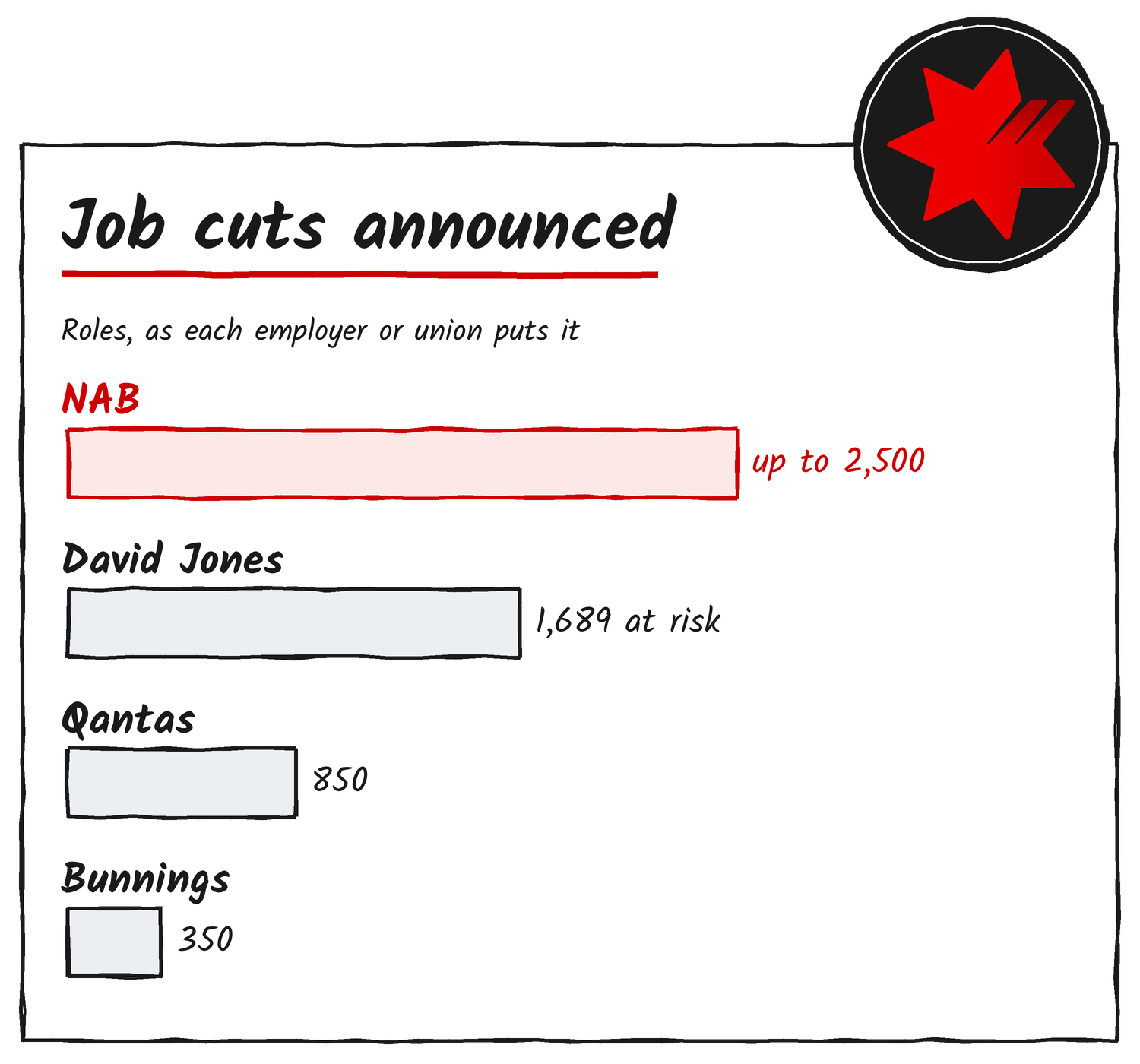
NAB is cutting up to 2,500 jobs itself, about 6% of its workforce, by mid-2027, ABC News reports. Chief executive Andrew Irvine said customer-facing roles wouldn’t be materially affected, and up to 1,500 of the cuts fall by the end of the year.
Other employers have announced cuts in recent weeks. Qantas is cutting 850 corporate jobs as it moves roles overseas in an Accenture deal. Bunnings said on 17 November that a technology partnership with Tata Consultancy Services ends about 230 permanent technology positions and about 120 contractor engagements.
The Shop, Distributive and Allied Employees Association says 1,689 directly employed David Jones workers are at risk in the 19 stores set to close, with only 170 redeployment offers, HRD Australia reports. The receivers, FTI Consulting, haven’t confirmed the union’s figure. David Jones’ only New Zealand store, at Newmarket in Auckland, is on the closure list.
What the numbers don’t show
The announced cuts don’t add up to the forecast. AMP chief economist Shane Oliver told The Nightly the economy is still adding about 15,000 jobs a month on average, and that he doesn’t think AI has had a big effect on jobs so far. He said weak sales and higher interest rates often sit behind corporate cuts, and that the unemployment rate could easily go above 5% if growth slows to 1% by the middle of next year.
NAB’s results summary has New Zealand moving the other way. It puts the New Zealand unemployment rate at 5.7% now and forecasts a modest fall as GDP growth lifts to 2.1% in 2026 and 2.8% in 2027.
The Australian Bureau of Statistics releases October labour force figures on Thursday 19 November. NAB expects the rate to hold at 4.7% with employment up about 20,000, BNZ’s Markets Outlook says.
Discover more from Sulat AI & Tech News
Subscribe to get the latest posts sent to your email.