The CIA and the Office of the Director of National Intelligence (ODNI) have discovered a breach of an open-source intelligence analysis system, The New York Times reported at 2:30pm ET on 24 November, which was 8:30am on 25 November in New Zealand. The intruders reached unclassified information. Classified material wasn’t jeopardised, according to the Times’ sources.
Dustin Volz and Julian Barnes wrote the story, with Tyler Pager contributing. It rests on US officials and other people familiar with the matter, none of them named. Two of those people said information at other agencies is also believed to have been exposed. The Times also reported that several agencies have detected intrusions recently, which has raised concern across government.
2
agencies named as having found the breach, the CIA and ODNI
2
sources who say other agencies’ information was also exposed
4
unclassified US systems reported breached since July 2025
What’s reported and what isn’t
- Reported: the CIA and ODNI found a breach of an open-source intelligence analysis system, a network that looks for insights in public, unclassified material.
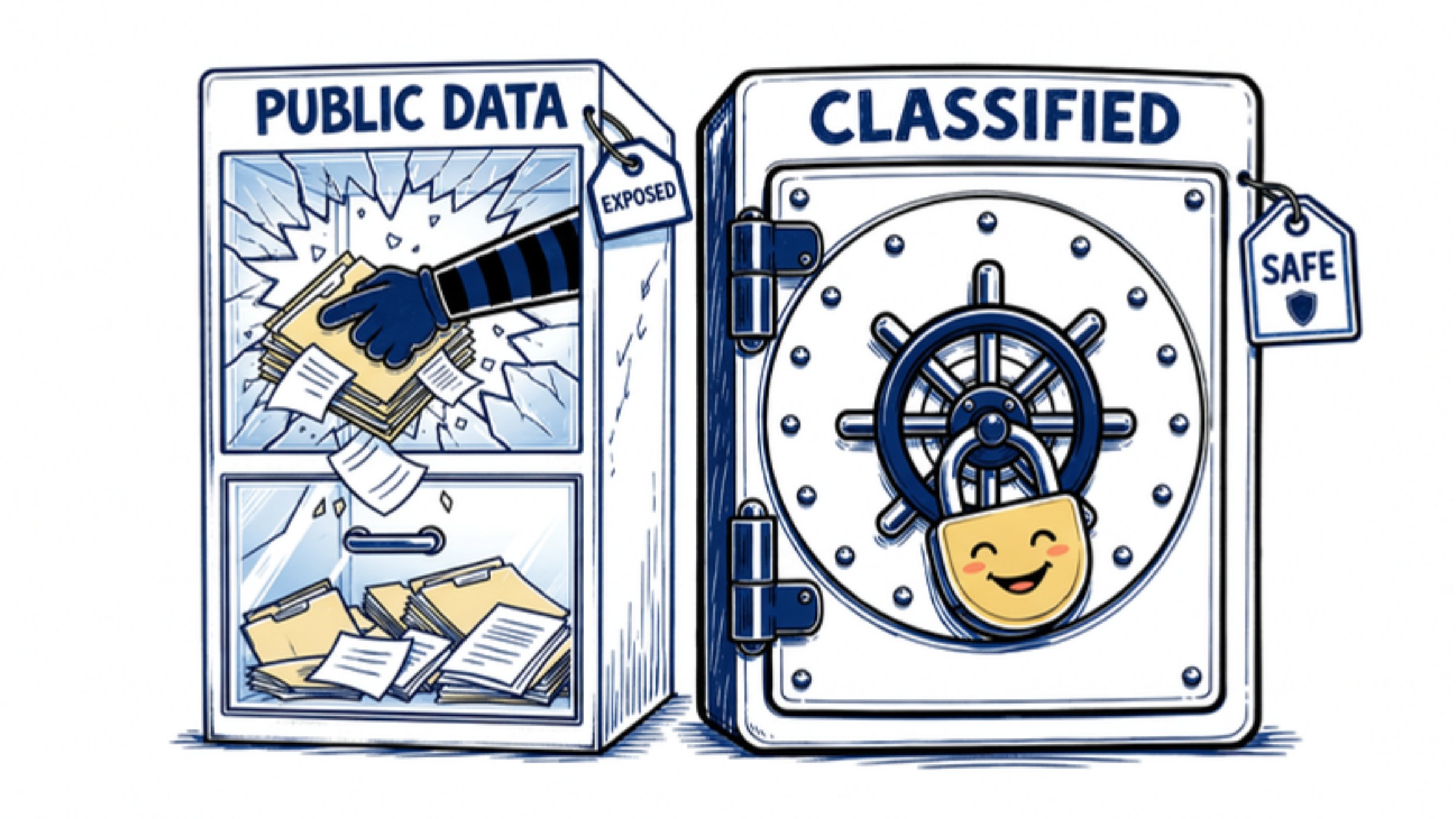
- Reported: unclassified information was exposed, and classified material wasn’t jeopardised.
- Reported: information at other agencies is also believed exposed, according to two of the Times’ sources.
- Not reported: what was taken, who did it, when it started, how they got in, or which other agencies are affected.
- Not on the record: we found no CIA or ODNI statement at publication, and every source in the Times report is anonymous.
Why “unclassified” isn’t the same as harmless
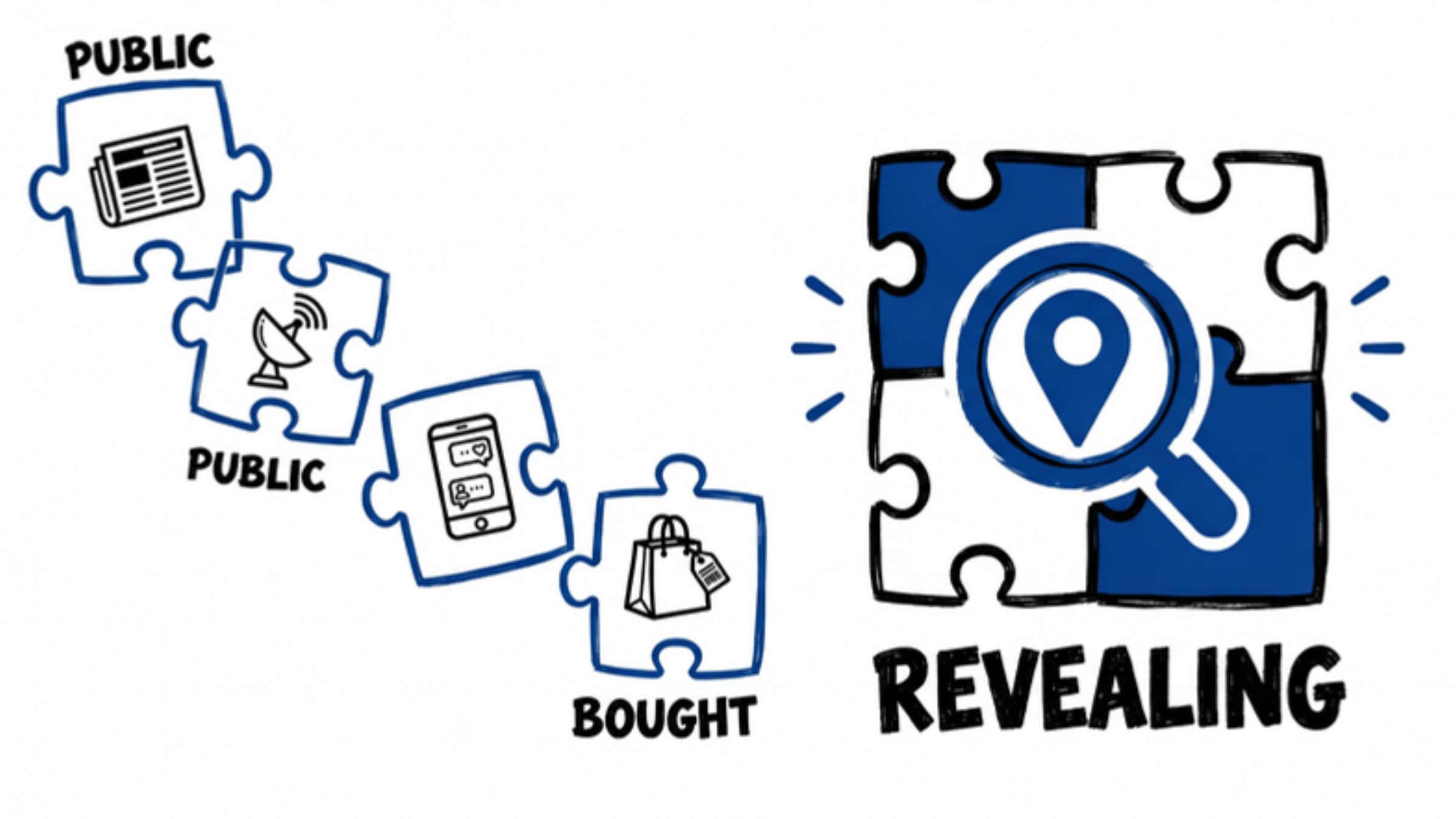
Open-source intelligence, or OSINT, is analysis built on information anyone can legally obtain. The Times says it can include commercially available data sets, social media content, satellite imagery and other online material, and that it can be highly revealing when the pieces are combined.
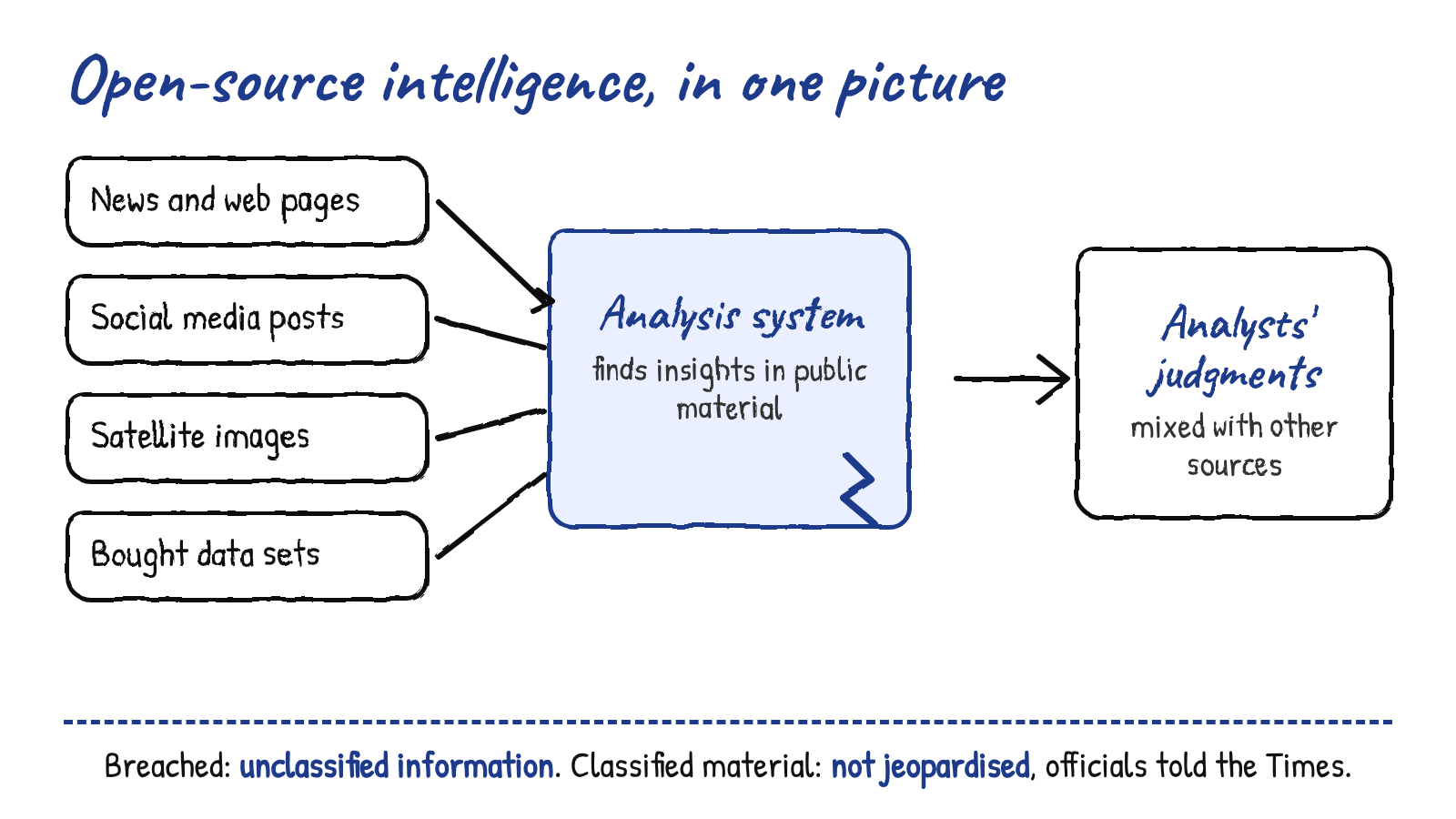
That’s why “unclassified” shouldn’t be read as “harmless”. The inputs may be public, but the system around them holds the analysis: what analysts collected, how they linked it and what they went looking for. An intruder in that system could learn which questions the agencies were asking. That’s our inference. The Times doesn’t say what was exposed.
The CIA sits at the centre of this work. Its Open Source Enterprise is the intelligence community’s OSINT functional manager, and ODNI’s 2024 to 2026 OSINT strategy sets the community-wide direction. A system serving both agencies, and others, would fit that structure, though the Times doesn’t name the system or say who runs it.
Bought data adds a second layer. ODNI’s 2022 review of commercially available information, declassified in June 2023, and the community’s May 2024 policy framework for handling it both treat purchased data as sensitive enough to need its own rules. If any of that sits in the breached system, the exposure could be larger than the word “unclassified” suggests. Nothing reported says it does.
A run of breaches at US security agencies
The Times’ report lands on a run of incidents. Each of the four systems in the graphic below was described as unclassified when it was disclosed. That’s what the public record supports. It isn’t a claim that one actor is behind them all.
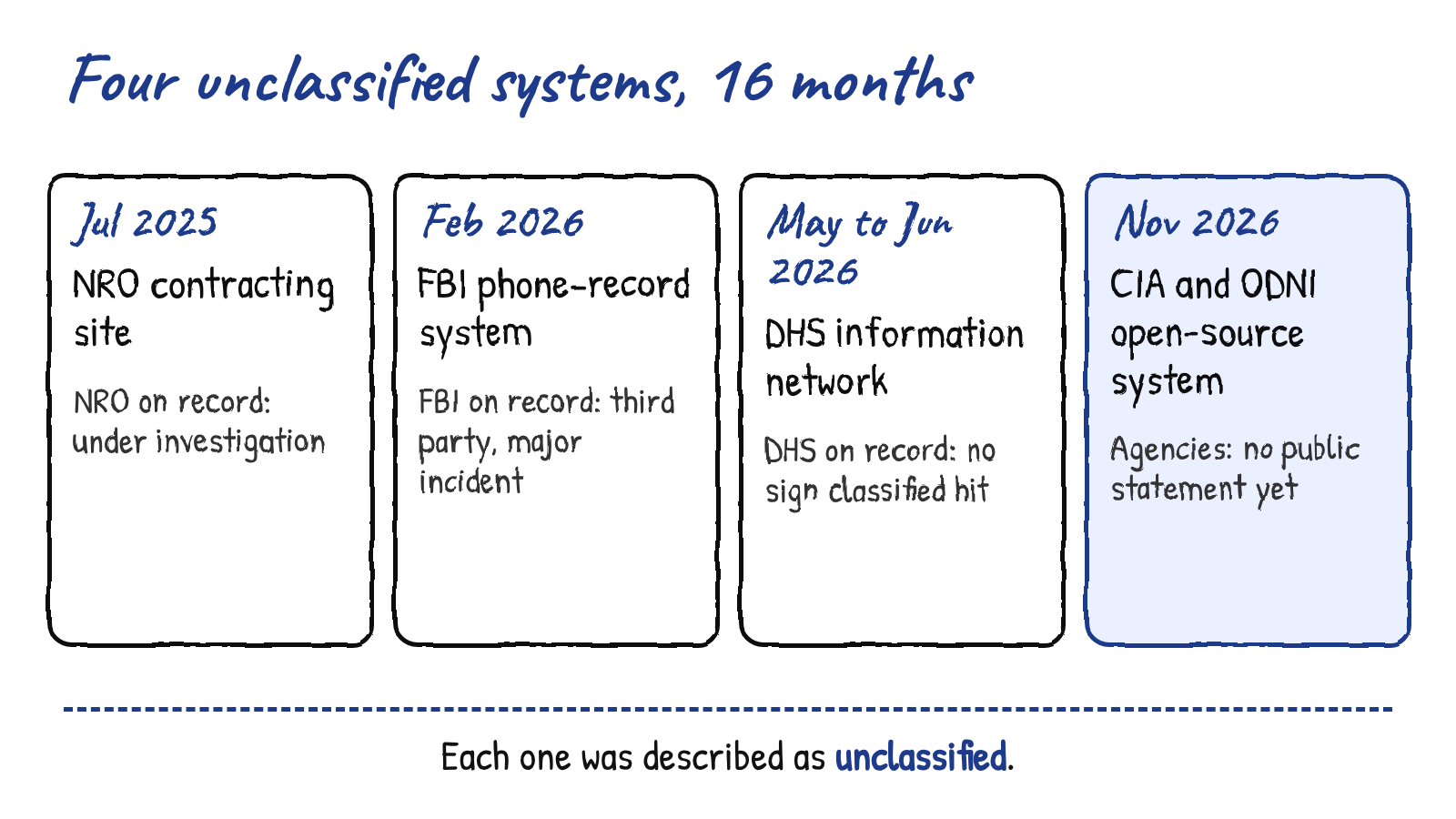
| System and date | What was said | Source |
|---|---|---|
| NRO Acquisition Research Center site, July 2025 | An NRO spokesman made a statement on the incident, and the CIA deferred to the NRO. | Washington Times |
| FBI phone-record (pen-register) system, found 17 February 2026 | Unclassified system, accessed through a third party, handled as a major incident. Surveillance targets’ phone numbers were exposed, and the breach was suspected to be China-linked. | Nextgov, 3 April 2026 |
| DHS HSIN information-sharing network, late May to early June 2026 | DHS called it a “specific, unclassified legacy information sharing environment” and said there was no indication classified networks were hit. | Nextgov, TechRepublic |
| NSANet outage, 17 November 2026 (an outage, not a reported breach) | The DNI tied it to PHP patching. The NSA cites routine maintenance. | Our report |
| FBI NCIC database, 20 November 2026 | CNN reported the FBI is investigating an apparent breach. | Our report |
| CIA and ODNI open-source system, 24 November 2026 | Reported by anonymous sources. We found no public statement from either agency. | The New York Times |
What the DNI said before the report
Jay Clayton, the DNI, told ABC’s This Week on 22 November that the week’s outages were “not coordinated” and “not state-sponsored”. He declined to say who was behind the FBI breach. He said that before the Times report, and ODNI is the office he leads, so his comments now sit next to a breach at his own agency. We haven’t seen him address it.
- John Ratcliffe has run the CIA since January 2025.
- Clayton is the DNI. Tulsi Gabbard left the role in June 2026.
- Clayton is also acting national cyber director after Sean Cairncross was fired on 19 November. Davies has been nominated to the post.
Our earlier reports cover the outages and the FBI database case this week:
The CIA has been here before
WikiLeaks published the agency’s hacking tools as Vault 7 in 2017. A CIA internal report that Senator Ron Wyden released in June 2020 found security failures at the agency led to the leak. That was classified material and this breach reportedly isn’t, so the damage isn’t comparable. The relevant point is that an agency review, not an outsider, put the failures on the record last time. Whether anything similar surfaces here is unknown.
Open questions to watch
- Do the CIA or ODNI confirm the breach on the record, and do they name the system?
- Which other agencies were exposed, and was it the same system or a shared platform?
- Was any commercially available data in the system, and whose?
- Does Clayton address the breach after his “not coordinated” remarks?
Terms used here
- OSINT
- Open-source intelligence: analysis of publicly available information.
- ODNI
- The Office of the Director of National Intelligence, which oversees the US intelligence community.
- Commercially available information
- Data the government can buy, such as data-broker datasets, rather than collect itself.
- Unclassified
- Not marked as national security information. It can still be sensitive.
Sources
We could read only the opening of the Times report and public excerpts, because the full article is paywalled. This piece reports what those show and adds background from the sources below.
- The New York Times, 24 November 2026
- ODNI, IC OSINT Strategy 2024 to 2026
- CIA, Directorate of Digital Innovation
- Nextgov on the DHS network breach
- The Hill on the CIA’s Vault 7 report
Discover more from Sulat AI & Tech News
Subscribe to get the latest posts sent to your email.