
Troy Hunt has told subscribers to the Have I Been Pwned (HIBP) API that a Microsoft Azure security incident could have exposed their API keys. HIBP couldn’t confirm whether its keys were hit. It concluded that it was possible, and it left the decision to rotate a key to each subscriber rather than forcing it.
The email is dated 25 November and went to subscribers with an active key. It names Microsoft’s incident tracking ID, MZK9-GH0, which covers a flaw in Azure API Management (APIM) Classic tiers. HIBP uses APIM to manage the subscriber keys that people send when they query its public API. I couldn’t find a public post from HIBP or Hunt on the same subject, so this article works from the email, as shown in a screenshot posted on X, and from Microsoft’s own account of the incident.
- What the notice says
- What Microsoft says happened
- Why an HIBP key is in scope
- Rotate or wait
- The wider picture
- What nobody has said
What the notice says
The email is titled “A heads-up about your HIBP API key and a recent Microsoft Azure security issue”. It opens with Microsoft’s warning, which Hunt says “could have” let an unauthorised party reach stored API keys, and explains why HIBP is writing: “We use APIM to manage our subscriber keys which are used when querying the public API, which is why I’m contacting you now.”
We’ve been reviewing the details provided by Microsoft and have been unable to confirm whether HIBP keys were impacted, but have concluded that it’s possible. I know that’s vague, but we just don’t have any more info to tie it down further than that.
Troy Hunt, HIBP notice to API key holders, 25 November 2026
Hunt adds that HIBP hasn’t had “any reports from customers about unexpected use of their keys, but that’s absence of evidence rather than evidence of absence.” The notice then sets out the choice. HIBP decided to send the message and “let you make the call on rotating it rather than forcing it and breaking things”. Hunt says the impact of both rotation and a compromised key “are specific to the subscriber; the risk is different if you’re just querying addresses versus having monitored domains, for example.”
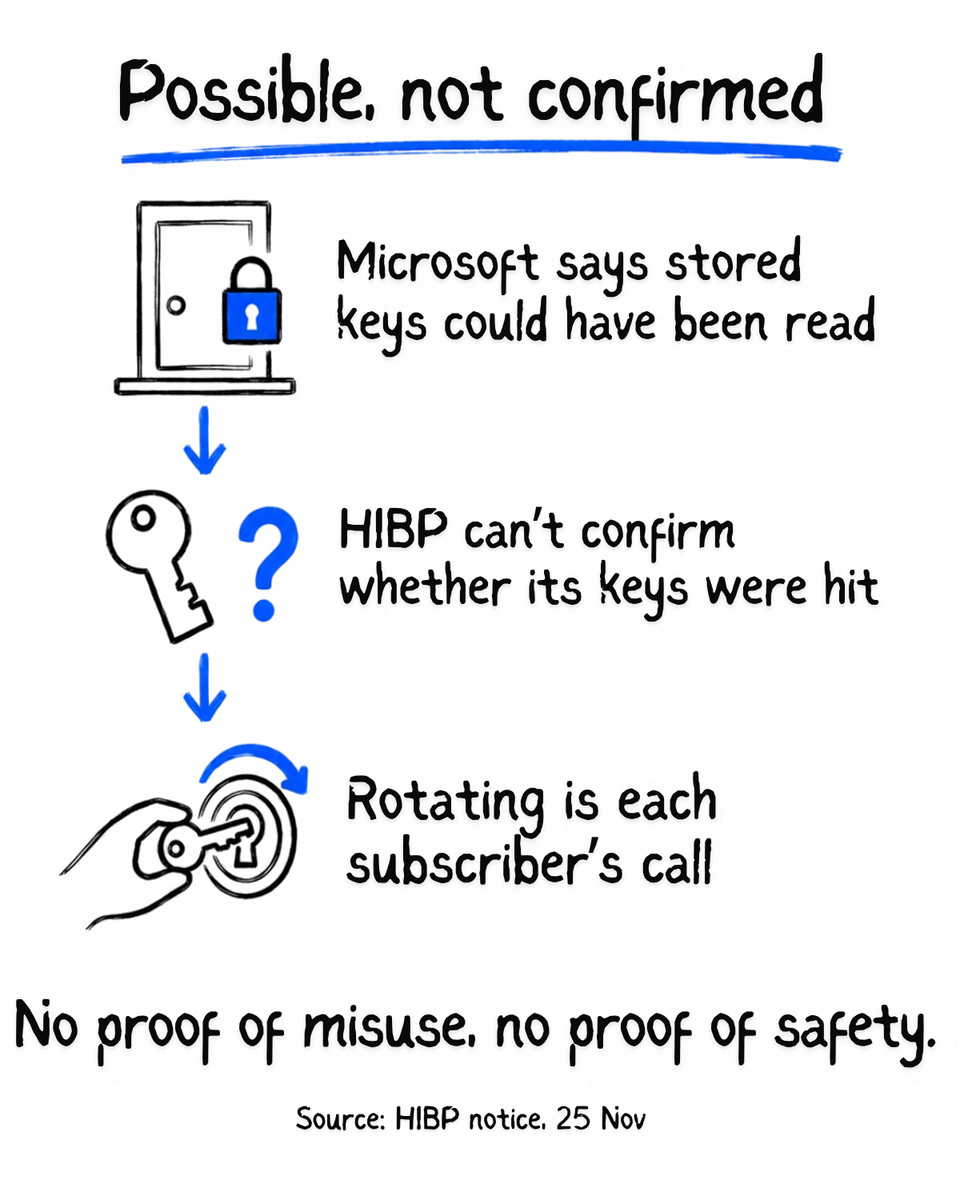
The mechanics are short. A subscriber can change their key in the HIBP dashboard. Hunt says “that will invalidate the old key so make sure you’re in a good position to quickly update any references to it if need be”, and that changing the key “has no impact on your subscription in any other way.”
What Microsoft says happened
Microsoft’s advisory went to Azure customers and was shared with BleepingComputer, which reported it on 23 November. Microsoft says it identified the flaw on 18 November and closed the unauthorised access path the next day. It says an unauthorised party “could have used the issue to access secrets stored in Azure API Management Classic instances before Microsoft identified the security issue”.
Only some instances were in scope. Microsoft told BleepingComputer the Developer, Basic, Standard and Premium tiers of APIM Classic were affected, while the Classic Consumption tier and all APIM v2 tiers were not. It also said the access depended on instances not following its recommended security configuration. The advisory lists five kinds of data that may have been exposed.
| What may have been exposed | Why it matters |
|---|---|
| Secrets stored in named values | Hold connection strings and credentials that policies use to call other services |
| Identity provider client secrets | Used to connect the service to an identity provider for sign-in |
| OpenID Connect provider client secrets | The same, for OpenID Connect providers |
| Subscription keys | The keys callers send to use a published API, which is what HIBP subscribers hold |
| Tokens for direct management APIs | Allow administrative calls against the service |
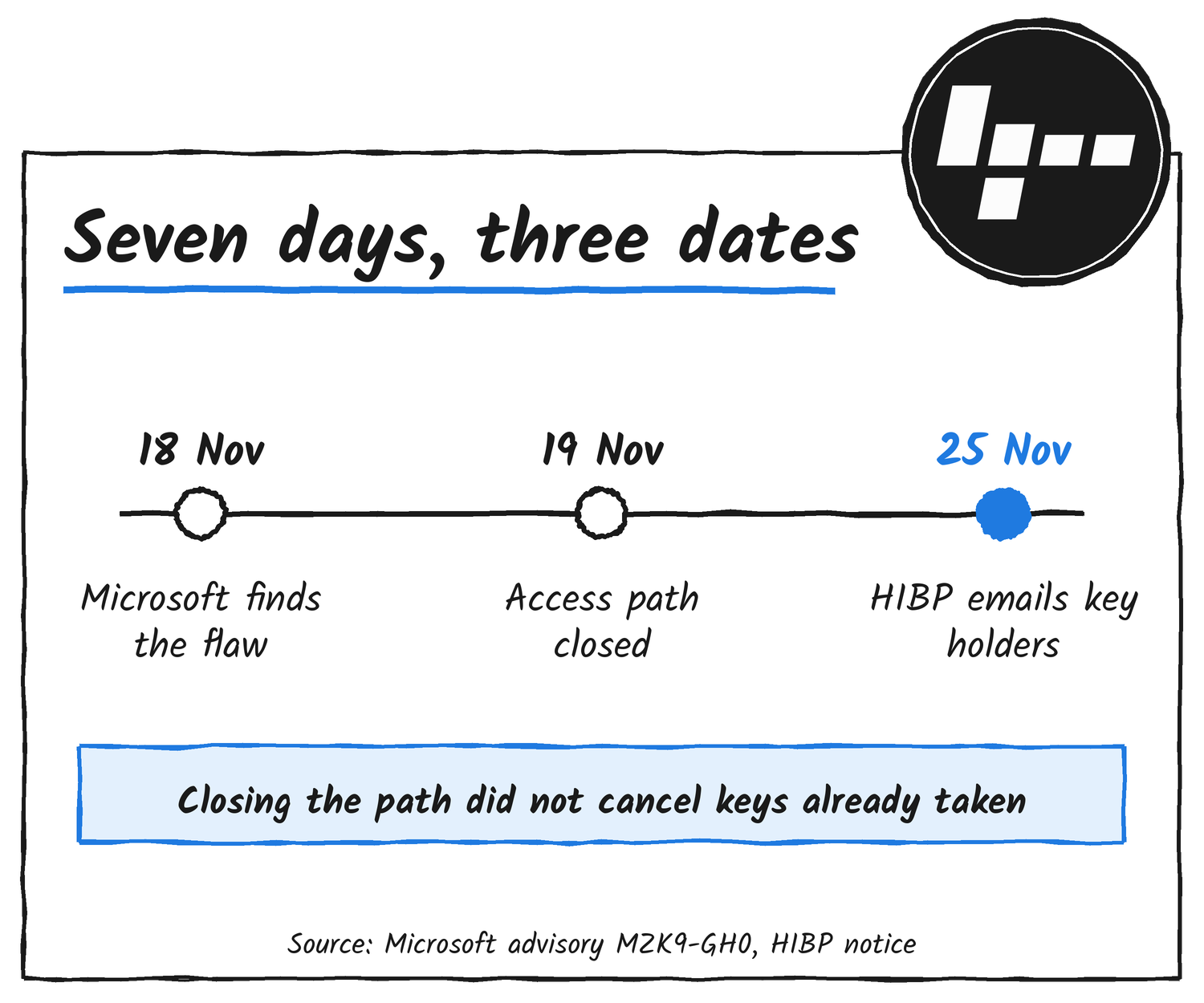
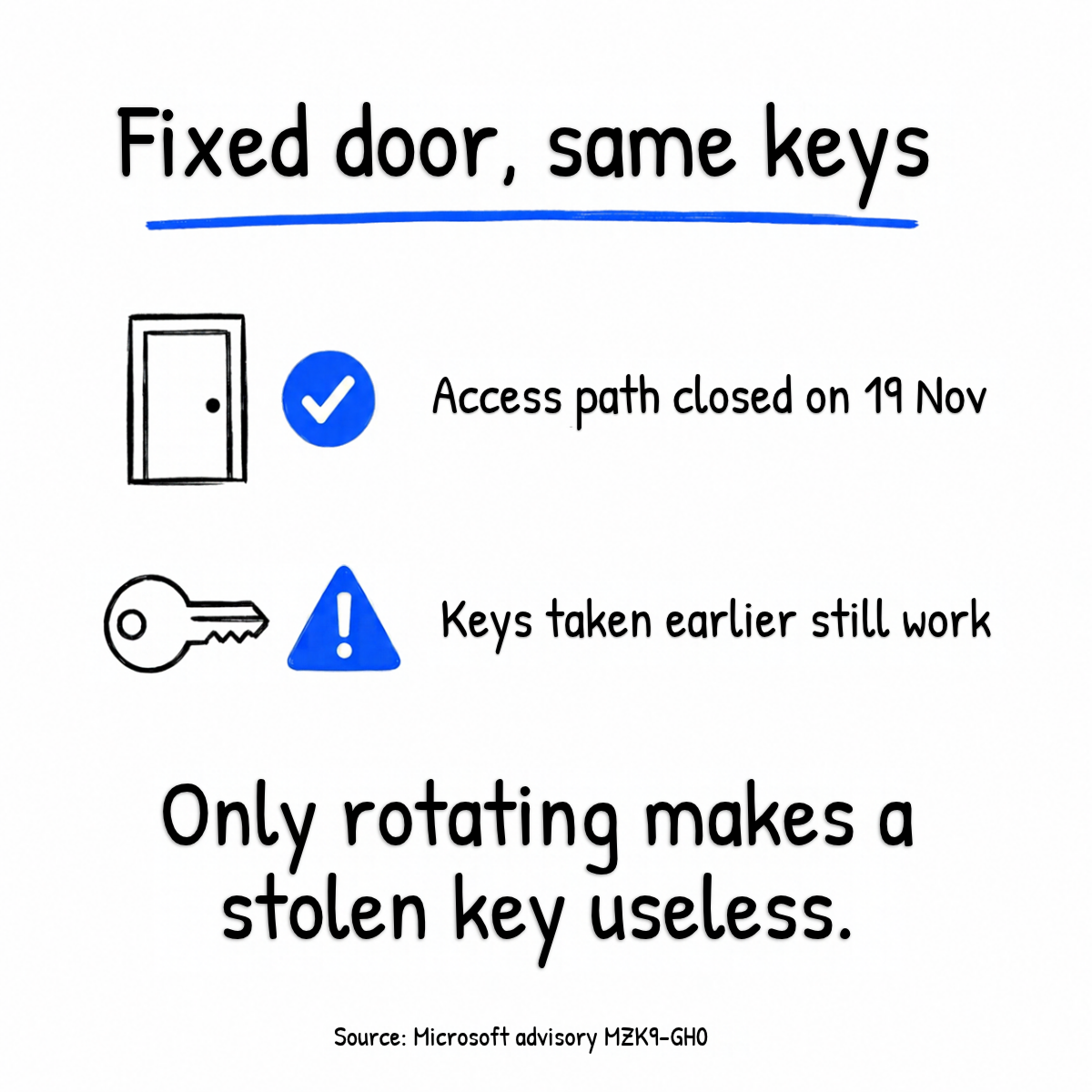
The detail that drives HIBP’s wording is what the fix doesn’t do. Microsoft says its remediation “blocks the unauthorized management-plane access path”, but “does not automatically invalidate credentials that may have been accessed before the fix was deployed.” It rotated the keys and credentials it controls, and told affected customers to rotate theirs, look for suspicious activity and review logs.
Why an HIBP key is in scope
An HIBP API key is an APIM subscription key. The HIBP API documentation has callers send it in an hibp-api-key header, and APIM checks it and applies the rate limit for the subscriber’s plan. Subscription keys are on Microsoft’s list of data that may have been exposed, which is the link Hunt draws.
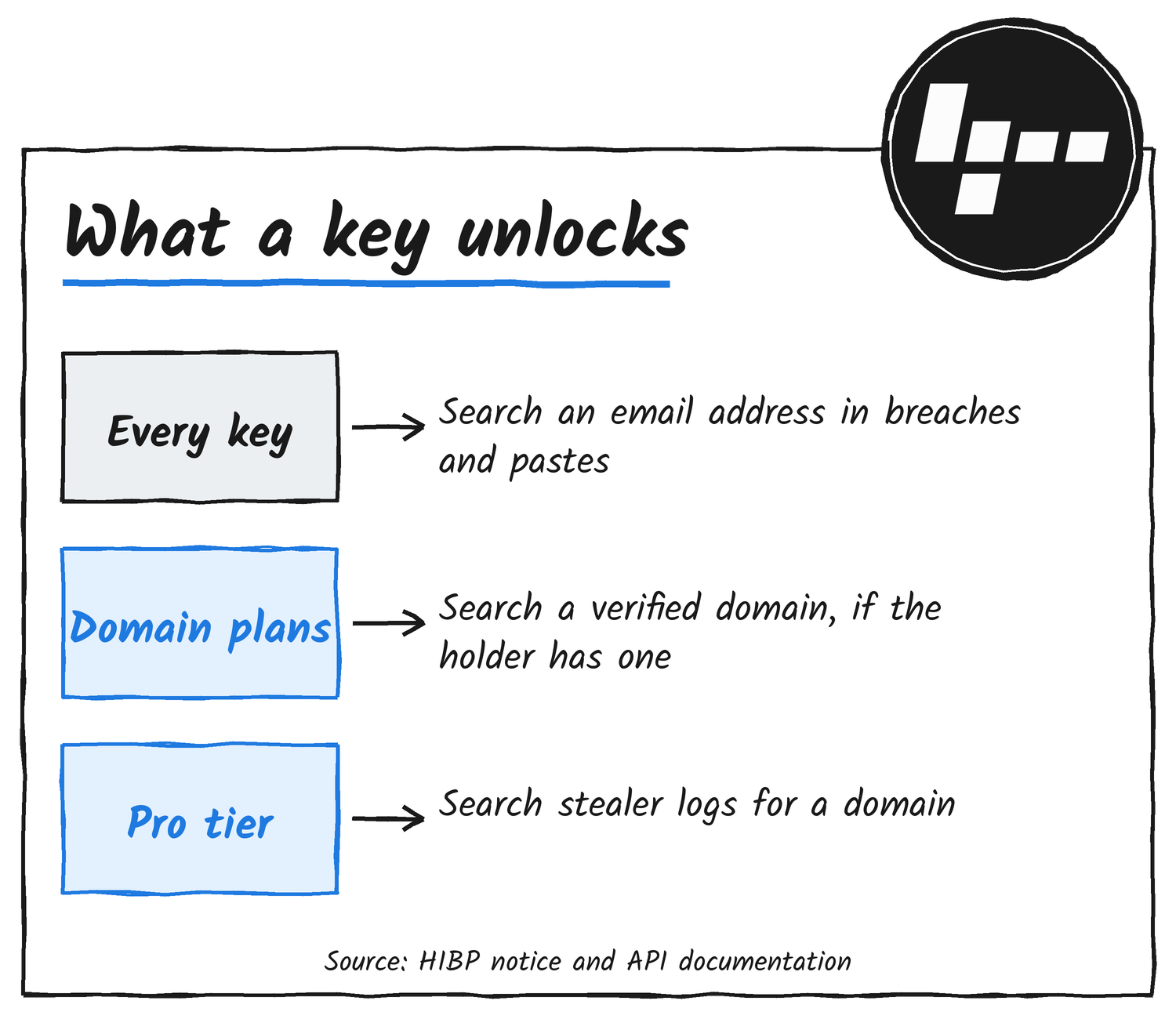
What a stolen key is worth depends on the plan. Every key can search an email address against breaches and pastes. Subscribers who have verified a domain can search it, and the Pro tier adds stealer logs. That is Hunt’s own distinction between “just querying addresses” and “having monitored domains”, and it is why he doesn’t give one answer for everyone. A stolen key lets someone run queries on that subscriber’s quota and, on a domain plan, see results meant for the domain’s owner.
There is one fact that would settle the question, and the notice doesn’t give it: which APIM tier HIBP runs. If HIBP’s service is on a v2 tier or Classic Consumption, Microsoft says it wasn’t affected. If it is on one of the four Classic tiers, the exposure was real but may depend on the configuration Microsoft mentions. That is my inference, not something HIBP has said.
4
APIM Classic tiers affected: Developer, Basic, Standard and Premium
5
kinds of secret Microsoft says may have been exposed
7 days
from Microsoft identifying the flaw to HIBP’s email
0
customer reports of unexpected key use, per HIBP
Rotate or wait
Hunt’s reason for not forcing rotation is practical: a forced swap breaks every integration that still holds the old key. A subscriber whose key sits in one script can rotate in minutes. A subscriber whose key is spread across several services, scheduled jobs and customer deployments needs a plan first.
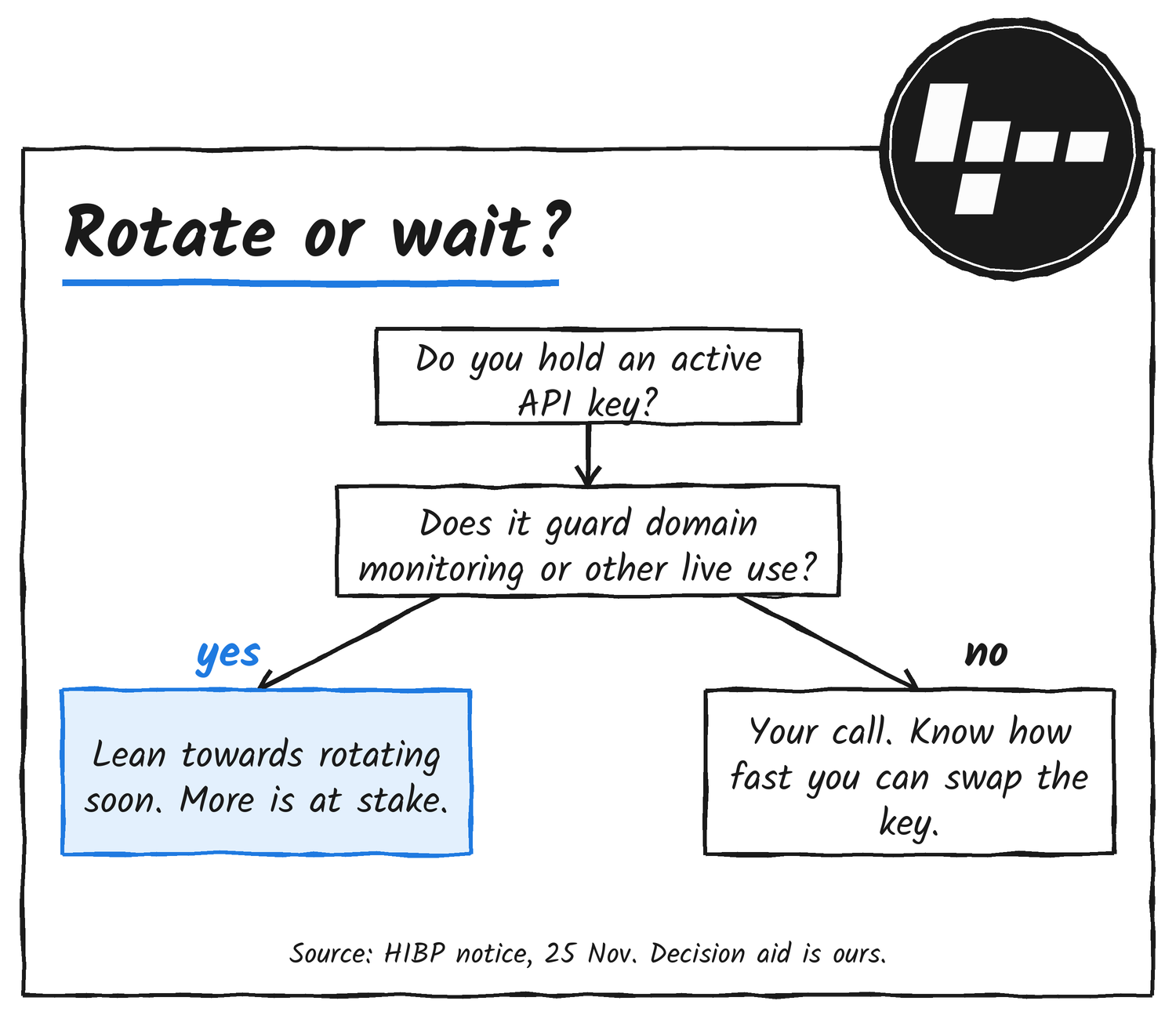
The decision aid below is mine, built from Hunt’s own distinction. It isn’t HIBP advice. Weighing it against the other official guidance, I’d lean towards rotating soon if the key guards domain monitoring or anything live, and treating it as a scheduled job otherwise.
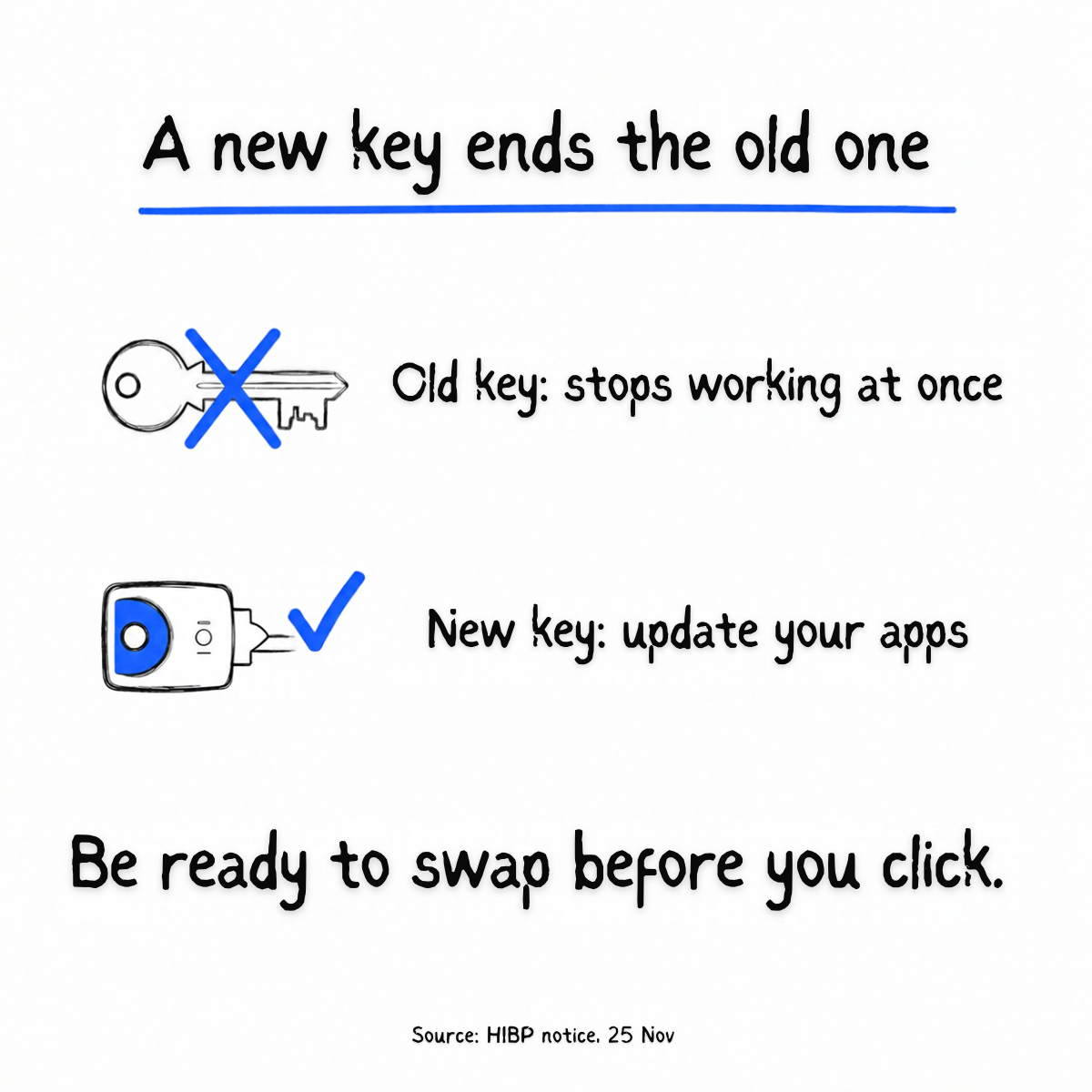
If you do rotate, the order matters, because the old key stops working the moment the new one is issued.
- List every place the key lives: code, environment variables, secret stores, CI settings and any customer-facing deployments.
- Choose a time when a short gap won’t hurt, and tell anyone who relies on the integration.
- Change the key in the HIBP dashboard, then update each place straight away.
- Run one request with the new key to confirm each integration works.
- Check your own logs for HIBP queries you don’t recognise from before the change.
Microsoft’s own guidance for APIM customers goes a step further, and its engineers have written up how to rotate credentials in API Management. The point that matters for HIBP-style setups is that a secret should be rotated at the service that issued it, not only inside APIM.
The wider picture
HIBP is a downstream customer of this flaw, not its centre. The people at the centre are Microsoft and the organisations whose APIM instances were reached, and the evidence of real exploitation comes from Norway. Norway’s National Security Authority (NSM) published its advice on 20 November and updated it on 23 November. It says an unknown actor went after access tokens, secrets and named values in APIM, that Equinor and Skagerak Energi are among those hit, that Norway’s energy sector found the flaw first, and that it also affects other sectors in Norway and abroad. NSM says it is still unclear how far the exploitation went, and that it has no indication so far that any compromise has affected deliveries by Norwegian organisations.
NSM’s advice is stricter than Hunt’s. It tells everyone who runs Azure API Management to assume their secrets and named values have leaked and to rotate all tokens and secrets, and to check that their instance is patched by reading its runtime version, with thresholds listed in the advisory. Hunt leaves rotation to each subscriber. The two aren’t in direct conflict: HIBP is describing a risk it can’t size, and NSM is advising organisations in a country where attacks have been confirmed. Microsoft told BleepingComputer its 19 November fix was fully deployed to Microsoft-hosted instances and needed no customer action, but didn’t explain why NSM still tells customers to check their runtime versions.
| Who | What the source says | Rotation advice |
|---|---|---|
| Microsoft | Flaw in APIM Classic tiers found 18 November and closed on 19 November; secrets may have been read before then | Rotate potentially exposed credentials, investigate and review logs |
| Norway’s NSM | Unknown actor went after APIM tokens, secrets and named values; other sectors and countries affected; extent still unclear | Assume secrets leaked, rotate all tokens and secrets, check the instance is patched |
| Equinor and Skagerak Energi | Equinor disclosed an attack on 17 November and later said it had stopped it, with no sign of stolen or altered data; Skagerak reported an attempted attack with no impact on operations, per BleepingComputer | Named by NSM as hit; no rotation advice of their own in the statements I read |
| Have I Been Pwned | Can’t confirm whether its subscriber keys were affected; no reports of unexpected use | Subscriber’s call; changing the key invalidates the old one |
Two neighbouring incidents are separate stories, not part of this one. BleepingComputer notes that the APIM report came days after Microsoft confirmed a breach involving its Entra Connect Health service, in which attackers used a flaw to steal tenant configuration information and administrator email addresses. And in the same week, 1Password disclosed that a stolen employee GitHub login had led to customer account records being downloaded; that case is covered in our 1Password report. The causes differ, and none of the three companies links its incident to the others. The common thread is that stolen credentials, not broken encryption, were the way in.
What nobody has said
- Which APIM tier and configuration HIBP runs, and whether Microsoft has told it the service was in scope.
- Whether HIBP can see from its own APIM logs any queries made with keys that don’t belong to their holders.
- How many organisations beyond Norway’s energy companies were reached, and whether any attacker has used what was taken.
- Why NSM still warns about runtime versions after Microsoft says its fix needs no customer action.
How this was checked
I read Hunt’s email as it appears in the screenshot Shcallaway posted on X and quoted it word for word. I read Microsoft’s advisory only through BleepingComputer’s 23 November report, which quotes it,. I read NSM’s advisory, in Norwegian, directly, along with the Equinor and Skagerak Energi statements. I left out an anonymous administrator’s account of how the flaw worked, which BleepingComputer says it couldn’t verify. I found no post from HIBP or Hunt on the subject, and I haven’t seen the email from HIBP itself.
Sources: Shcallaway on X (HIBP notice), BleepingComputer on the APIM flaw, NSM advisory, Equinor, Skagerak Energi, Microsoft on rotating credentials, HIBP API documentation, BleepingComputer on Entra Connect Health.