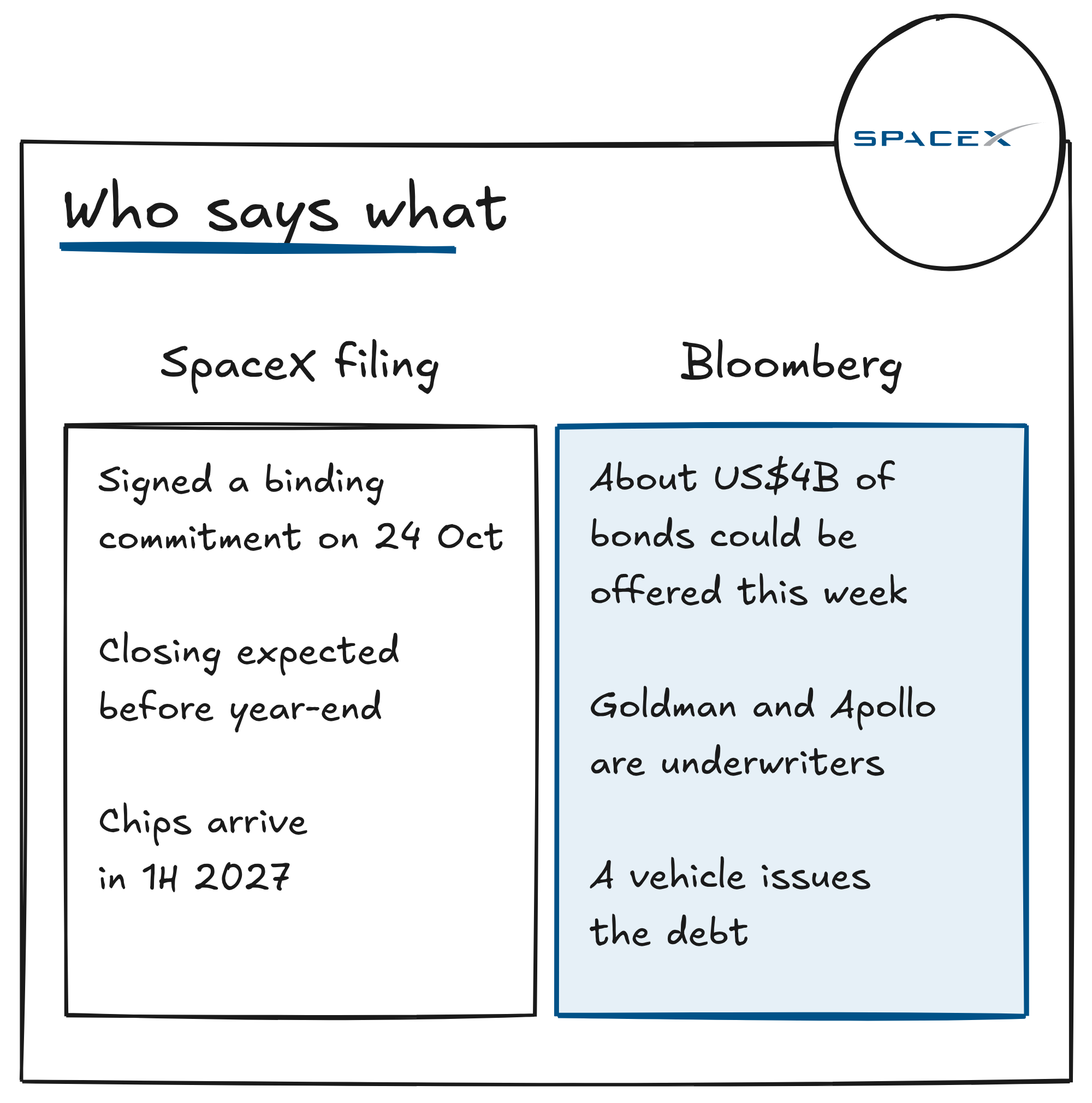
Goldman Sachs and Apollo could start selling part of the roughly US$40 billion of debt that pays for SpaceX’s Nvidia chips as soon as this week, Bloomberg reports. Bloomberg cites unnamed people for a first slice of about US$4 billion of bonds that could be offered within days, with Goldman and Apollo as the underwriters.
The financing isn’t new. SpaceX said on 26 October, in a release and an SEC filing, that it had signed a binding commitment for a master finance lease of about US$40 billion with an entity managed by Apollo. The lessor buys GPU pods and related equipment and leases them to SpaceX for data centres SpaceX selects. SpaceX says the equipment is Nvidia’s next-generation Vera Rubin chips.
How the structure works
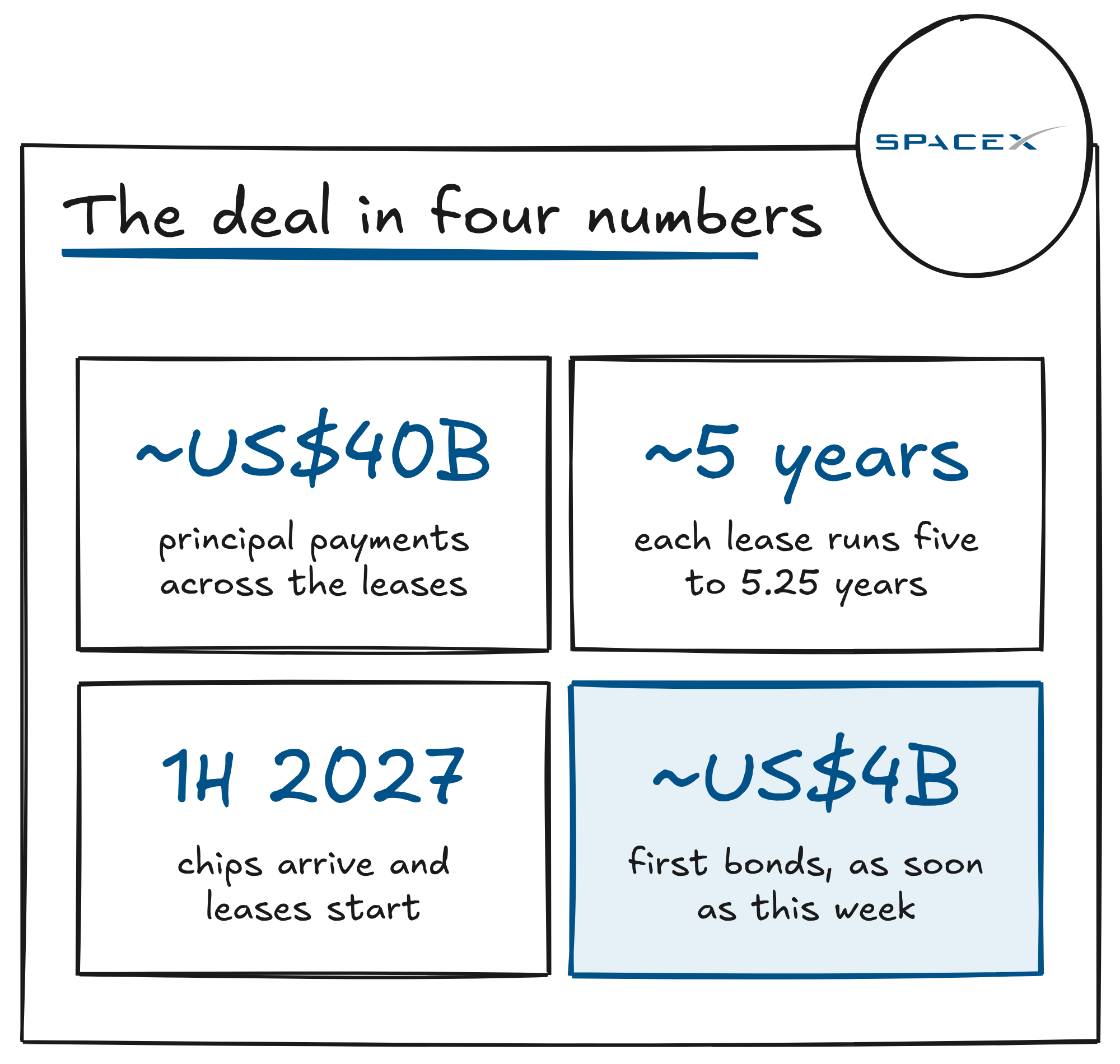
A special purpose vehicle managed by Apollo-backed Atlas SP buys the chips and issues asset-backed securities, Bloomberg reports. A special purpose vehicle is a company set up to hold one set of assets and the debt that pays for them. SpaceX isn’t the issuer; it leases the chips and pays rent. Bloomberg says the design keeps the debt off SpaceX’s balance sheet and lets SpaceX keep its investment-grade credit ratings.
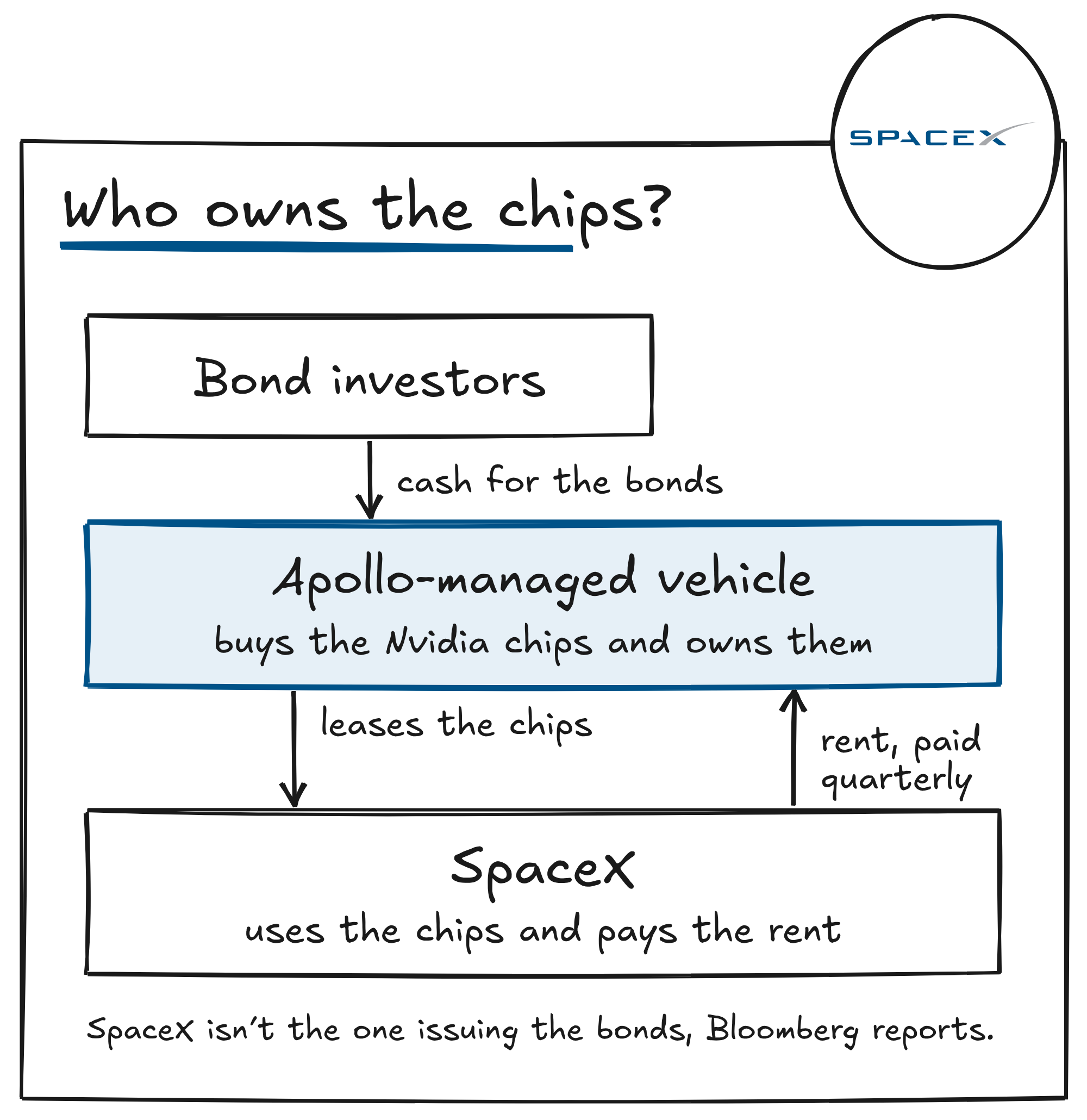
SpaceX’s filing sets the lease terms. Each batch of equipment gets its own lease schedule of about five to five and a quarter years from delivery. Rent is paid quarterly in advance and is one-twentieth of the financed cost, plus a fixed-rate charge on the outstanding balance and certain ongoing costs. The fixed rate is set at pricing, before SpaceX enters the lease, and the schedules start in the first half of 2027 as the GPUs arrive.
Bloomberg reported on 4 November that the package includes a US$8.3 billion senior secured loan led by Goldman and several bond tranches sold to asset managers. It says the debt and a US$7 billion lease prepayment from SpaceX pay for about US$47.3 billion of GPU equipment, and that a presentation it saw says rent is owed regardless of the equipment’s condition, casualty or force majeure.
Who’s lending and what SpaceX is spending
SpaceX says the financing parties are led by Apollo and Goldman Sachs, with Goldman as sole structuring agent. It names BlackRock funds, Goldman Sachs Asset Management funds and KKR-advised accounts as anchor investors. SpaceX CFO Bret Johnsen said in the release that the company is seeing “less than one year payback periods on our SI infrastructure investments”, SI being its Super Intelligence business.
SpaceX’s AI segment, which includes Grok, Cursor and its cloud compute business, brought in US$7.6 billion of its US$14.6 billion third-quarter revenue, TechCrunch reports. Capital expenditure reached nearly US$20 billion, up from US$6.9 billion a year earlier, and Johnsen said on the 20 October earnings call that SpaceX expects to spend US$35 billion to US$40 billion in the fourth quarter alone. The buildout also includes a US$24 billion gas-fired power plant and supercomputing project in the Rio Grande Valley, where Texas issued SpaceX an air permit on 16 November.
Musk said on 25 October that SpaceX had closed US$40 billion in debt financing, Reuters reports. SpaceX’s filing says the lease hasn’t closed: entry is subject to specified closing conditions, and SpaceX expects it to close before the end of 2026. The US$40 billion is the total of principal payments across the lease schedules, not cash SpaceX has raised. SpaceX hasn’t announced the bond sale, and the lease’s fixed rate will be set when the debt is priced.
Discover more from Sulat AI & Tech News
Subscribe to get the latest posts sent to your email.