
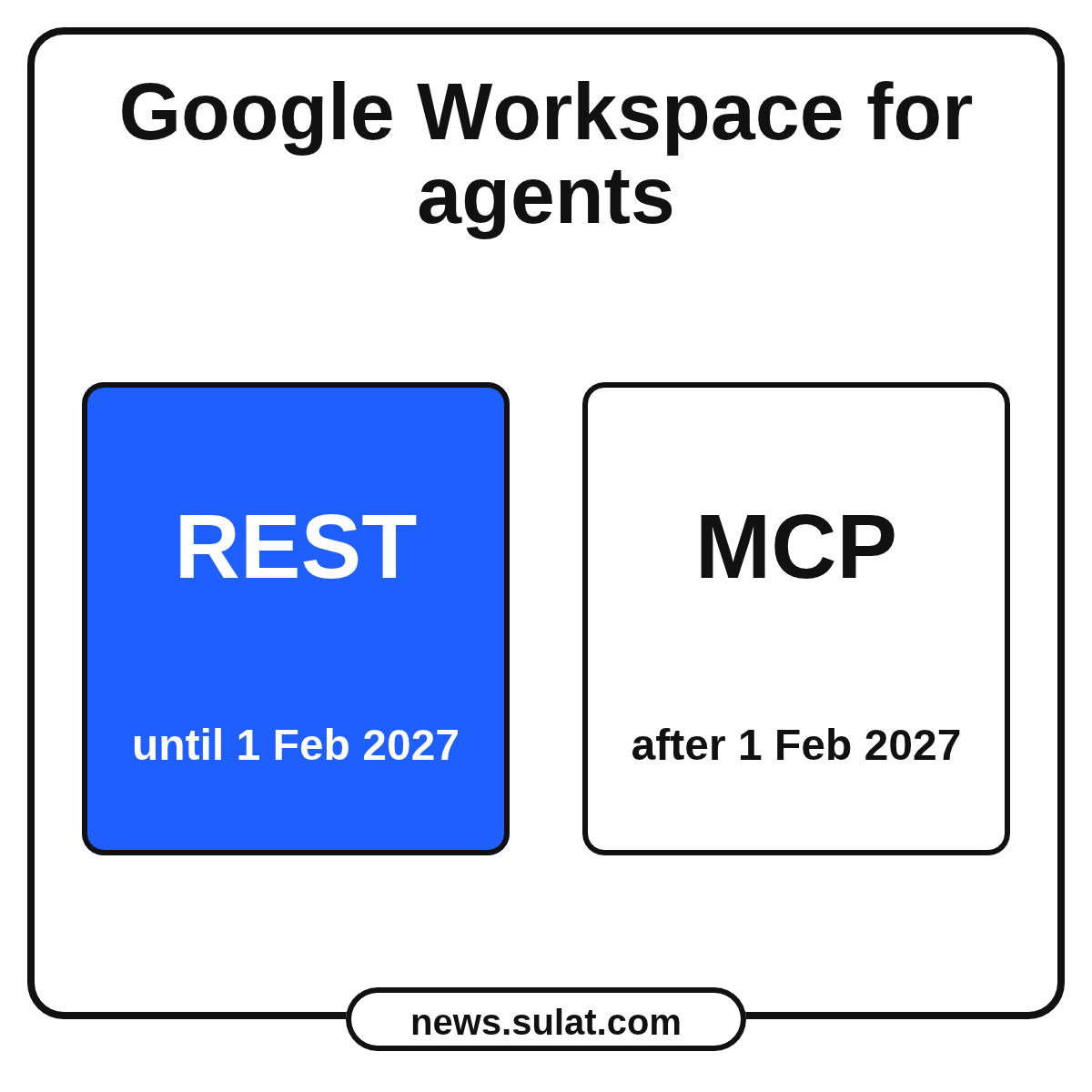
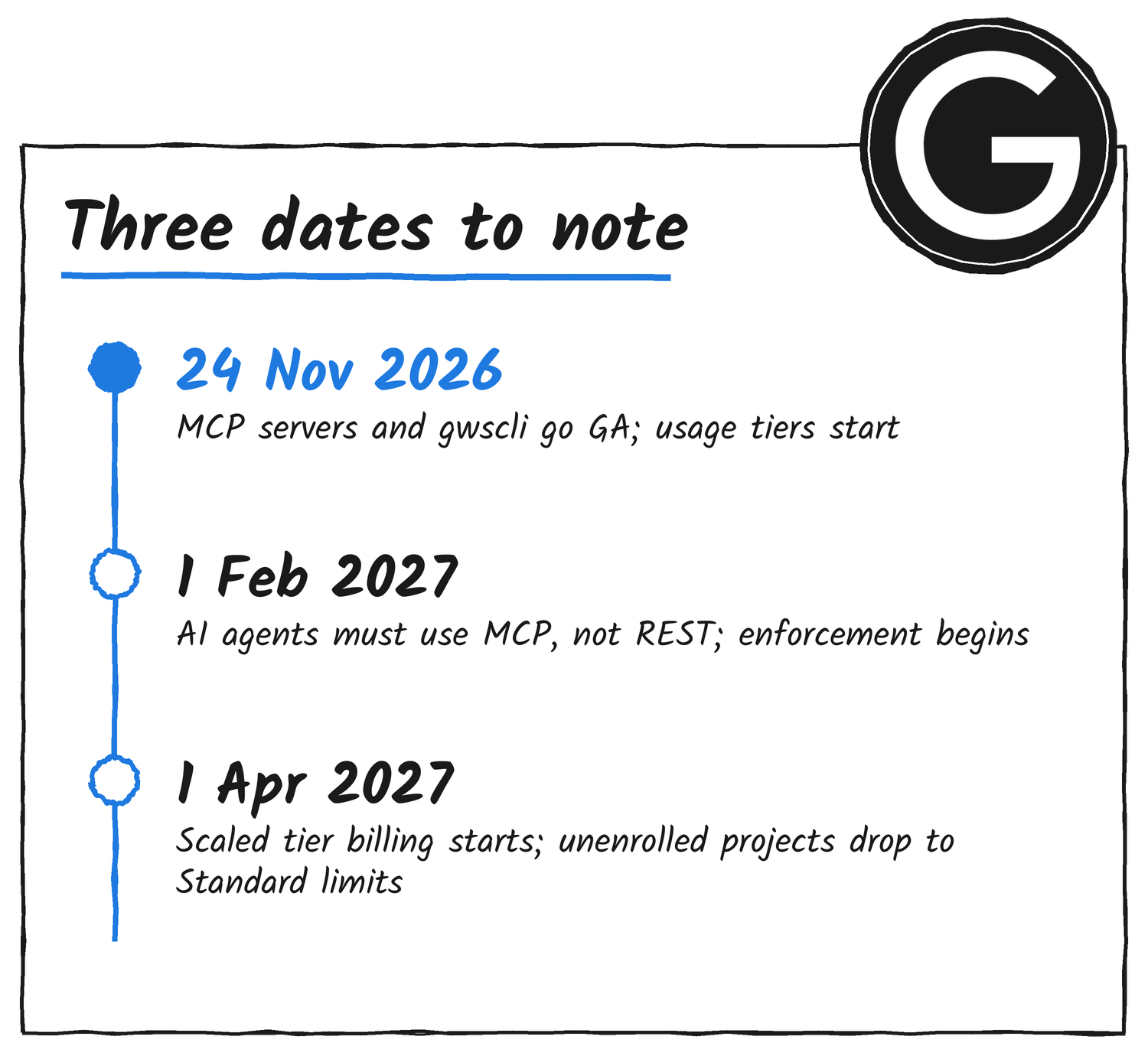
Google made its Workspace MCP servers and its gwscli command-line tool generally available on 24 November US time. Philipp Schmid, whose X bio lists agents and the Gemini API at Google DeepMind, posted the news with a one-click Personal mode setup as the hook. Google’s Workspace Updates blog carries the full announcement, and Google’s docs add what the post leaves out: a free tier capped at 5,000 requests a day, a rule that AI agents must use MCP from 1 February 2027, and paid billing from 1 April 2027.
I read the blog post, the MCP and CLI guides and the quota pages, then checked each line of Schmid’s post against them. Most of it holds. Two lines need the context below.
8
products with a Workspace MCP server in Google’s GA post
5,000
free requests a day per project, on the Calendar MCP page
99%
of active developers Google says stay inside the free Standard tier
1 Feb 2027
when AI agents must use MCP instead of REST
Schmid’s post, checked against Google’s docs
| Schmid says | What Google’s pages say |
|---|---|
| MCP servers and gwscli are GA today | The 24 November blog post says Google is “making Workspace Model Context Protocol (MCP) servers and the official Workspace CLI generally available”. The MCP setup guide, last updated 19 November, still carries a Developer Preview banner and lists Preview Program membership as a prerequisite. |
| 8 servers: Gmail, Drive, Docs, Sheets, Slides, Calendar, Chat, Tasks | The blog post names the same eight and says Keep is coming soon. The setup guide’s server table also lists People, Classroom and a Universal Search server, and doesn’t list Tasks. |
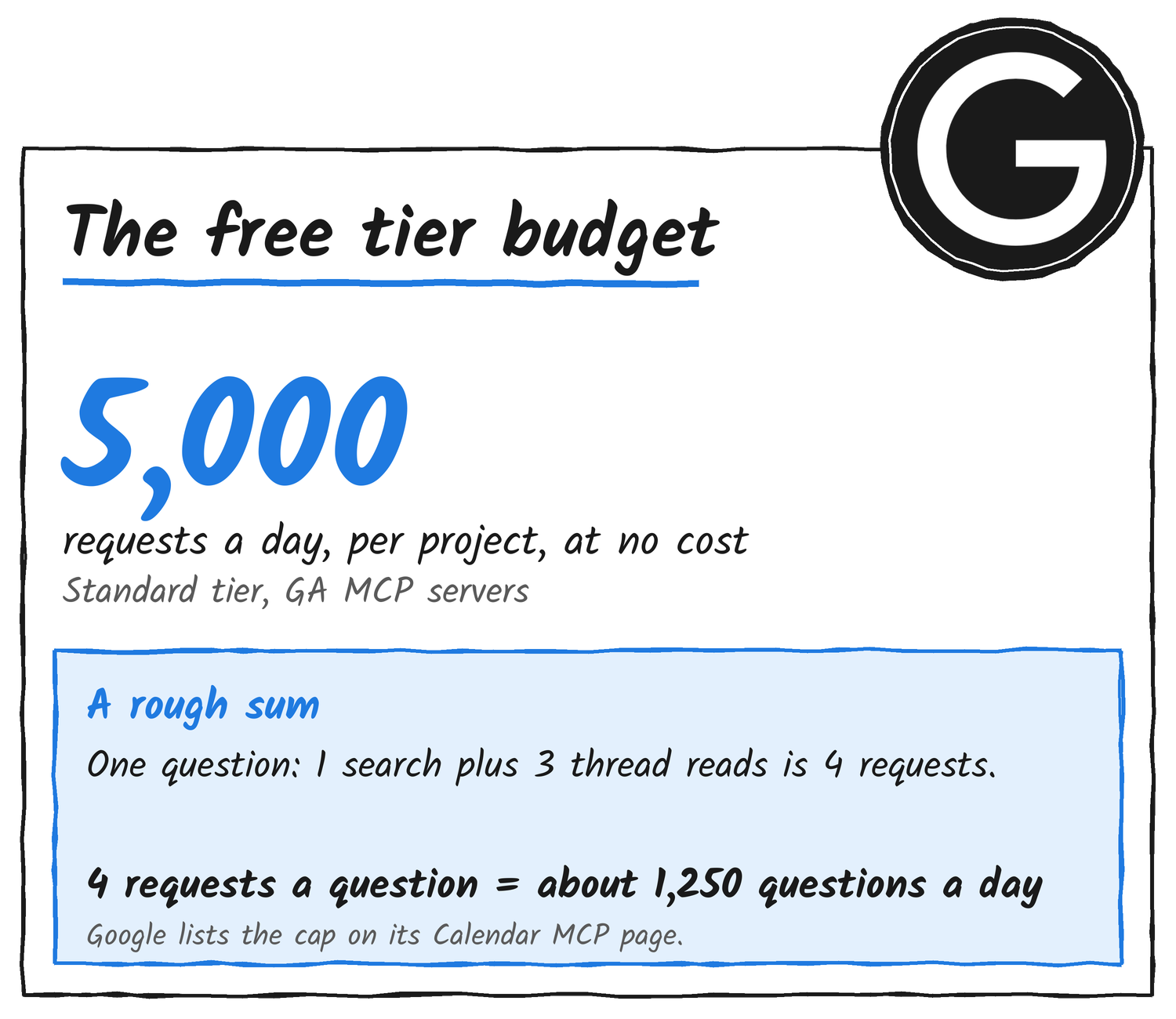
| Free tier: 5,000 req/day per product | Google’s Calendar MCP page says Standard tier GA MCP servers are “capped at 5,000 no-cost requests per day, per project”. The Gmail and Drive quota pages I read list per-minute limits only. |
| Built-in human-in-the-loop for send and share | The CLI guide says approval prompts cover sending messages, sharing content externally, trashing items and deleting data. Other write actions run without asking once scopes are granted. |
| 1-click Personal mode, no Enterprise plan or billing card | Personal mode makes a single-user OAuth client and skips consent screen setup and app verification. Google’s Standard tier “never produces charges”. The setup steps in the guides don’t ask for a billing account, which only the paid Scaled tier needs. |
You still have to go through Google Cloud, which is not optimal, but it is much better than the old OAuth consent screen and app review flow.
Philipp Schmid, on X
Two ways in
Google describes two managed routes to Workspace data. The MCP servers are Google-hosted and suit cloud and web agents, with one URL per product such as https://gmailmcp.googleapis.com/mcp/v1. gwscli is a binary for developer terminals, VMs and containerised sandboxes, and it ships with packaged agent skills. It covers Calendar, Chat, Docs, Drive, Gmail, Sheets, Slides and Tasks, plus People in Developer Preview.
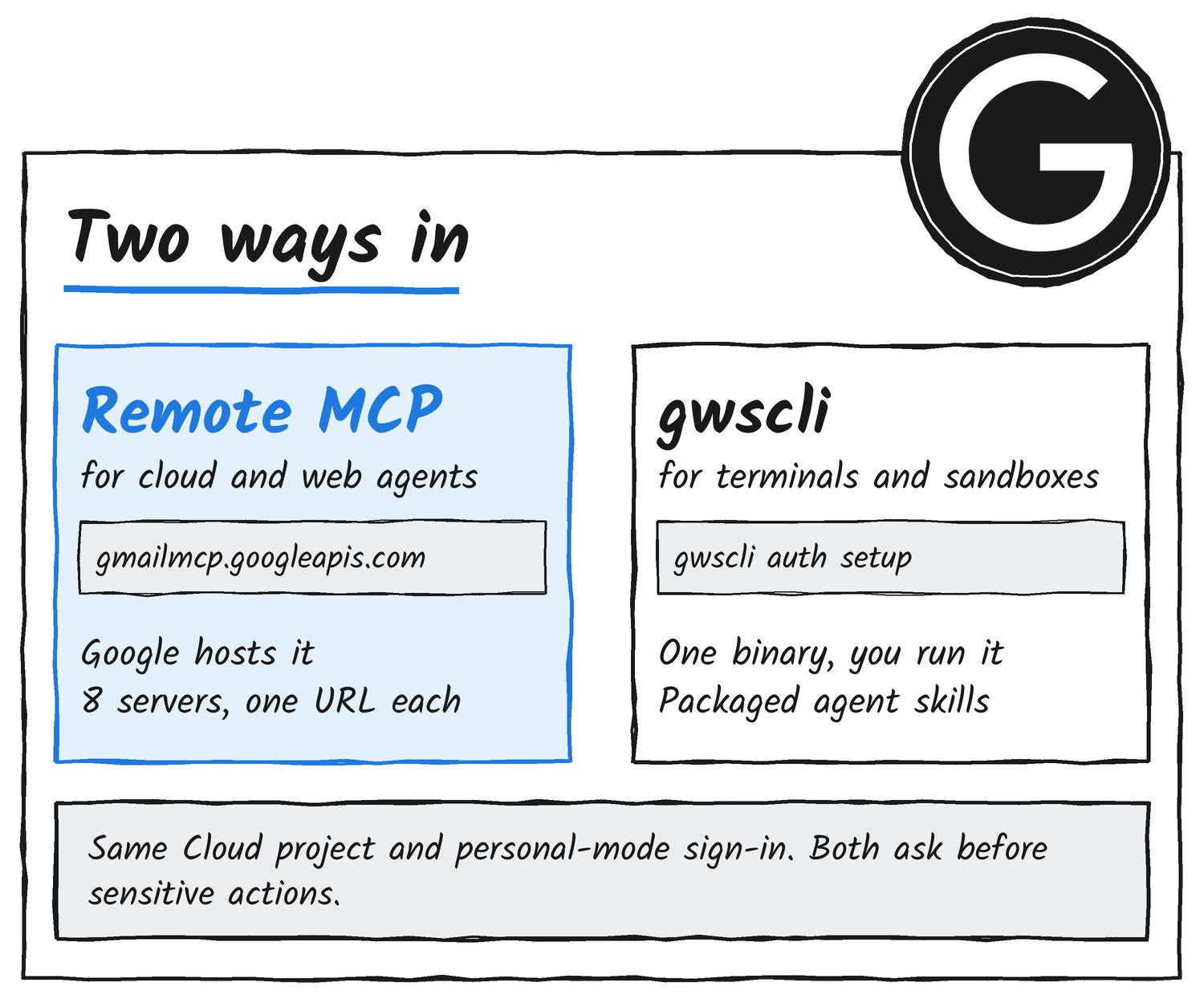
Don’t confuse it with the googleworkspace/cli repository on GitHub. That one installs a tool called gws, and its README says it isn’t an officially supported Google product. Google’s gwscli installs from dl.google.com, and the GA post calls it the official CLI. Google’s guide gives these steps for Personal mode:
curl -fsSL https://dl.google.com/workspace-cli/install.sh | bash
gwscli auth setup
gwscli auth login --bundle=readonly
Before auth setup, you open Personal mode in the Google Cloud console, create a project and download the client secret file. Google says the CLI discovers commands at runtime, so command shapes “might change without backward compatibility” and static scripts shouldn’t rely on them.
What an agent can and can’t do
Google’s quota pages list each server’s tools. Gmail has create_draft, search_threads, get_thread, label tools and list_drafts, and no send tool. Drive has search, read, download, create, copy, metadata and get_file_permissions, and no share tool. Calendar can create, update, delete and respond to events and suggest times. Chat gained search_messages and send_message in May, but sending needs a Workspace account and a configured Chat app, and the CLI guide says it isn’t supported for personal Google Accounts.
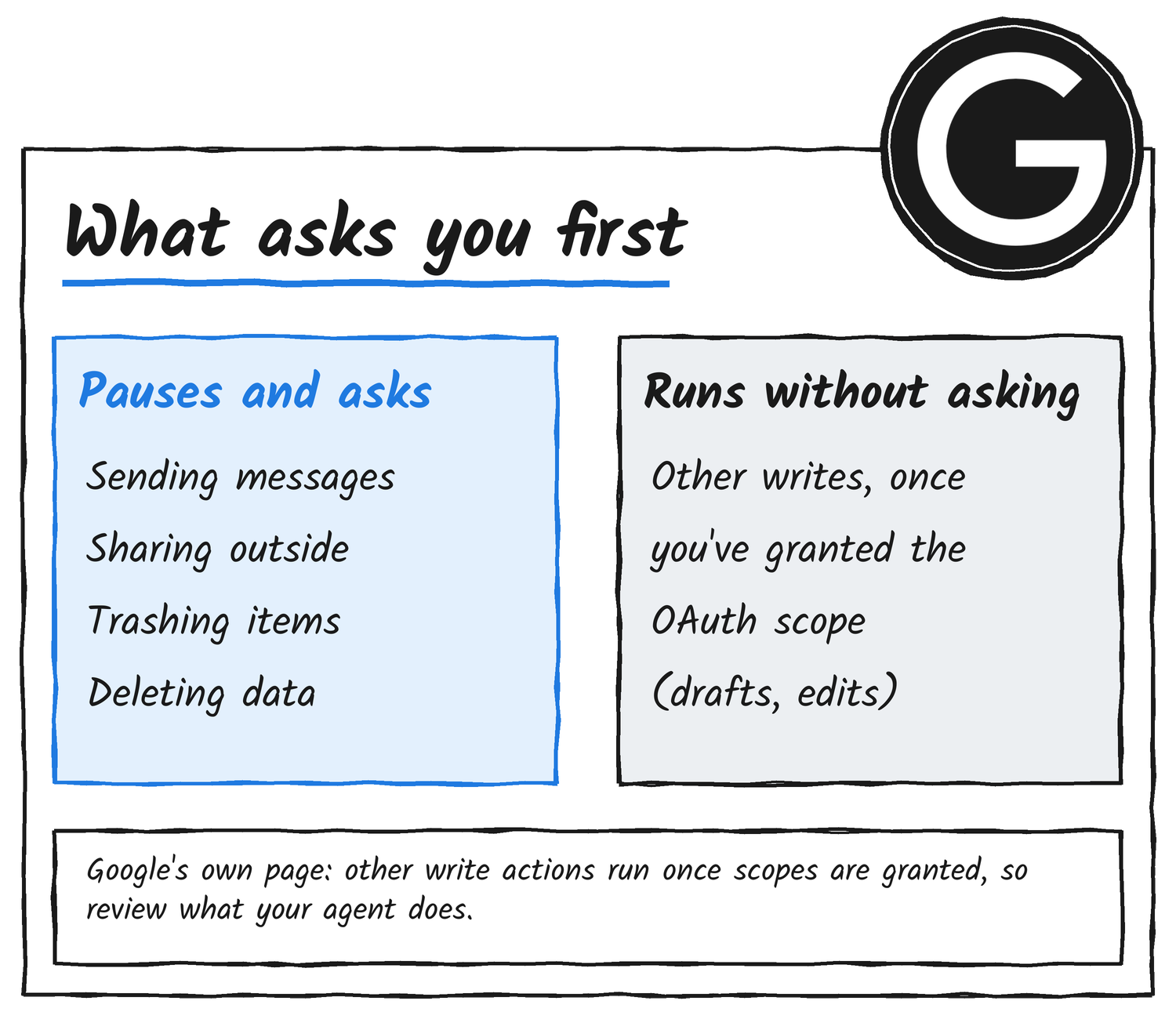
In an organisation, admins get more. The Admin console’s Security, API Controls page manages external AI tools, the MCP servers and the CLI, sets confirmation rules and shows agent audit logs. Existing data loss prevention rules apply to agent use automatically. Since 11 November, Google’s release notes say, the MCP servers reject OAuth clients that aren’t marked “Use this client for an AI-powered agent”.
The free tier, and what changes in 2027
The Standard tier costs nothing and never produces a Google Cloud charge. Google says over 99% of active developers sit inside it. The 5,000 a day is a request count, so an agent that searches mail and then reads three threads to answer one question spends four of them. That sum puts the ceiling near 1,250 questions a day per project.
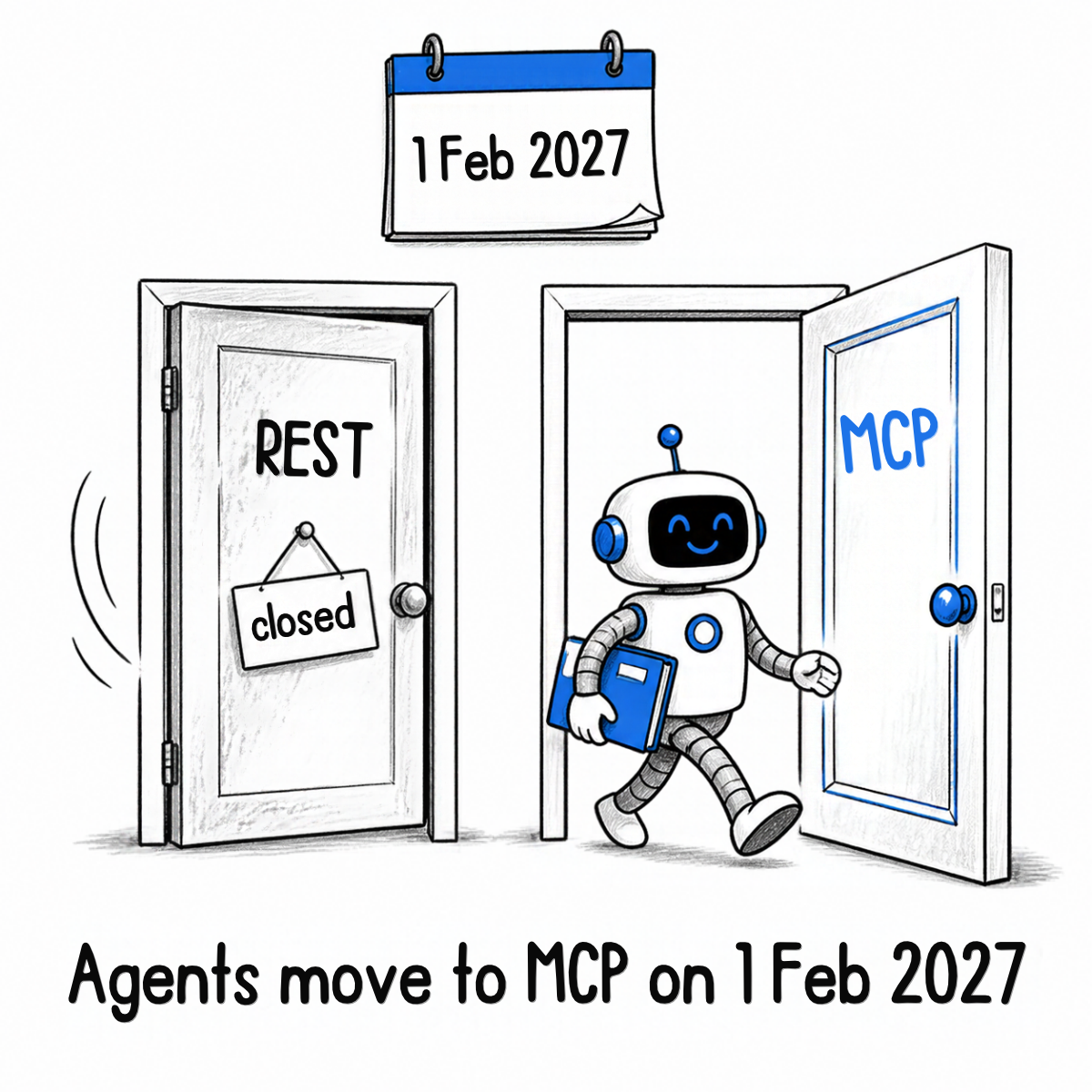
Projects that need more can enrol in the Scaled tier, and Google’s Calendar page says Scaled Calendar MCP usage is charged from the first request, with no daily allowance, from 1 April 2027. Projects that already have higher limits keep them until 1 April 2027, then drop to Standard limits unless they switch to Scaled or an admin marks them internal. After 1 February 2027, agents calling REST directly are held to Standard limits whatever their tier. A new Workspace AI Tools Addendum also bars using agents to scrape Workspace APIs or to store certain derived data for long periods.
Security and telemetry
Google’s setup guide has a prompt injection warning: an agent that reads a hostile email or shared file can be steered into changing or deleting data. It says users must screen prompts and responses with Model Armor or a documented alternative, start read-only and review every action. The CLI guide adds that auth login blocks forever in unattended jobs, so headless setups should pass a token with --oauth_token.

gwscli also sends usage telemetry by default. Per the guide it records the service and action, flag names, CLI version, operating system, status codes and crash traces, and never flag values, tokens, queries, document IDs or addresses. gwscli logging off or GWSCLI_TELEMETRY_ENABLED=0 turns it off. We covered another developer tool’s default telemetry earlier today.
How it compares
| Vendor | What agents connect to | Who approves access | Fine print |
|---|---|---|---|
| Google Workspace | One server per product, plus the gwscli binary | OAuth client marked as an agent; admins manage it under API Controls | 5,000 free requests a day per project; Scaled tier billing from 1 April 2027 |
| Microsoft 365 | Work IQ MCP: one endpoint with 10 generic tools that find operations at runtime | The Tools registry in the Microsoft 365 admin center | Microsoft Learn calls the older Mail, Calendar, Teams, SharePoint, OneDrive and Word servers a legacy experience kept for testing and backward compatibility |
| Slack | One hosted server at mcp.slack.com, GA since 17 February 2026 | Workspace admins approve each client app | Only directory-published or internal Slack apps may use it |
| Notion | One hosted server at mcp.notion.com | The signed-in person’s OAuth consent, with workspace admin controls | Notion says its open-source server is no longer actively maintained |
Google’s design is the most fragmented of the four: a server per product, a separate CLI, a quota that differs by page. Microsoft is betting on one generic endpoint and runtime discovery, and Slack and Notion each run a single server. That’s my read, not a Google or Microsoft claim, but it’s why Google’s per-product quota pages are worth reading before you plan a workload.
What a developer can do now
- Use Personal mode for your own account, and sign in with
--bundle=readonlyfirst. - If an agent already calls Workspace REST APIs, give it its own OAuth client marked as an AI agent and plan the move to MCP before 1 February 2027.
- Check the Workspace API usage dashboard in the Google Cloud console against the Standard limits.
- Turn off
gwsclitelemetry if your policy needs it off. - Don’t point an agent at mail or documents from unknown senders.
More on the people behind it: Schmid’s frontend design skill post and his Gemini function results announcement are covered here, and our explainer on code execution with MCP shows why returning summaries instead of raw data matters for agent costs.
The 5,000-a-day figure appears on Google’s Calendar MCP page. Keep isn’t available yet.
Discover more from Sulat AI & Tech News
Subscribe to get the latest posts sent to your email.