
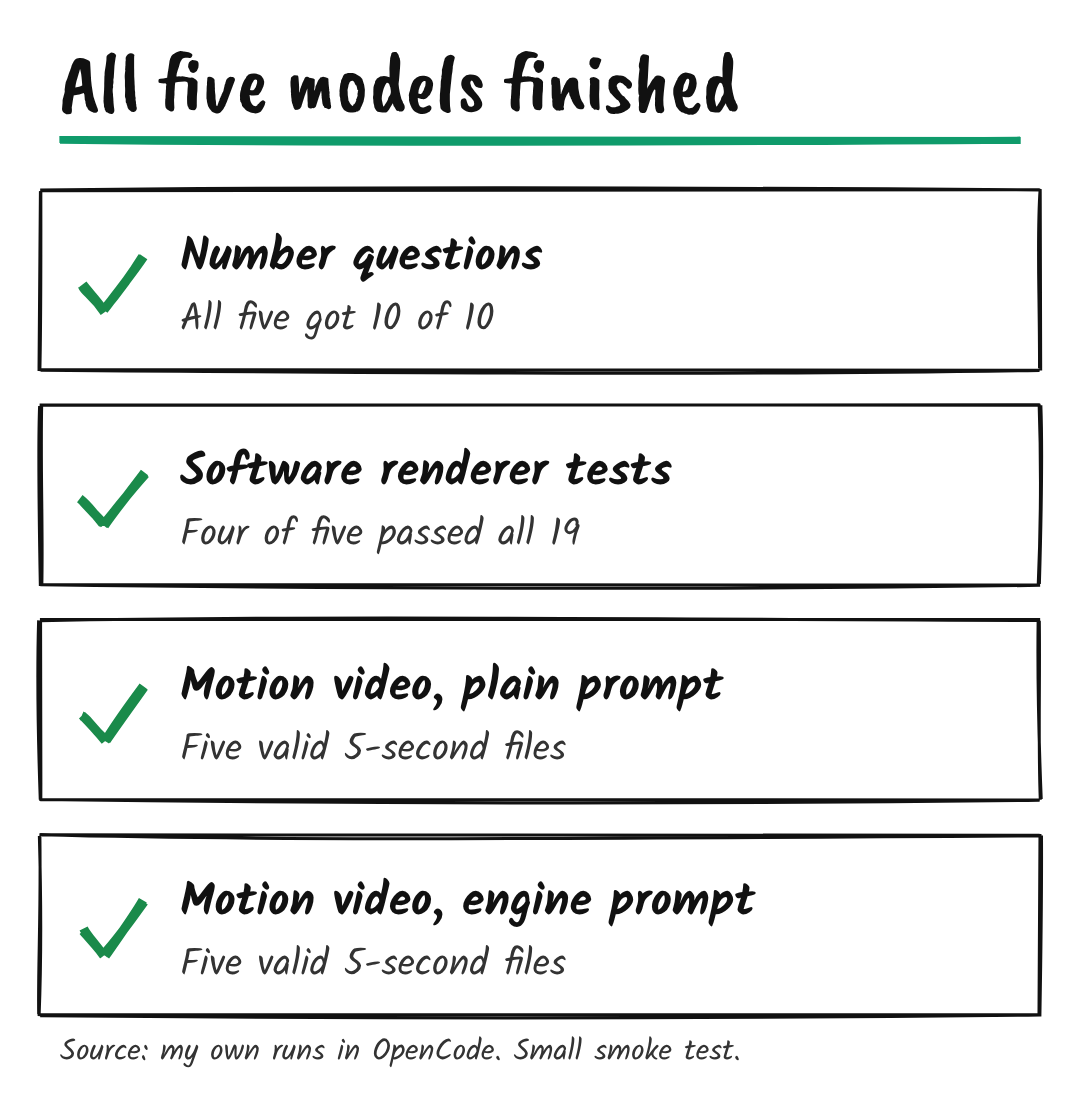
Chetas Lua says GPT-6.2 Astra has taste, but only if you give it a scientific job. Ask for a motion video and, in their words, “it will make slop”. Ask it to write its own Python or GL renderer and show a few motion designs, and “it will go bonkers”. I ran both kinds of prompt on Astra and four other models. Astra didn’t make slop from the plain prompt, and when I asked for a renderer it wrote a C software rasteriser with a depth buffer that draws the whole five-second video in about two seconds. All five models finished every task.
What the post says
Chetas Lua, an AI researcher and reporter who tests new models on launch day, posted a reel of Astra motion designs with this advice:
Astra 6.2 has taste, but you have to make sure it thinks of some sort of scientific task. If you ask it to make a motion video, it will make slop. If you ask it to write its own Python/GL renderer, make a video, and show a few motion designs, it will go bonkers and show you how good it is.
Chetas Lua on X, crediting @Jimosax for running the experiment
An earlier post from the same account shows the longer version. It says Astra “wrote its own custom rendering engine from scratch. No Blender, no After Effects, no Three.js, no stock assets.” Per the post, Astra began with a CUDA rasteriser, hit a software OpenGL fallback and a shared GPU queue on the machine, and ported its own shader code into a custom C++ CPU renderer that draws every frame mathematically at 1080p30.
Neither post includes the prompt or the code, so I wrote my own prompts and ran them myself.
Where Astra sits
GPT-6.2 Astra is OpenAI’s model for its hardest projects. It launched on 17 November next to GPT-6.2 Sol, the cheaper everyday model. OpenAI says Astra writes cleaner code and builds frontends that look and work better, “particularly for websites, gaming, and 3D design”. In the API it’s gpt-6.2-astra at US$8 per million input tokens, US$0.40 for cached input and US$40 for output, which is 20% below GPT-6 Astra’s input and output prices. The context window is 1,050,000 tokens. It’s in ChatGPT Work and Codex for Plus, Pro, Enterprise and Edu plans.
OpenAI’s own comparison puts Astra 5.2 points above GPT-6 Astra on Agents’ Last Exam at under a third of the cost, and 5.5 points ahead of Anthropic’s Claude Fable 5.2 at 5% of the cost. We’ve covered the model from several angles: P-Zero Research’s TasteVal scores, DesignArena’s ten-edit slop test, a setup that has Gemini 4 Neon steer Astra and the launch billing fix.
How I tested it
I ran everything in OpenCode 1.19.6, one run per model per task, each in a fresh folder, all five models at once on a four-core machine with no GPU. Everything below is a smoke test, and the times are rough because the runs shared the cores. The field was GPT-6.2 Astra on the OpenAI API, Gemini 4 Neon on Google, Claude Opus 5.5 on Anthropic, Kimi K3.1 Pro through Synthetic and DeepSeek V4.1 Flash through Morph. Every model ran on its default settings except Neon, where I set thinking to low and raised the output limit so long file writes finish.
Two tests were visual and two were basic. The visual pair gave each model the same job framed two ways. The first is the plain prompt:
Make a motion design video and save it as out.mp4 in the current directory: H.264, 1280x720, 24 fps, 5 seconds, no audio. Pick your own subject and style. Python 3 with numpy and Pillow, gcc and ffmpeg are installed. The machine has 4 CPU cores and no GPU, and the render has to finish within 10 minutes. When it is done, write a short NOTES.txt saying what you built and how long the render took.The second is the renderer prompt, written to match what the post describes:
Write your own renderer from scratch and use it to make a motion design video. No Blender, no After Effects, no Three.js, no stock assets and no existing rendering or video libraries: you compute every pixel yourself in code you write (Python with numpy, or C), and use ffmpeg only to encode the frames you produce. Show a few different motion designs in the one video. Save it as out.mp4 in the current directory: H.264, 1280x720, 24 fps, 5 seconds, no audio. Python 3 with numpy and Pillow, gcc and ffmpeg are installed. The machine has 4 CPU cores and no GPU, and the render has to finish within 10 minutes. When it is done, write a short NOTES.txt saying what you built and how long the render took.The basic pair was ten exact-answer questions and a small software-renderer exercise with hidden tests. Their prompts are in the closing section.
The plain prompt didn’t produce slop
Every model took the plain prompt and wrote a Python script that drew the frames. “Plain” only meant I didn’t mention a renderer.
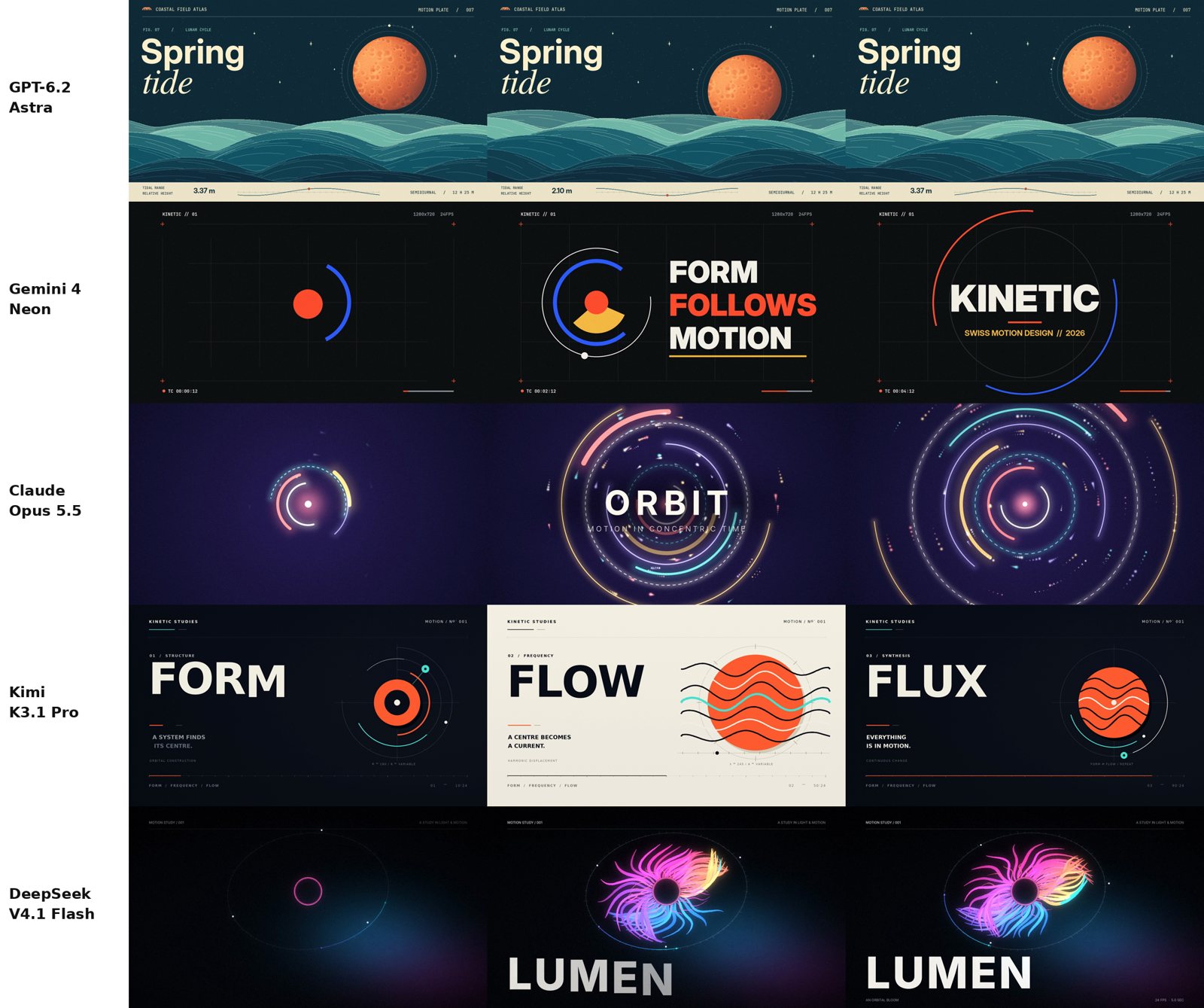
Astra made “Spring tide”, a coastal atlas plate: a copper moon over six layers of engraved teal waves, with a tide gauge along the bottom. It reads like a designed poster. Neon made a dark Swiss-style reel that ends on a KINETIC title card. Opus made nested glowing rings with a title in the middle. Kimi made three poster scenes called Form, Flow and Flux. DeepSeek made glowing filaments around a dark core, with the title LUMEN.
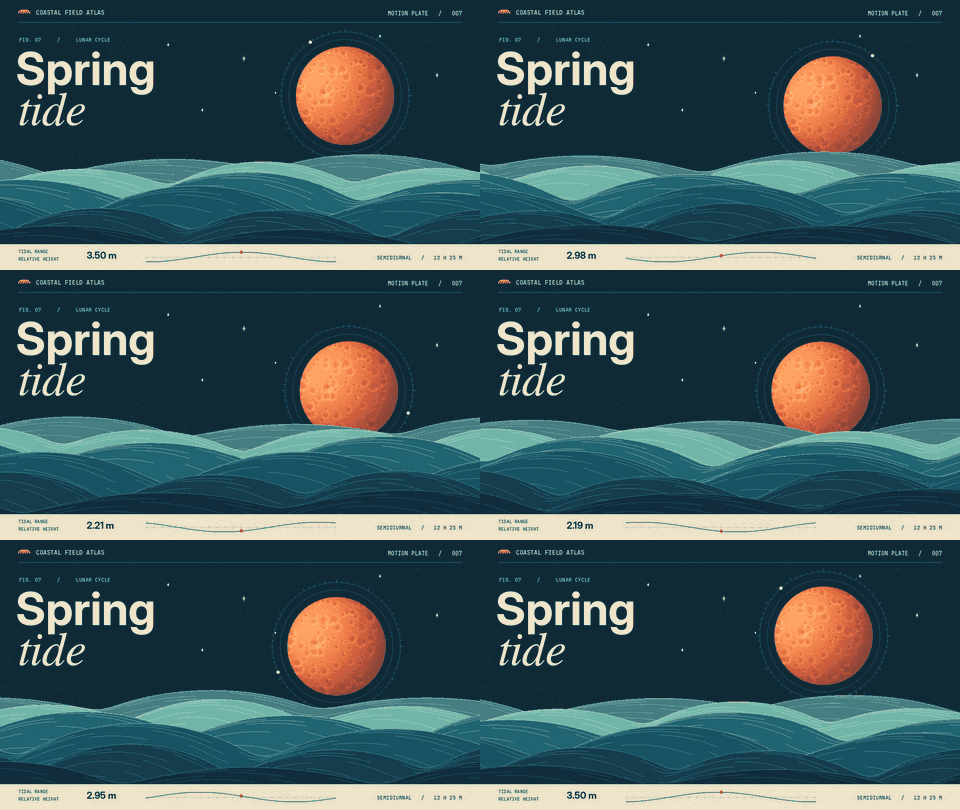
Astra’s is the most still of the five. I measured the average pixel change between frames on a 0 to 255 scale: about 1.3 for Astra, 1.9 for DeepSeek and between 5 and 6 for the other three. Astra moves the moon and the waves slowly; the other four cut between scenes or spin faster.
Asking for a renderer changed what each model built
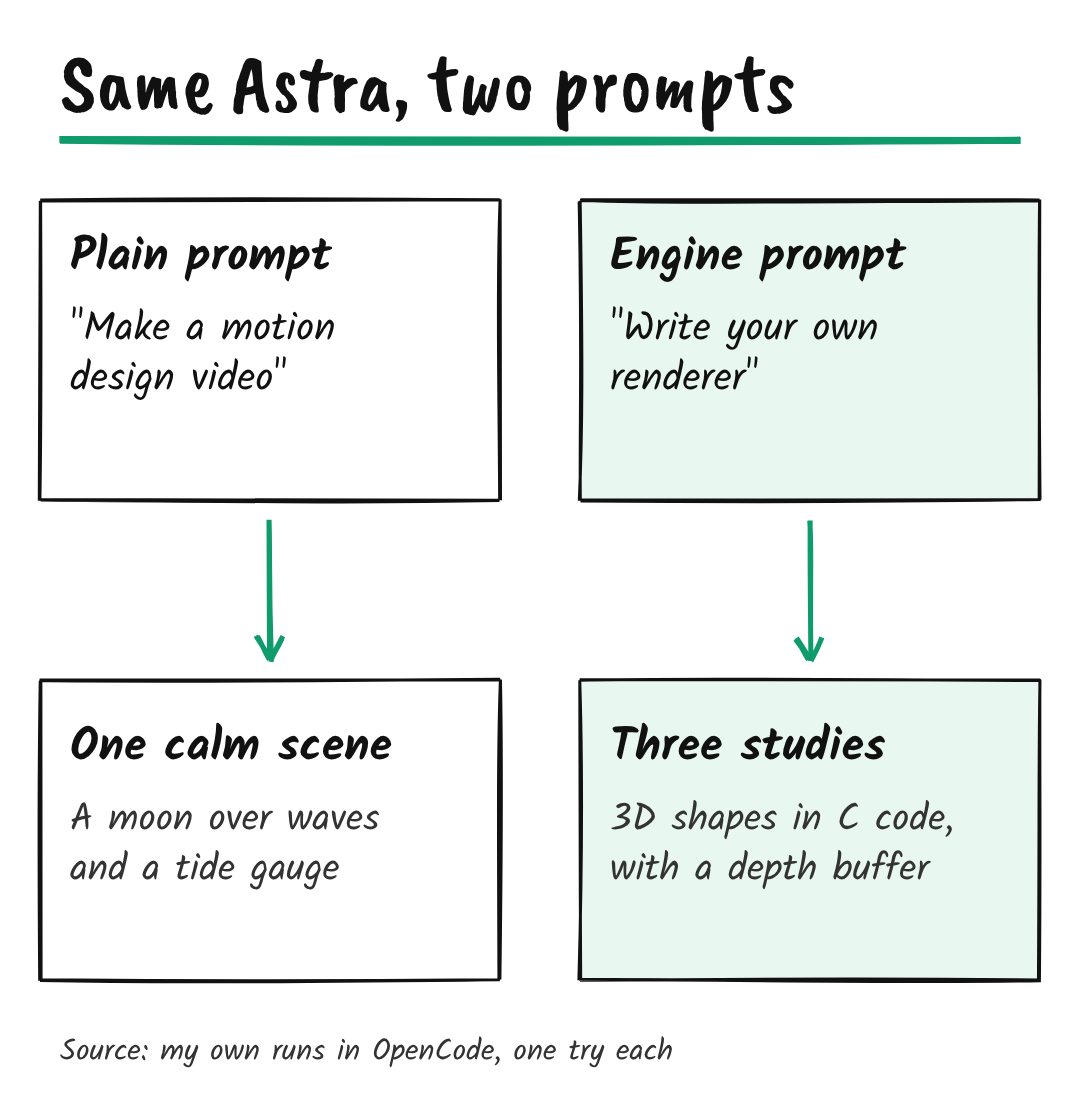
With the renderer prompt, every model added 3D to the video, and all of them showed several different designs in sequence.
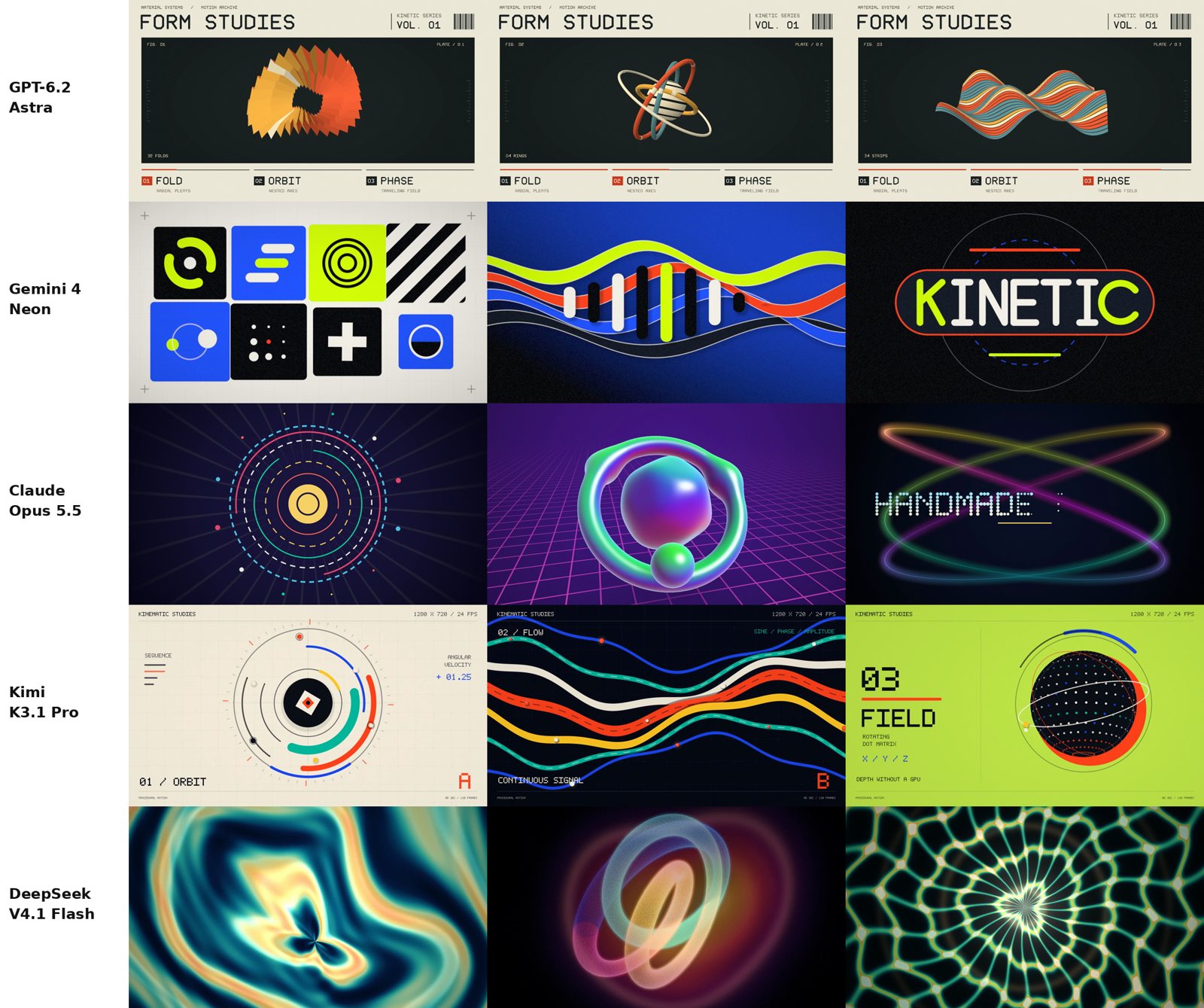
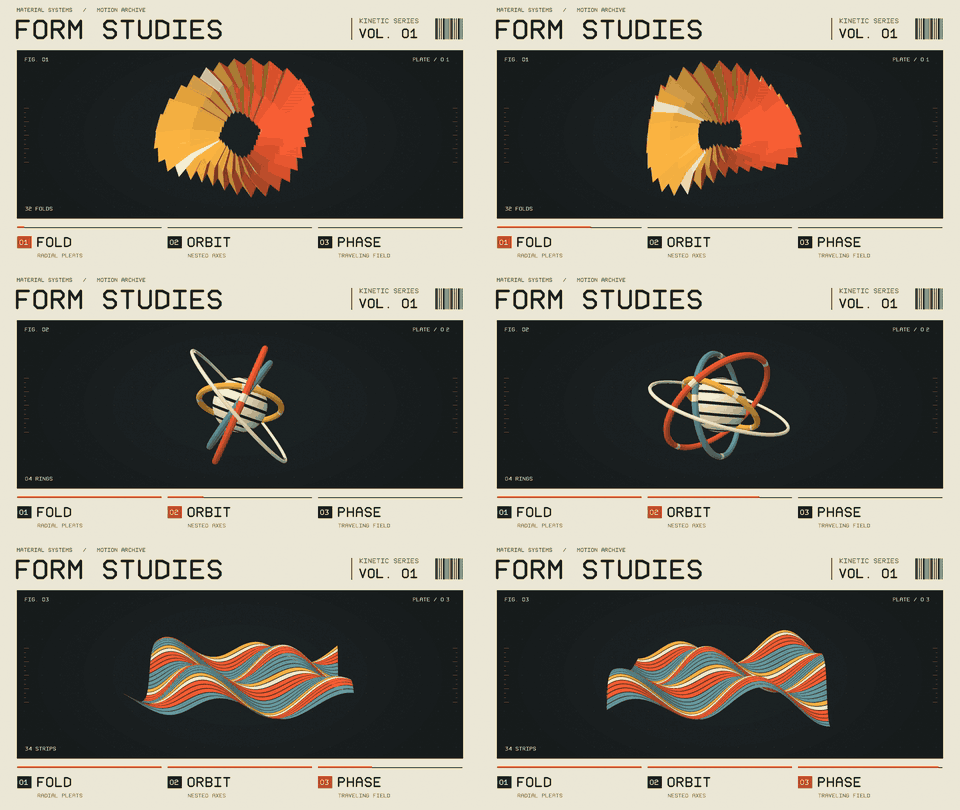
Astra wrote renderer.c, a software triangle rasteriser with a depth buffer, four samples per pixel and its own stroke lettering. It’s the only model whose notes describe a rasteriser. The video, “Form Studies”, has three plates: a pleated paper ring, a striped sphere circled by four bands, and 34 ribbons carrying a wave, all on one consistent poster layout. I re-ran the renderer on its own afterwards: 120 frames plus the encode took about two seconds.
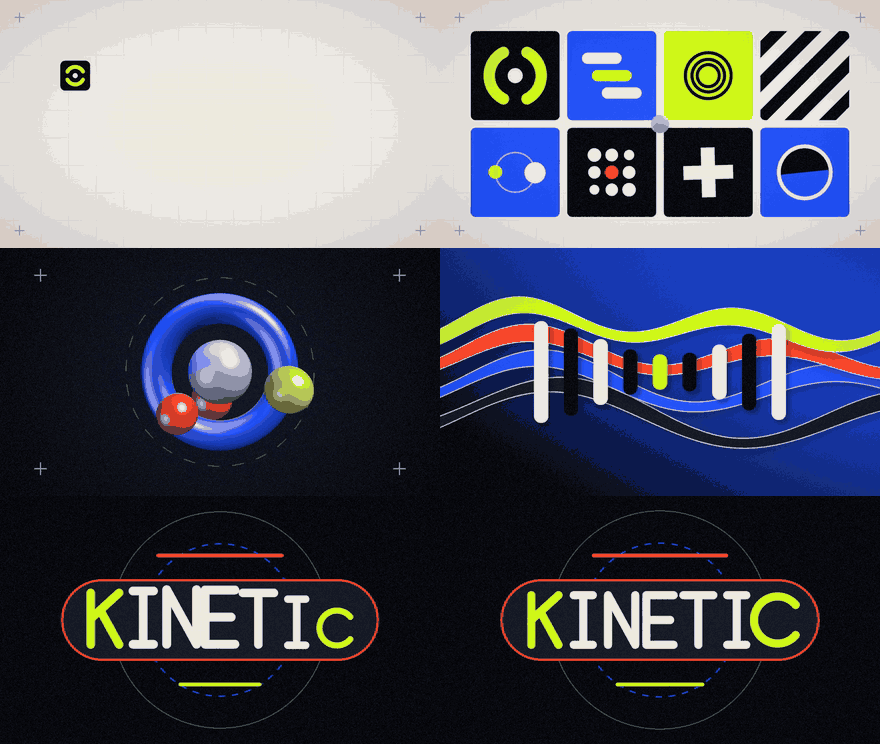
Neon also wrote C, using distance fields for the flat shapes and a ray marcher for 3D. Its four scenes are a Swiss tile grid, a glossy torus with orbiting spheres, wave bars over ribbons and the KINETIC title built from line segments. Its notes report about 95 seconds.
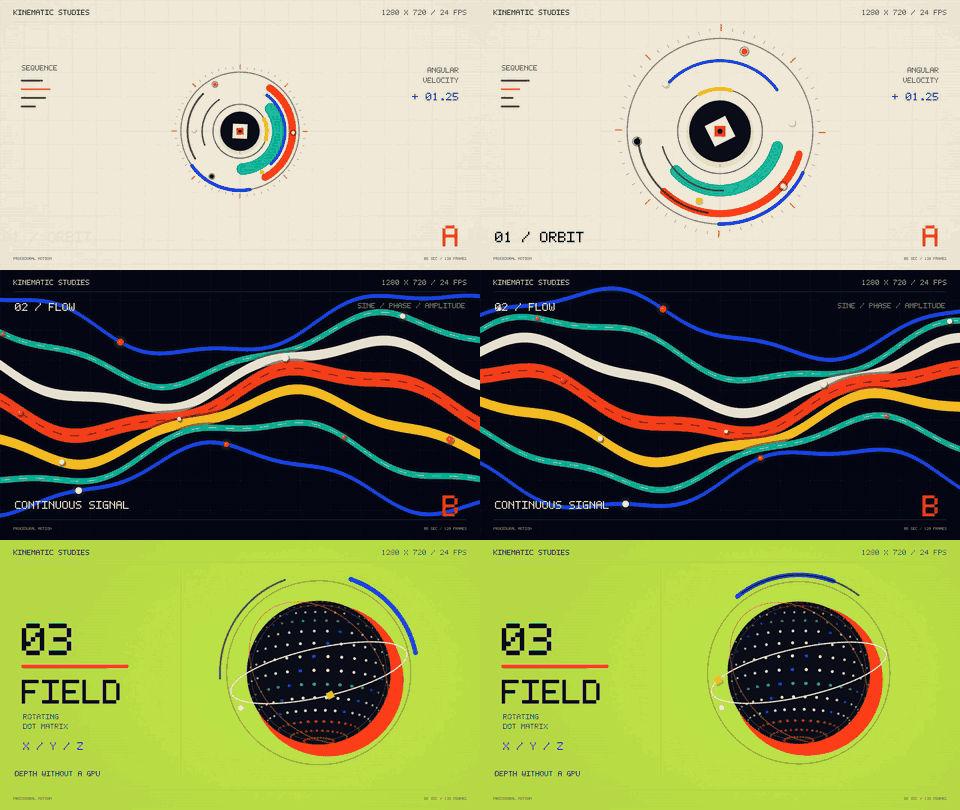
Opus wrote a Python and NumPy renderer with distance fields and a sphere-tracing ray marcher over a synthwave grid. The four designs are dashed rings, a wave of turning tiles, a wobbling 3D blob and a rainbow light trace that spells HANDMADE PIXELS in dots. Its notes report 97 seconds, most of it in the ray-marched scene.

Kimi wrote a NumPy renderer for three parts: segmented orbit rings, sine ribbons and a rotating 3D dot sphere. Its notes report 47 seconds.
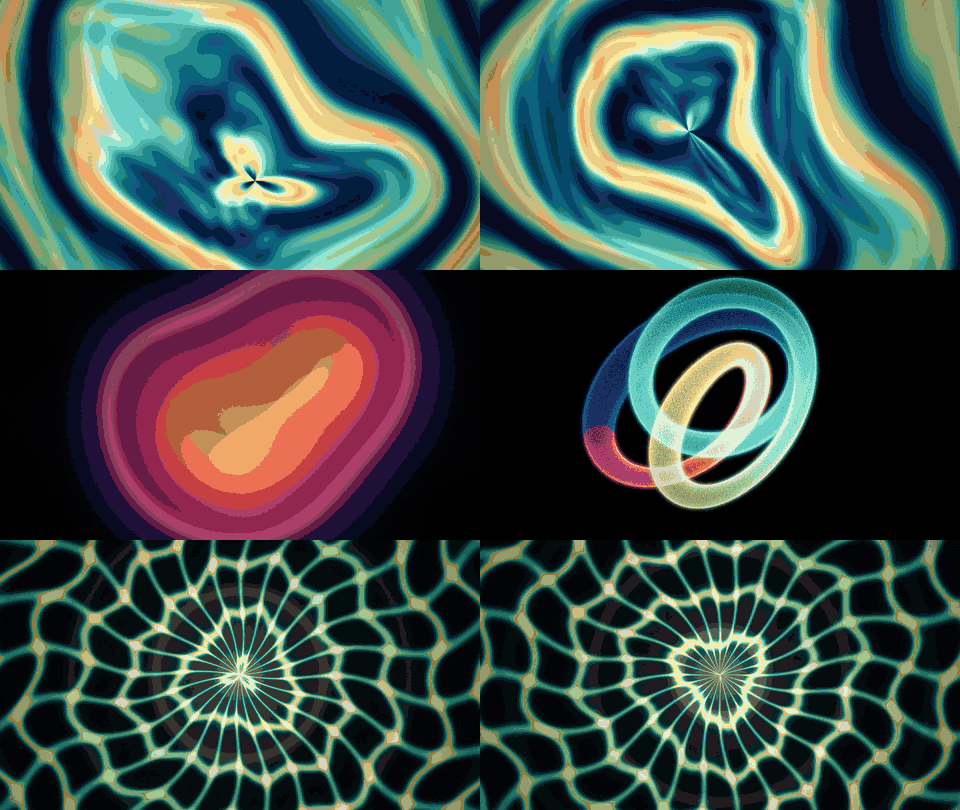
DeepSeek wrote a NumPy renderer for four studies: warped ripples, merging metaballs, a software-rotated torus-knot point cloud with a hand-written bloom pass, and a twelve-fold mandala. Its notes report 35 seconds.
My read, which is taste and not a measurement: Neon and Opus made the most varied videos, Astra made the most consistent design, and DeepSeek made the most painterly. Astra’s renderer was the quickest by a distance, about two seconds against 35 to 97 seconds in the other four’s notes, and its output is the closest to a finished motion plate.
The basic tests
The first was ten exact-answer questions covering arithmetic, primes, date gaps, binary, a letter count and Fibonacci. All five models got ten out of ten.
The second asked each model to implement four functions of a tiny software renderer in pure Python: barycentric weights, triangle rasterising, alpha blending and perspective projection. The folder came with four visible tests, and I ran fifteen hidden ones on top. Astra, Neon, Opus and DeepSeek passed all 19. Kimi passed 18. Its rasteriser returned pixels row by row, and the docstring asked for a sorted list of (x, y) pairs, which in Python means sorting by x first.
| Model | Numbers | Renderer tests | Plain video | Renderer video | Frame change, plain / renderer |
|---|---|---|---|---|---|
| GPT-6.2 Astra | 25 s | 34 s | 119 s | 145 s | 1.3 / 1.8 |
| Gemini 4 Neon | 34 s | 77 s | 134 s | 239 s | 5.6 / 9.7 |
| Claude Opus 5.5 | 26 s | 63 s | 221 s | 371 s | 5.4 / 7.5 |
| Kimi K3.1 Pro | 28 s | 92 s | 249 s | 360 s | 5.4 / 8.6 |
| DeepSeek V4.1 Flash | 21 s | 36 s | 405 s | 223 s | 1.9 / 9.4 |
What I take from it
- Astra didn’t need the renderer framing to produce good work. The plain prompt gave a well-designed, slow scene.
- The renderer framing got three 3D studies from Astra instead of one flat scene, built on a rasteriser it wrote itself.
- The same framing pushed the other four models towards 3D and several scenes too, so it isn’t an Astra-only trick.
- This is one run per model per prompt, so the differences between runs of the same model are unknown. Treat the table as a smoke test.
Prompts I used
The two video prompts are above. These are the other two, verbatim.
Number questions prompt
Answer these ten questions. Write one answer per line, in order, to a file called answers.txt in the current directory: just the answer, no words, no units, no commas in numbers. You may run code if you want to.

1. What is 37 * 48 * 19?
2. What is 2 to the power of 40?
3. What is the remainder when 123456789 is divided by 97?
4. What is the sum of all prime numbers below 200?
5. How many days are there from 14 March 2024 to 9 November 2026, counting 14 March 2024 as day zero?
6. Write 2025 in binary.
7. What is the greatest common divisor of 1071 and 462?
8. What is 15% of 2480?
9. How many times does the letter e appear in this sentence: 'The development of renderers needs very precise ideas, even here.'?
10. What is the 20th number in the Fibonacci sequence, if the sequence starts 1, 1, 2, 3?
Software renderer prompt
The file raster.py in the current directory has four stub functions for a tiny software renderer. Implement them so they match their docstrings, in pure Python (no numpy). tests/test_raster.py has a few visible tests; make them pass, and make the functions correct for cases the visible tests do not cover. Run pytest to check. Do not change the function names or signatures.The folder held a raster.py with four stub functions and docstrings, plus tests/test_raster.py with four visible tests. I ran 15 hidden tests on the result.
Disclosure: I’m an OpenAI, Firecrawl and Devin ambassador.