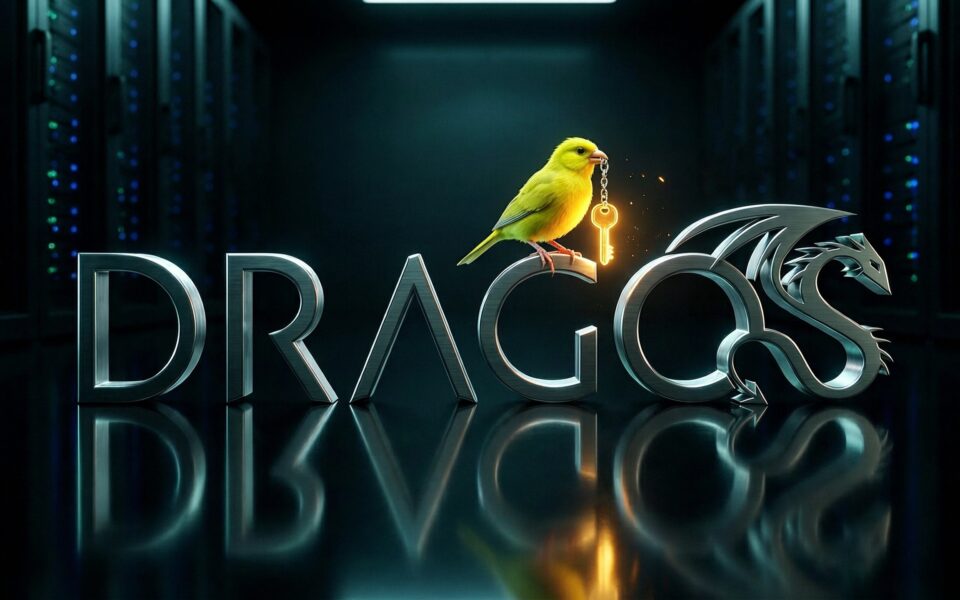
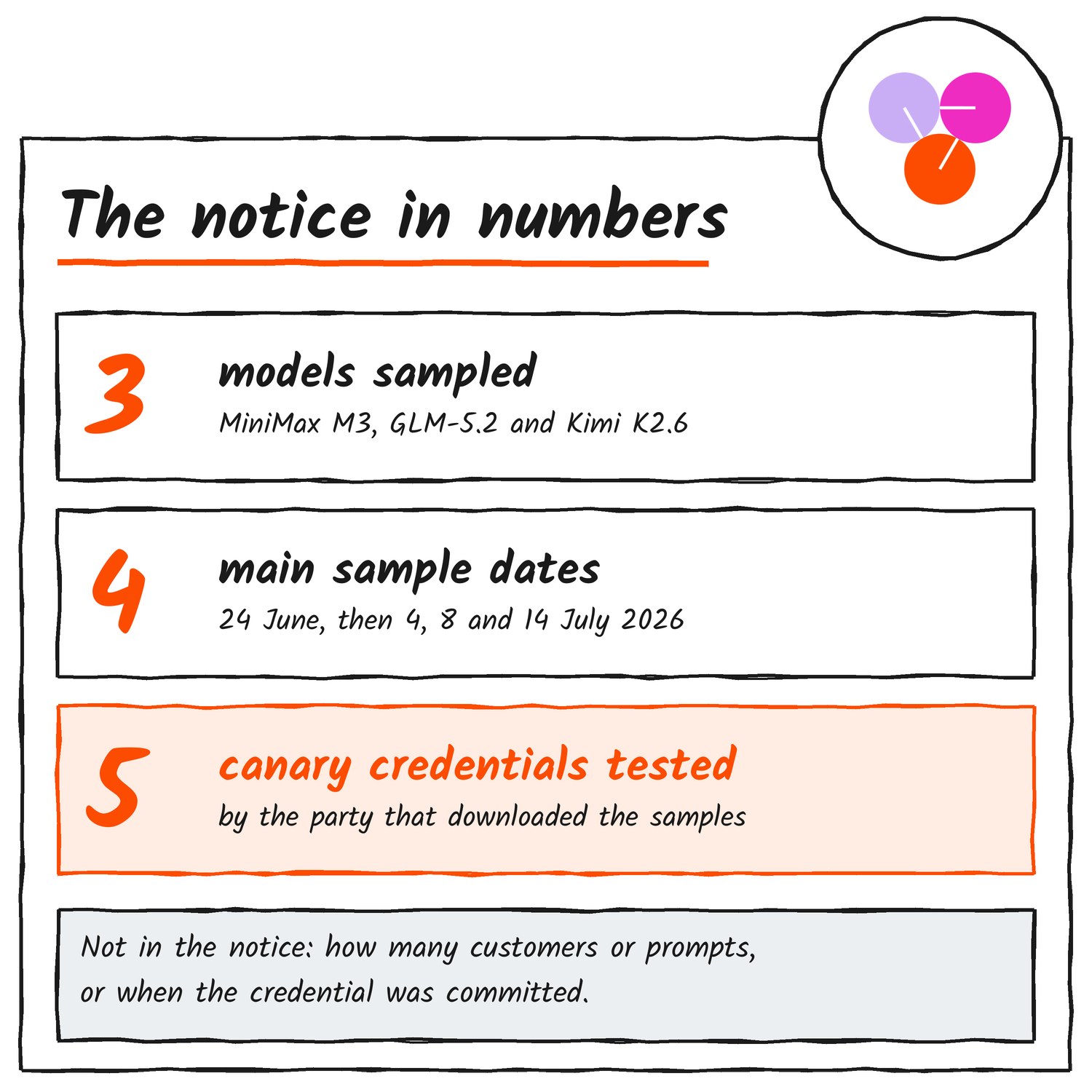
Together AI says an unauthorised party downloaded stored prompt samples from its serverless inference service after an AI coding agent committed a credential to a public GitHub repository. CEO Vipul Ved Prakash posted the company’s security notice on 21 November. The samples came from requests to MiniMax M3, GLM-5.2 and Kimi K2.6, mostly on four days in June and July 2026.
The repository was xorl, the public home of Together’s distributed training framework for large language models. The credential opened a private Hugging Face repository where Together kept prompt samples it had collected for routine software testing. Together’s scanner flagged the credential and the commit was reverted. The notice says the unauthorised party got the credential while it was exposed and used it to download the samples.
What the notice says
Together says it worked with an external forensic investigation firm and law enforcement, and that it has found no evidence of prompt leakage beyond this incident. Its review of the affected prompt contents is still running to work out whether sensitive personal information or other customer data was exposed. It will contact affected customers directly as needed.
| Question | What Together’s notice says |
|---|---|
| What was taken | Stored prompt samples from its serverless inference service |
| Which models | MiniMax M3, GLM-5.2 and Kimi K2.6 |
| Which days | Primarily 24 June, 4 July, 8 July and 14 July 2026 |
| How it got out | An AI coding agent committed a credential to the public xorl repository |
| Where the samples sat | A private Hugging Face repository |
| Where the data is now | Together understands it has been deleted |
Five of the tested credentials were canaries
After the download, the notice says, the unauthorised party searched the samples for credentials to other services and tested whether they were valid. Five of the credentials it tested were canary credentials associated with a Dragos security experiment. A canary credential is a fake that exists in one place only, so any attempt to use it shows that place was read.
Dragos published the results of that kind of experiment on 19 November. HD Moore, its chief research officer, wrote that Dragos sent nearly two million canary-seeded prompts to AI services from July through November and found evidence that data from at least three providers had been exposed. Dragos’s post doesn’t name Together or any other provider, and Together’s notice doesn’t say whether it’s one of the three. Three of Together’s four main sample dates fall in July, the month Dragos says it started seeding prompts.
What Together has changed
The notice lists four changes. Together says it now uses scoped or short-lived credentials, and keyless access where supported, to limit the damage when one is exposed. It checks every pull request for credentials. It has updated its development processes for AI coding agents. And zero data retention, ZDR, is now the default setting for new accounts.
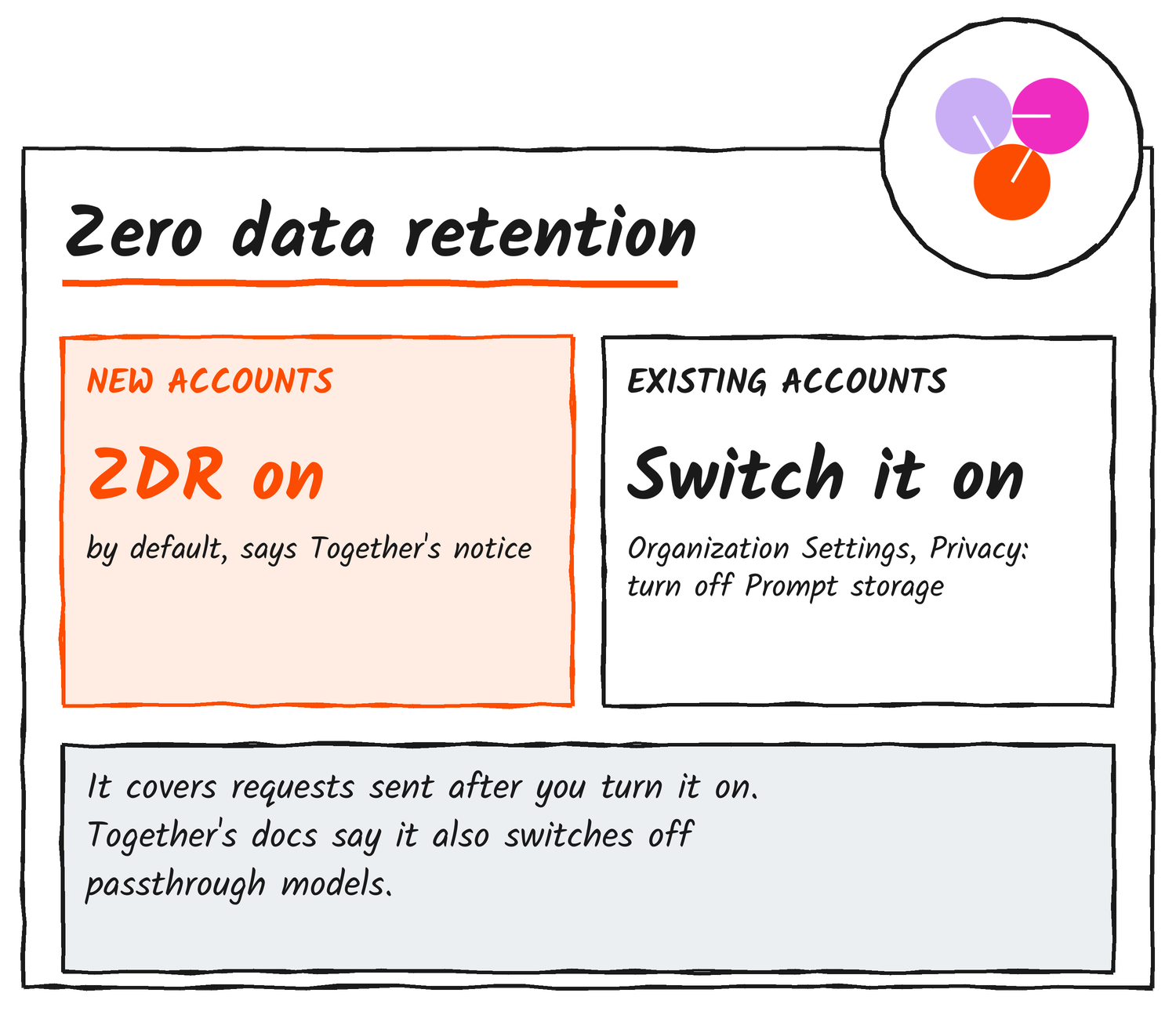
Together’s privacy docs say it stores the prompts you send and the responses models return by default, and that the data isn’t shared with third parties. An organisation admin switches storage off under Organization Settings, in the Privacy section, which turns ZDR on. The ZDR page says it applies only to requests sent after it’s enabled, and that turning off prompt storage also turns off passthrough models, the ones that forward requests to a third-party provider.
What the notice leaves out
The notice doesn’t say how many customers or prompts were in the samples, when the credential was committed or how long it stayed exposed. It doesn’t say who the unauthorised party is, which customers Together has contacted, or whether prompts sent to other models were stored the same way. Together says it understands the data has now been deleted, and doesn’t say who confirmed that.
If you sent prompts to those models
Together’s notice doesn’t tell customers to rotate keys. The unauthorised party searched the samples for credentials and tested them, so any secret that sat in a prompt from those dates is worth replacing.
- Check your Together usage for MiniMax M3, GLM-5.2 and Kimi K2.6 requests around 24 June and 4, 8 and 14 July.
- Look inside those prompts for API keys, tokens, database URLs and passwords.
- Revoke and replace anything secret you find. A new key issued next to the old one leaves the old one live.
- Turn off prompt storage in Organization Settings, Privacy, to switch ZDR on for later requests.
- Ask Together at [email protected] if you need to know whether your organisation was affected.
This is separate from OpenRouter’s email of 21 November, which told customers that a third party may have read prompts sent to MiniMax models. In that case a researcher’s test links were opened days after the requests, and the email names AtlasCloud, Novita and StreamLake as the forwarding providers. It doesn’t name Together.

Discover more from Sulat AI & Tech News
Subscribe to get the latest posts sent to your email.